Table of Contents
- 1. Product Overview
- 1.1 মূল সুবিধা এবং পণ্যের অবস্থান
- 1.2 প্রধান বৈশিষ্ট্য
- 2. প্রযুক্তিগত বিবরণ গভীর বিশ্লেষণ
- 2.1 পরম সর্বোচ্চ রেটিং
- 2.2 ইলেক্ট্রো-অপটিক্যাল বৈশিষ্ট্য
- 3. বিনিং সিস্টেম ব্যাখ্যা
- 3.1 লুমিনাস ইনটেনসিটি বিনিং (কোড: L2, M1, M2, N1)
- 3.2 ডমিনেন্ট ওয়েভলেন্থ বিনিং (কোড: X, Y)
- 3.3 ফরওয়ার্ড ভোল্টেজ বিনিং (কোড: 27, 28, 29, 30)
- 4. পারফরম্যান্স কার্ভ বিশ্লেষণ
- 4.1 আপেক্ষিক দীপ্তিমান তীব্রতা বনাম ফরওয়ার্ড কারেন্ট
- 4.2 আপেক্ষিক দীপ্তিমান তীব্রতা বনাম পারিপার্শ্বিক তাপমাত্রা
- 4.3 ফরওয়ার্ড কারেন্ট ডিরেটিং কার্ভ
- 4.4 স্পেকট্রাম বন্টন
- 4.5 বিকিরণ প্যাটার্ন
- 5. যান্ত্রিক এবং প্যাকেজিং তথ্য
- 5.1 প্যাকেজ মাত্রা
- 5.2 পোলারিটি শনাক্তকরণ
- 6. সোল্ডারিং এবং অ্যাসেম্বলি নির্দেশিকা
- 6.1 রিফ্লো সোল্ডারিং প্রোফাইল (Pb-free)
- 6.2 সংরক্ষণ এবং আর্দ্রতা সংবেদনশীলতা
- 6.3 হ্যান্ড সোল্ডারিং এবং রি-ওয়ার্ক
- 7. প্যাকেজিং এবং অর্ডার তথ্য
- 7.1 রিল এবং টেপ স্পেসিফিকেশন
- 7.2 লেবেল ব্যাখ্যা
- 8. অ্যাপ্লিকেশন পরামর্শ এবং ডিজাইন বিবেচনা
- 8.1 সাধারণ অ্যাপ্লিকেশন দৃশ্যাবলী
- 8.2 গুরুত্বপূর্ণ ডিজাইন বিবেচনা
- 9. প্রযুক্তিগত তুলনা ও পার্থক্য
- 10. প্রায়শই জিজ্ঞাসিত প্রশ্নাবলী (প্রযুক্তিগত প্যারামিটার ভিত্তিক)
- 11. ব্যবহারিক নকশা ও ব্যবহার কেস স্টাডি
- 12. কার্যনীতি পরিচিতি
- 13. প্রযুক্তি প্রবণতা এবং প্রসঙ্গ
- LED স্পেসিফিকেশন টার্মিনোলজি
- ফটোইলেকট্রিক পারফরম্যান্স
- ইলেকট্রিক্যাল প্যারামিটারস
- Thermal Management & Reliability
- Packaging & Materials
- Quality Control & Binning
- Testing & Certification
1. Product Overview
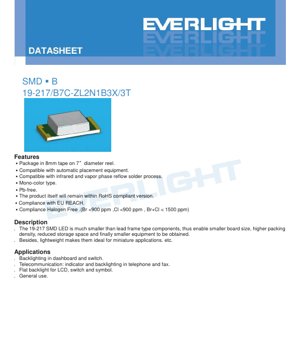
19-217/B7C-ZL2N1B3X/3T হল একটি কমপ্যাক্ট, সারফেস-মাউন্ট নীল LED যা আধুনিক ইলেকট্রনিক অ্যাপ্লিকেশনের জন্য ডিজাইন করা হয়েছে যেখানে উচ্চ নির্ভরযোগ্যতা এবং দক্ষ অ্যাসেম্বলি প্রয়োজন। এই উপাদানটি ঐতিহ্যবাহী লিড-ফ্রেম LED-এর তুলনায় একটি উল্লেখযোগ্য অগ্রগতি উপস্থাপন করে, যা চূড়ান্ত পণ্যগুলিতে যথেষ্ট ক্ষুদ্রীকরণ এবং কর্মক্ষমতা উন্নতি সক্ষম করে।
1.1 মূল সুবিধা এবং পণ্যের অবস্থান
এই LED-এর প্রাথমিক সুবিধা হল এর ক্ষুদ্রাকৃতি। SMD প্যাকেজ উল্লেখযোগ্যভাবে ছোট প্রিন্টেড সার্কিট বোর্ড (PCB) ডিজাইন সম্ভব করে, যা উচ্চতর উপাদান প্যাকিং ঘনত্বের দিকে নিয়ে যায়। এটি সরাসরি সরঞ্জামের আকার হ্রাস এবং উপাদান ও সমাপ্ত পণ্য উভয়ের জন্য কম স্টোরেজ প্রয়োজনীয়তার দিকে পরিচালিত করে। তদুপরি, SMD প্যাকেজের হালকা ওজন এটিকে বহনযোগ্য এবং ক্ষুদ্র অ্যাপ্লিকেশনের জন্য আদর্শ করে তোলে যেখানে ওজন একটি গুরুত্বপূর্ণ বিষয়। পণ্যটি একটি নির্ভরযোগ্য, শিল্প-মানের নীল নির্দেশক এবং ব্যাকলাইট উৎস হিসাবে অবস্থিত, যা প্রধান পরিবেশগত ও নিরাপত্তা নিয়মাবলীর সাথে সঙ্গতিপূর্ণ।
1.2 প্রধান বৈশিষ্ট্য
- প্যাকেজিং: 8mm টেপে সরবরাহকৃত, যা একটি 7-ইঞ্চি ব্যাসের রিলে মাউন্ট করা, উচ্চ-গতির স্বয়ংক্রিয় পিক-এন্ড-প্লেস সরঞ্জামের সাথে সম্পূর্ণ সামঞ্জস্যপূর্ণ।
- সোল্ডারিং সামঞ্জস্যতা: স্ট্যান্ডার্ড ইনফ্রারেড (আইআর) এবং বেপার ফেজ রিফ্লো সোল্ডারিং প্রক্রিয়ার সাথে ব্যবহারের জন্য নকশাকৃত।
- পরিবেশগত সম্মতি: ডিভাইসটি সীসা-মুক্ত (Pb-free), EU RoHS নির্দেশিকার সাথে সঙ্গতিপূর্ণ এবং EU REACH নিয়মাবলী মেনে চলে। এটি হ্যালোজেন-মুক্ত হিসাবে শ্রেণীবদ্ধ, ব্রোমিন (Br) এবং ক্লোরিন (Cl) উপাদান প্রতিটি 900 ppm-এর নিচে এবং তাদের সমষ্টি 1500 ppm-এর নিচে।
- প্রকার: মনো-কালার (নীল) LED একটি ওয়াটার-ক্লিয়ার রজন লেন্স সহ।
2. প্রযুক্তিগত বিবরণ গভীর বিশ্লেষণ
এই বিভাগটি LED-এর বৈদ্যুতিক, আলোকীয় এবং তাপীয় পরামিতিগুলির একটি বিশদ, বস্তুনিষ্ঠ বিশ্লেষণ প্রদান করে, যা শক্তিশালী সার্কিট ডিজাইনের জন্য অত্যন্ত গুরুত্বপূর্ণ।
2.1 পরম সর্বোচ্চ রেটিং
এই রেটিংগুলি সেই চাপ সীমা নির্ধারণ করে যার বাইরে ডিভাইসের স্থায়ী ক্ষতি হতে পারে। এই সীমার নিচে বা এই সীমায় অপারেশন নিশ্চিত করা হয় না।
- Reverse Voltage (VR): 5V. রিভার্স বায়াসে এই ভোল্টেজ অতিক্রম করলে তাৎক্ষণিক জাংশন ব্রেকডাউন ঘটাতে পারে।
- Continuous Forward Current (IF): 10 mA. সরাসরি কারেন্ট যা ক্রমাগত প্রয়োগ করা যেতে পারে।
- সর্বোচ্চ ফরওয়ার্ড কারেন্ট (IFP): 40 mA. এটি শুধুমাত্র পালসড অবস্থায় অনুমোদিত (ডিউটি সাইকেল 1/10, 1 kHz এ) ক্ষণস্থায়ী সার্জ পরিচালনার জন্য।
- পাওয়ার ডিসিপেশন (Pd): 40 mW. 25°C পরিবেষ্টিত তাপমাত্রায় প্যাকেজটি সর্বোচ্চ যে ক্ষমতা অপচয় করতে পারে, VF * IF.
- ইলেক্ট্রোস্ট্যাটিক ডিসচার্জ (ESD): 150V (হিউম্যান বডি মডেল)। সমাবেশের সময় সঠিক ESD হ্যান্ডলিং পদ্ধতি বাধ্যতামূলক।
- Operating & Storage Temperature: -৪০°সি থেকে +৮৫°সি (অপারেটিং), -৪০°সি থেকে +৯০°সি (স্টোরেজ)।
- সোল্ডারিং তাপমাত্রা: রিফ্লো: সর্বোচ্চ ১০ সেকেন্ডের জন্য ২৬০°সি পিক। হ্যান্ড সোল্ডারিং: প্রতি টার্মিনালে সর্বোচ্চ ৩ সেকেন্ডের জন্য ৩৫০°সি।
2.2 ইলেক্ট্রো-অপটিক্যাল বৈশিষ্ট্য
বিশেষভাবে উল্লেখ না করা হলে, ২৫°সি পরিবেষ্টিত তাপমাত্রা এবং ২mA ফরওয়ার্ড কারেন্টে পরিমাপকৃত সাধারণ পারফরম্যান্স প্যারামিটারগুলো এগুলো।
- লুমিনাস ইনটেনসিটি (Iv): ১৪.৫ mcd (ন্যূনতম) থেকে ৩৬.০ mcd (সর্বোচ্চ) পর্যন্ত পরিসর, সাধারণ সহনশীলতা ±১১%। এটি LED-এর অনুভূত উজ্জ্বলতা নির্ধারণ করে।
- ভিউইং অ্যাঙ্গেল (2θ১/২): ১২০ ডিগ্রি (সাধারণ)। এটি সেই পূর্ণ কোণ যেখানে উজ্জ্বল তীব্রতা সর্বোচ্চ তীব্রতার অর্ধেক, যা একটি প্রশস্ত দর্শন শঙ্কু নির্দেশ করে।
- Peak Wavelength (λp): ৪৬৮ nm (সাধারণ)। যে তরঙ্গদৈর্ঘ্যে বর্ণালী শক্তি বণ্টন সর্বাধিক।
- Dominant Wavelength (λd): ৪৬৫.০ nm থেকে ৪৭৫.০ nm। এটি আলোর অনুভূত রঙকে সংজ্ঞায়িত করে, ±১ nm এর একটি কঠোর সহনশীলতার সাথে।
- Spectral Bandwidth (Δλ): ২৫ nm (সাধারণ)। সর্বোচ্চ শক্তির অর্ধেক উচ্চতায় নির্গত বর্ণালীর প্রস্থ।
- Forward Voltage (VF): ২.৫০V থেকে ২.৯০V at IF=2mA, সহনশীলতা ±0.05V। এটি কারেন্ট-সীমিত রোধক গণনার জন্য অত্যন্ত গুরুত্বপূর্ণ।
- বিপরীত কারেন্ট (IR): সর্বোচ্চ 50 μA, VR=5V এ। ডিভাইসটি বিপরীত বায়াসে পরিচালনার জন্য ডিজাইন করা হয়নি।
3. বিনিং সিস্টেম ব্যাখ্যা
LED গুলি উৎপাদনের পর মূল পরামিতির ভিত্তিতে বাছাই (বিন) করা হয় সামঞ্জস্য নিশ্চিত করতে। পার্ট নম্বর 19-217/B7C-ZL2N1B3X/3T এই বিন তথ্যটি এনকোড করে।
3.1 লুমিনাস ইনটেনসিটি বিনিং (কোড: L2, M1, M2, N1)
LED গুলোকে I=2mA তে চারটি তীব্রতা বিনে বিভক্ত করা হয়েছেF=2mA:
- L2: 14.5 - 18.0 mcd
- M1: 18.0 - 22.5 mcd
- M2: 22.5 - 28.5 mcd
- N1: 28.5 - 36.0 mcd
3.2 ডমিনেন্ট ওয়েভলেন্থ বিনিং (কোড: X, Y)
I-এ LED গুলিকে দুটি তরঙ্গদৈর্ঘ্য বিনে বাছাই করা হয়।F=2mA:
- X: 465.0 - 470.0 nm
- Y: 470.0 - 475.0 nm
3.3 ফরওয়ার্ড ভোল্টেজ বিনিং (কোড: 27, 28, 29, 30)
I তে LED গুলো চারটি ফরওয়ার্ড ভোল্টেজ বিনে বিভক্ত।F=2mA:
- 27: 2.50 - 2.60 V
- 28: 2.60 - 2.70 V
- 29: ২.৭০ - ২.৮০ V
- ৩০: ২.৮০ - ২.৯০ V
4. পারফরম্যান্স কার্ভ বিশ্লেষণ
ডেটাশিট বিভিন্ন অপারেটিং অবস্থার অধীনে LED-এর আচরণ বোঝার জন্য অপরিহার্য বেশ কয়েকটি বৈশিষ্ট্যগত কার্ভ প্রদান করে।
4.1 আপেক্ষিক দীপ্তিমান তীব্রতা বনাম ফরওয়ার্ড কারেন্ট
এই বক্ররেখাটি দেখায় যে আলোকিত তীব্রতা ফরোয়ার্ড কারেন্টের সাথে বৃদ্ধি পায় কিন্তু অ-রৈখিক পদ্ধতিতে। এটি একটি ভোল্টেজের পরিবর্তে একটি স্থিতিশীল, নির্দিষ্ট কারেন্টে (যেমন, রেটেড আউটপুটের জন্য 2mA) LED চালানোর গুরুত্ব তুলে ধরে, কারণ ছোট ভোল্টেজ পরিবর্তন বড় কারেন্ট এবং উজ্জ্বলতার তারতম্য ঘটাতে পারে।
4.2 আপেক্ষিক দীপ্তিমান তীব্রতা বনাম পারিপার্শ্বিক তাপমাত্রা
একটি LED-এর আউটপুট জংশন তাপমাত্রা বৃদ্ধির সাথে সাথে হ্রাস পায়। এই বক্ররেখাটি সাধারণত নিম্ন তাপমাত্রা থেকে সর্বোচ্চ অপারেটিং তাপমাত্রা (+85°C) পর্যন্ত তীব্রতার একটি ধীরে ধীরে হ্রাস দেখায়। ডিজাইনারদেরকে এমন অ্যাপ্লিকেশনগুলিতে এই তাপীয় ডিরেটিং বিবেচনা করতে হবে যেখানে উচ্চ পরিবেষ্টিত তাপমাত্রা বা দুর্বল তাপ অপসারণের আশা করা হয়।
4.3 ফরওয়ার্ড কারেন্ট ডিরেটিং কার্ভ
এটি একটি গুরুত্বপূর্ণ ডিজাইন সরঞ্জাম। এটি পরিবেষ্টিত তাপমাত্রার একটি ফাংশন হিসাবে সর্বাধিক অনুমোদিত অবিচ্ছিন্ন ফরোয়ার্ড কারেন্ট নির্দেশ করে। তাপমাত্রা বৃদ্ধির সাথে সাথে, 40mW পাওয়ার ডিসিপেশন সীমা অতিক্রম করা এবং তাপীয় রানওয়ে সৃষ্টি করা রোধ করতে সর্বাধিক নিরাপদ কারেন্ট হ্রাস পায়।
4.4 স্পেকট্রাম বন্টন
স্পেকট্রাল প্লটটি 468 nm (নীল) কেন্দ্রিক একটি সংকীর্ণ নির্গমন ব্যান্ড নিশ্চিত করে, যার সাধারণ ব্যান্ডউইথ 25 nm। এই বিশুদ্ধ বর্ণালী InGaN সেমিকন্ডাক্টর উপাদানের বৈশিষ্ট্যসূচক।
4.5 বিকিরণ প্যাটার্ন
পোলার ডায়াগ্রামটি 120° দর্শন কোণ চিত্রিত করে, দেখায় কীভাবে আলোর তীব্রতা স্থানিকভাবে বিতরণ করা হয়। প্যাটার্নটি সাধারণত ল্যাম্বার্টিয়ান বা নিয়ার-ল্যাম্বার্টিয়ান, যা একটি বিস্তৃত এলাকায় সমান আলোকসজ্জা প্রদান করে।
5. যান্ত্রিক এবং প্যাকেজিং তথ্য
5.1 প্যাকেজ মাত্রা
LED-এর একটি অত্যন্ত কমপ্যাক্ট ফুটপ্রিন্ট রয়েছে। মূল মাত্রাগুলি (মিমিতে, সহনশীলতা ±0.1mm যদি না উল্লেখ করা হয়) সামগ্রিক দৈর্ঘ্য, প্রস্থ এবং উচ্চতা, সেইসাথে সোল্ডার প্যাড লেআউট এবং সুপারিশকৃত PCB ল্যান্ড প্যাটার্ন অন্তর্ভুক্ত করে। সঠিক সোল্ডারিং এবং অ্যালাইনমেন্ট নিশ্চিত করতে PCB লেআউট এবং সোল্ডার পেস্ট স্টেনসিল ডিজাইনের জন্য সুনির্দিষ্ট মাত্রা অত্যন্ত গুরুত্বপূর্ণ।
5.2 পোলারিটি শনাক্তকরণ
ক্যাথোড সাধারণত চিহ্নিত করা থাকে, প্রায়শই প্যাকেজের সংশ্লিষ্ট পাশে একটি সবুজ আভা বা মোল্ডিং-এ একটি খাঁজ দ্বারা। সঠিক ক্রিয়াকলাপ নিশ্চিত করতে বসানোর সময় সঠিক পোলারিটি মেনে চলতে হবে।
6. সোল্ডারিং এবং অ্যাসেম্বলি নির্দেশিকা
দীর্ঘমেয়াদী নির্ভরযোগ্যতার জন্য এই নির্দেশিকাগুলি মেনে চলা অত্যন্ত গুরুত্বপূর্ণ।
6.1 রিফ্লো সোল্ডারিং প্রোফাইল (Pb-free)
একটি বিস্তারিত তাপমাত্রা প্রোফাইল প্রদান করা হয়েছে:
- প্রি-হিটিং: ফ্লাক্স সক্রিয় করতে এবং তাপমাত্রা ধীরে ধীরে বাড়ানোর জন্য 150-200°C তাপমাত্রায় 60-120 সেকেন্ড।
- Time Above Liquidus (TAL): 217°C এর উপরে 60-150 সেকেন্ড।
- Peak Temperature: সর্বোচ্চ 260°C, 10 সেকেন্ডের বেশি ধরে রাখা যাবে না।
- Heating/Cooling Rates: তাপীয় চক কমানোর জন্য সর্বোচ্চ 6°C/সেকেন্ড গরম করা, 3°C/সেকেন্ড ঠান্ডা করা।
6.2 সংরক্ষণ এবং আর্দ্রতা সংবেদনশীলতা
LED গুলি ডেসিক্যান্ট সহ একটি আর্দ্রতা-প্রতিরোধী বাধা ব্যাগে প্যাকেজ করা হয়েছে।
- ব্যবহারের জন্য প্রস্তুত না হওয়া পর্যন্ত ব্যাগটি খুলবেন না।
- খোলার পরে, যদি ≤30°C এবং ≤60% RH তে সংরক্ষণ করা হয় তবে 168 ঘন্টার (7 দিন) মধ্যে ব্যবহার করুন।
- যদি এক্সপোজারের সময়সীমা অতিক্রম করা হয় বা ডেসিক্যান্ট সম্পৃক্ত হয়ে যায়, তাহলে রিফ্লো করার আগে "পপকর্নিং" (বাষ্পীভূত আর্দ্রতার কারণে প্যাকেজ ফাটা) প্রতিরোধ করতে 60±5°C তে 24 ঘন্টার জন্য বেক-আউট প্রয়োজন।
6.3 হ্যান্ড সোল্ডারিং এবং রি-ওয়ার্ক
যদি হ্যান্ড সোল্ডারিং প্রয়োজন হয়:
- একটি সোল্ডারিং আয়রনের টিপ তাপমাত্রা ≤350°C ব্যবহার করুন।
- প্রতি টার্মিনালে যোগাযোগের সময় ≤3 সেকেন্ডে সীমাবদ্ধ রাখুন।
- একটি কম-শক্তির আয়রন (≤25W) ব্যবহার করুন।
- টার্মিনালগুলির মধ্যে ≥2 সেকেন্ডের একটি শীতল ব্যবধান দিন।
- প্রাথমিক সোল্ডারিংয়ের পরে পুনরায় কাজ করা এড়িয়ে চলুন। যদি এড়ানো সম্ভব না হয়, একটি ডুয়াল-টিপ সোল্ডারিং আয়রন ব্যবহার করে উভয় টার্মিনাল একই সাথে গরম করুন এবং সোল্ডার জয়েন্টে চাপ না দিয়ে কম্পোনেন্টটি তুলে নিন।
7. প্যাকেজিং এবং অর্ডার তথ্য
7.1 রিল এবং টেপ স্পেসিফিকেশন
LED গুলি 7-ইঞ্চি রিলে এমবসড ক্যারিয়ার টেপে সরবরাহ করা হয়। টেপের প্রস্থ 8 মিমি। প্রতিটি রিলে 3000 টি পিস থাকে। স্বয়ংক্রিয় ফিডারের সাথে সামঞ্জস্যতা নিশ্চিত করতে ক্যারিয়ার টেপের পকেট এবং রিল হাব/ফ্ল্যাঞ্জের বিস্তারিত মাত্রা প্রদান করা হয়েছে।
7.2 লেবেল ব্যাখ্যা
রিল লেবেলে বেশ কয়েকটি মূল শনাক্তকারী তথ্য থাকে:
- P/N: সম্পূর্ণ পণ্য নম্বর।
- QTY: রিলে পরিমাণ।
- CAT/HUE/REF: যথাক্রমে লুমিনাস ইনটেনসিটি, ডমিন্যান্ট ওয়েভলেংথ এবং ফরওয়ার্ড ভোল্টেজ বিনের সাথে সঙ্গতিপূর্ণ কোড।
- LOT No: ট্রেসেবিলিটি লট নম্বর।
8. অ্যাপ্লিকেশন পরামর্শ এবং ডিজাইন বিবেচনা
8.1 সাধারণ অ্যাপ্লিকেশন দৃশ্যাবলী
- ব্যাকলাইটিং: এর ছোট আকার এবং সমান আলোর বিতরণের কারণে ড্যাশবোর্ড সূচক, মেমব্রেন সুইচ এবং প্রতীক আলোকিত করার জন্য আদর্শ।
- টেলিকমিউনিকেশন সরঞ্জাম: ফোন, ফ্যাক্স মেশিন এবং নেটওয়ার্কিং হার্ডওয়্যারে অবস্থা সূচক এবং কীপ্যাড ব্যাকলাইটিং।
- এলসিডি ফ্ল্যাট ব্যাকলাইটিং: এজ-লিট বা ডাইরেক্ট-লিট ছোট এলসিডি প্যানেলের জন্য অ্যারে হিসাবে ব্যবহার করা যেতে পারে।
- সাধারণ নির্দেশনা: ভোক্তা ও শিল্প ইলেকট্রনিক্সে পাওয়ার অবস্থা, মোড সূচক এবং সজ্জামূলক আলোকসজ্জা।
8.2 গুরুত্বপূর্ণ ডিজাইন বিবেচনা
- কারেন্ট সীমাবদ্ধকরণ: একটি বহিরাগত কারেন্ট-সীমাবদ্ধ রোধক একেবারে বাধ্যতামূলক। LED-এর সূচকীয় I-V বৈশিষ্ট্যের অর্থ ভোল্টেজে সামান্য বৃদ্ধি কারেন্টে বড় বৃদ্ধি ঘটায়, যা দ্রুত ব্যর্থতার দিকে নিয়ে যায়। রোধকের মান R = (Vsupply - VF) / I সূত্র ব্যবহার করে গণনা করা হয়।F.
- তাপীয় ব্যবস্থাপনা: শক্তি অপচয় কম হলেও, সর্বোচ্চ কারেন্টের কাছাকাছি বা উচ্চ পারিপার্শ্বিক তাপমাত্রায় কাজ করার সময়, ডিরেটিং কার্ভ অনুযায়ী পর্যাপ্ত PCB কপার এলাকা বা থার্মাল ভায়া নিশ্চিত করুন।
- ESD সুরক্ষা: LED যদি ব্যবহারকারীর কাছে প্রবেশযোগ্য হয়, তাহলে ইনপুট লাইনে ESD সুরক্ষা বাস্তবায়ন করুন এবং হ্যান্ডলিংয়ের সময় সঠিক ESD প্রোটোকল অনুসরণ করুন।
- অপটিক্যাল ডিজাইন: 120° দর্শন কোণ বিস্তৃত কভারেজ প্রদান করে। ফোকাসড আলোর জন্য, একটি বাহ্যিক লেন্স বা লাইট গাইড প্রয়োজন হতে পারে।
9. প্রযুক্তিগত তুলনা ও পার্থক্য
পুরানো থ্রু-হোল নীল LED বা বড় SMD প্যাকেজের তুলনায়, 19-217 স্বতন্ত্র সুবিধা প্রদান করে:
- আকার: এর ক্ষুদ্রাকৃতি 2.0mm x 1.25mm ফুটপ্রিন্ট অভূতপূর্ব ডিজাইন ঘনত্বের অনুমতি দেয়।
- কর্মদক্ষতার সামঞ্জস্য: তীব্রতা, তরঙ্গদৈর্ঘ্য এবং ভোল্টেজের উপর কঠোর বিনিং বহু-এলইডি অ্যাপ্লিকেশনে অভিন্ন চেহারা এবং আচরণ নিশ্চিত করে।
- উৎপাদনযোগ্যতা: স্বয়ংক্রিয় এসএমটি অ্যাসেম্বলি লাইনের সাথে সম্পূর্ণ সামঞ্জস্যতা হাতে ঢোকানোর তুলনায় উৎপাদন খরচ উল্লেখযোগ্যভাবে হ্রাস করে এবং নির্ভরযোগ্যতা বৃদ্ধি করে।
- সম্মতি: RoHS, REACH এবং হ্যালোজেন-মুক্ত মান পূরণ করা কঠোর পরিবেশগত নিয়ন্ত্রণ সহ বৈশ্বিক বাজারের জন্য ডিজাইনকে ভবিষ্যৎ-সুরক্ষিত করে।
10. প্রায়শই জিজ্ঞাসিত প্রশ্নাবলী (প্রযুক্তিগত প্যারামিটার ভিত্তিক)
প্রশ্ন 1: ফরওয়ার্ড ভোল্টেজ নির্দিষ্ট থাকলে কারেন্ট-লিমিটিং রেজিস্টর কেন প্রয়োজন?
উত্তর 1: ফরওয়ার্ড ভোল্টেজ একটি নির্দিষ্ট কারেন্টে (2mA) একটি বৈশিষ্ট্য। পাওয়ার সাপ্লাই ভোল্টেজ পরিবর্তিত হয়, এবং LED-এর V-এর নিজস্ব একটি সহনশীলতা রয়েছে এবং তাপমাত্রার সাথে পরিবর্তিত হয়। রেজিস্টর কারেন্ট সেট করার জন্য একটি রৈখিক, স্থিতিশীল পদ্ধতি প্রদান করে, LED কে ওভারকারেন্ট অবস্থা থেকে রক্ষা করে।F প্রশ্ন 2: আমি কি এই LED টিকে ক্রমাগত 10mA তে চালাতে পারি?
প্রশ্ন 2: আমি কি এই LED টিকে ক্রমাগত 10mA তে চালাতে পারি?
প্রশ্ন 3: আমার ডিজাইনের জন্য পার্ট নম্বরে "B3X" এর অর্থ কী?
প্রশ্ন 3: আমার ডিজাইনের জন্য পার্ট নম্বরে "B3X" এর অর্থ কী?
প্রশ্ন 4: আমি 120° ভিউইং অ্যাঙ্গেল কীভাবে ব্যাখ্যা করব?
প্রশ্ন 4: আমি 120° ভিউইং অ্যাঙ্গেল কীভাবে ব্যাখ্যা করব?
A4: এর অর্থ হল LED একটি প্রশস্ত শঙ্কুতে আলো বিকিরণ করে। সরাসরি সামনে (0°) দেখলে উজ্জ্বলতা সর্বোচ্চ হয়। কেন্দ্র থেকে ±60° (মোট 120°) কোণে, উজ্জ্বলতা সর্বোচ্চ মানের অর্ধেক হয়ে যায়। এটি এমন অ্যাপ্লিকেশনের জন্য উপযুক্ত যেখানে LED কে বিভিন্ন কোণ থেকে দেখা প্রয়োজন।
11. ব্যবহারিক নকশা ও ব্যবহার কেস স্টাডি
দৃশ্যকল্প: চারটি নীল অবস্থা নির্দেশক সহ একটি কমপ্যাক্ট কন্ট্রোল প্যানেল নকশা করা।
বাস্তবায়ন:
- সার্কিট নকশা: একটি 5V সিস্টেম সরবরাহ ব্যবহার করে। লক্ষ্য IF ভালো উজ্জ্বলতা এবং দীর্ঘস্থায়ীত্বের জন্য = 5mA। একটি সাধারণ V ধরে নিয়েF 2.7V, R = (5V - 2.7V) / 0.005A = 460Ω হিসাব করুন। নিকটতম স্ট্যান্ডার্ড মান, 470Ω ব্যবহার করুন।
- PCB লেআউট: চারটি LED সারিবদ্ধভাবে স্থাপন করুন। ডেটাশিট থেকে প্রস্তাবিত ল্যান্ড প্যাটার্নটি অবিকল অনুসরণ করুন। সামান্য তাপীয় উপশমের জন্য ক্যাথোড প্যাডের সাথে সংযুক্ত একটি ছোট কপার পাউর অন্তর্ভুক্ত করুন।
- সংযোজন: উৎপাদন লাইন প্রস্তুত না হওয়া পর্যন্ত রিলগুলি সিল করে রাখুন। সঠিক রিফ্লো প্রোফাইল অনুসরণ করুন। সোল্ডারিংয়ের পরে চাক্ষুষ পরিদর্শন করুন।
- ফলাফল: সামঞ্জস্যপূর্ণ নীল রঙ এবং উজ্জ্বলতা, নির্ভরযোগ্য অপারেশন এবং একটি পেশাদার, ক্ষুদ্রায়িত চেহারা সহ চারটি নির্দেশক।
12. কার্যনীতি পরিচিতি
এই LED টি একটি ইন্ডিয়াম গ্যালিয়াম নাইট্রাইড (InGaN) সেমিকন্ডাক্টর চিপের উপর ভিত্তি করে তৈরি। যখন জংশনের অন্তর্নিহিত সম্ভাবনাকে অতিক্রম করে একটি ফরওয়ার্ড ভোল্টেজ প্রয়োগ করা হয়, ইলেকট্রন এবং হোলগুলি সক্রিয় অঞ্চলে ইনজেক্ট হয় যেখানে তারা পুনর্মিলিত হয়। এই পুনর্মিলন প্রক্রিয়া ফোটন (আলো) আকারে শক্তি মুক্ত করে। InGaN খাদের নির্দিষ্ট গঠন ব্যান্ডগ্যাপ শক্তি নির্ধারণ করে, যা সরাসরি নির্গত আলোর তরঙ্গদৈর্ঘ্যের সাথে সম্পর্কিত—এই ক্ষেত্রে, প্রায় 468 nm (নীল)। জল-স্বচ্ছ এপোক্সি রজন এনক্যাপসুল্যান্ট চিপটি রক্ষা করে, আলোর আউটপুট গঠনের জন্য একটি লেন্স হিসাবে কাজ করে এবং উচ্চ অপটিক্যাল স্বচ্ছতা এবং দীর্ঘমেয়াদী স্থিতিশীলতার জন্য তৈরি করা হয়েছে।
13. প্রযুক্তি প্রবণতা এবং প্রসঙ্গ
19-217 LED অপ্টোইলেকট্রনিক্সের মূল প্রবণতাগুলির উদাহরণ দেয়: নিরলস ক্ষুদ্রীকরণ, SMT সামঞ্জস্যের মাধ্যমে উন্নত উৎপাদনযোগ্যতা এবং পরিবেশগত মানের কঠোর অনুসরণ। নীল নির্গমনের জন্য InGaN প্রযুক্তির ব্যবহার এখন পরিপক্ব এবং অত্যন্ত নির্ভরযোগ্য। এই ধরনের উপাদানগুলির ভবিষ্যত বিবর্তন আরও উচ্চ দক্ষতার (প্রতি mA-তে আরও আলোর আউটপুট), প্রিমিয়াম অ্যাপ্লিকেশনের জন্য কঠোর প্যারামেট্রিক নিয়ন্ত্রণ এবং অনবোর্ড ড্রাইভার বা নিয়ন্ত্রণ সার্কিটির সাথে একীকরণের উপর দৃষ্টি নিবদ্ধ করতে পারে। অটোমোটিভ, শিল্প, ভোক্তা এবং IoT ডিভাইস বাজারে এই ধরনের কমপ্যাক্ট, নির্ভরযোগ্য এবং মানসম্মত সূচক এবং ব্যাকলাইটের চাহিদা অব্যাহতভাবে বৃদ্ধি পাচ্ছে।
LED স্পেসিফিকেশন টার্মিনোলজি
LED প্রযুক্তিগত পরিভাষার সম্পূর্ণ ব্যাখ্যা
ফটোইলেকট্রিক পারফরম্যান্স
| পরিভাষা | একক/প্রতিনিধিত্ব | সহজ ব্যাখ্যা | কেন গুরুত্বপূর্ণ |
|---|---|---|---|
| Luminous Efficacy | lm/W (lumens per watt) | প্রতি ওয়াট বিদ্যুতের জন্য আলোর ফলন, বেশি মানে বেশি শক্তি-দক্ষ। | সরাসরি শক্তি-দক্ষতা গ্রেড এবং বিদ্যুতের খরচ নির্ধারণ করে। |
| Luminous Flux | lm (lumens) | উৎস দ্বারা নির্গত মোট আলো, সাধারণত "উজ্জ্বলতা" বলা হয়। | আলোটি যথেষ্ট উজ্জ্বল কিনা তা নির্ধারণ করে। |
| দৃশ্যমান কোণ | ° (ডিগ্রি), উদাহরণস্বরূপ, 120° | যে কোণে আলোর তীব্রতা অর্ধেক কমে যায়, তা বিমের প্রস্থ নির্ধারণ করে। | আলোকিত পরিসর এবং সমরূপতাকে প্রভাবিত করে। |
| CCT (বর্ণ তাপমাত্রা) | K (কেলভিন), উদাহরণস্বরূপ, 2700K/6500K | আলোর উষ্ণতা/শীতলতা, কম মান হলুদাভ/উষ্ণ, বেশি মান সাদাটে/শীতল। | আলোকিত পরিবেশ এবং উপযুক্ত পরিস্থিতি নির্ধারণ করে। |
| CRI / Ra | এককহীন, ০–১০০ | বস্তুর রং সঠিকভাবে ফুটিয়ে তোলার ক্ষমতা, Ra≥৮০ ভাল। | রঙের স্বকীয়তাকে প্রভাবিত করে, শপিং মল, যাদুঘরের মতো উচ্চ চাহিদাসম্পন্ন স্থানে ব্যবহৃত হয়। |
| SDCM | ম্যাকঅ্যাডাম উপবৃত্ত ধাপ, যেমন "5-ধাপ" | রঙের সামঞ্জস্য মেট্রিক, ছোট ধাপ মানে আরও সামঞ্জস্যপূর্ণ রঙ। | এলইডি-এর একই ব্যাচ জুড়ে অভিন্ন রঙ নিশ্চিত করে। |
| Dominant Wavelength | nm (ন্যানোমিটার), যেমন 620nm (লাল) | রঙিন LED-এর রঙের সাথে সম্পর্কিত তরঙ্গদৈর্ঘ্য। | লাল, হলুদ, সবুজ একরঙা LED-এর বর্ণচ্ছটা নির্ধারণ করে। |
| Spectral Distribution | Wavelength vs intensity curve | তরঙ্গদৈর্ঘ্য জুড়ে তীব্রতা বণ্টন দেখায়। | বর্ণ রেন্ডারিং এবং গুণমানকে প্রভাবিত করে। |
ইলেকট্রিক্যাল প্যারামিটারস
| পরিভাষা | প্রতীক | সহজ ব্যাখ্যা | ডিজাইন বিবেচনা |
|---|---|---|---|
| ফরওয়ার্ড ভোল্টেজ | Vf | LED চালু করার জন্য সর্বনিম্ন ভোল্টেজ, যেমন "শুরু করার থ্রেশহোল্ড"। | ড্রাইভার ভোল্টেজ অবশ্যই ≥Vf হতে হবে, সিরিজ LED-এর জন্য ভোল্টেজ যোগ হয়। |
| ফরওয়ার্ড কারেন্ট | If | স্বাভাবিক LED অপারেশনের জন্য কারেন্ট মান। | Usually constant current drive, current determines brightness & lifespan. |
| Max Pulse Current | Ifp | সংক্ষিপ্ত সময়ের জন্য সহনীয় সর্বোচ্চ কারেন্ট, ডিমিং বা ফ্ল্যাশিংয়ের জন্য ব্যবহৃত। | Pulse width & duty cycle must be strictly controlled to avoid damage. |
| বিপরীত ভোল্টেজ | Vr | LED সহ্য করতে পারে এমন সর্বোচ্চ বিপরীত ভোল্টেজ, এর বেশি হলে ব্রেকডাউন হতে পারে। | সার্কিটে বিপরীত সংযোগ বা ভোল্টেজ স্পাইক প্রতিরোধ করতে হবে। |
| তাপীয় রোধ | Rth (°C/W) | চিপ থেকে সোল্ডারে তাপ স্থানান্তরের বিরোধিতা, যত কম তত ভালো। | উচ্চ তাপীয় রোধের জন্য শক্তিশালী তাপ অপসারণ প্রয়োজন। |
| ESD Immunity | V (HBM), উদাহরণস্বরূপ, 1000V | ইলেক্ট্রোস্ট্যাটিক ডিসচার্জ সহ্য করার ক্ষমতা, মান যত বেশি হবে, ক্ষতিগ্রস্ত হওয়ার সম্ভাবনা তত কম। | উৎপাদনে অ্যান্টি-স্ট্যাটিক ব্যবস্থা প্রয়োজন, বিশেষ করে সংবেদনশীল LED-এর জন্য। |
Thermal Management & Reliability
| পরিভাষা | মূল মেট্রিক | সহজ ব্যাখ্যা | প্রভাব |
|---|---|---|---|
| জাংশন তাপমাত্রা | Tj (°C) | LED চিপের অভ্যন্তরীণ প্রকৃত কার্যকরী তাপমাত্রা। | প্রতি 10°C হ্রাস আয়ু দ্বিগুণ করতে পারে; অত্যধিক উচ্চ তাপমাত্রা আলোর ক্ষয় এবং বর্ণ পরিবর্তন ঘটায়। |
| লুমেন অবমূল্যায়ন | L70 / L80 (hours) | প্রাথমিক উজ্জ্বলতার 70% বা 80% এ নামার জন্য প্রয়োজনীয় সময়। | সরাসরি LED-এর "সার্ভিস লাইফ" নির্ধারণ করে। |
| লুমেন মেইনটেন্যান্স | % (উদাহরণস্বরূপ, 70%) | সময় অতিবাহিত হওয়ার পর অবশিষ্ট উজ্জ্বলতার শতাংশ। | দীর্ঘমেয়াদী ব্যবহারে উজ্জ্বলতা ধরে রাখার ক্ষমতা নির্দেশ করে। |
| রঙের পরিবর্তন | Δu′v′ বা ম্যাকঅ্যাডাম উপবৃত্ত | ব্যবহারের সময় রঙের পরিবর্তনের মাত্রা। | আলোক দৃশ্যের রঙের সামঞ্জস্যকে প্রভাবিত করে। |
| তাপীয় বার্ধক্য | উপাদানের অবনতি | দীর্ঘমেয়াদী উচ্চ তাপমাত্রার কারণে অবনতি। | উজ্জ্বলতা হ্রাস, রঙের পরিবর্তন বা ওপেন-সার্কিট ব্যর্থতার কারণ হতে পারে। |
Packaging & Materials
| পরিভাষা | সাধারণ প্রকার | সহজ ব্যাখ্যা | Features & Applications |
|---|---|---|---|
| প্যাকেজ প্রকার | ইএমসি, পিপিএ, সিরামিক | হাউজিং উপাদান চিপ রক্ষা করে, অপটিক্যাল/থার্মাল ইন্টারফেস প্রদান করে। | ইএমসি: ভাল তাপ প্রতিরোধ ক্ষমতা, কম খরচ; সিরামিক: ভাল তাপ অপসারণ, দীর্ঘ জীবনকাল। |
| চিপ কাঠামো | ফ্রন্ট, ফ্লিপ চিপ | চিপ ইলেক্ট্রোড বিন্যাস। | ফ্লিপ চিপ: উন্নত তাপ অপসারণ, উচ্চতর কার্যকারিতা, উচ্চ-শক্তির জন্য। |
| ফসফর আবরণ | YAG, সিলিকেট, নাইট্রাইড | নীল চিপকে আবৃত করে, কিছুকে হলুদ/লালে রূপান্তরিত করে, সাদা আলো তৈরি করতে মিশ্রিত করে। | বিভিন্ন ফসফর কার্যকারিতা, CCT, এবং CRI কে প্রভাবিত করে। |
| লেন্স/অপটিক্স | ফ্ল্যাট, মাইক্রোলেন্স, টিআইআর | পৃষ্ঠের অপটিক্যাল কাঠামো আলোর বণ্টন নিয়ন্ত্রণ করে। | দৃশ্যমান কোণ এবং আলোর বণ্টন বক্ররেখা নির্ধারণ করে। |
Quality Control & Binning
| পরিভাষা | বিনিং কন্টেন্ট | সহজ ব্যাখ্যা | উদ্দেশ্য |
|---|---|---|---|
| আলোক প্রবাহ বিন | কোড যেমন, 2G, 2H | উজ্জ্বলতা অনুসারে গোষ্ঠীবদ্ধ, প্রতিটি গোষ্ঠীর সর্বনিম্ন/সর্বোচ্চ লুমেন মান রয়েছে। | একই ব্যাচে অভিন্ন উজ্জ্বলতা নিশ্চিত করে। |
| ভোল্টেজ বিন | কোড যেমন, 6W, 6X | ফরওয়ার্ড ভোল্টেজ রেঞ্জ অনুসারে গ্রুপ করা হয়েছে। | ড্রাইভার ম্যাচিং সহজ করে, সিস্টেমের দক্ষতা উন্নত করে। |
| কালার বিন | 5-স্টেপ ম্যাকঅ্যাডাম উপবৃত্ত | রঙের স্থানাঙ্ক অনুসারে গ্রুপ করা হয়েছে, যা একটি সংকীর্ণ পরিসীমা নিশ্চিত করে। | রঙের সামঞ্জস্য নিশ্চিত করে, ফিক্সচারের মধ্যে অসম রঙ এড়ায়। |
| CCT Bin | 2700K, 3000K ইত্যাদি। | CCT অনুসারে গ্রুপ করা, প্রতিটির সংশ্লিষ্ট স্থানাঙ্ক পরিসর রয়েছে। | বিভিন্ন দৃশ্যের CCT প্রয়োজনীয়তা পূরণ করে। |
Testing & Certification
| পরিভাষা | Standard/Test | সহজ ব্যাখ্যা | তাৎপর্য |
|---|---|---|---|
| LM-80 | লুমেন রক্ষণাবেক্ষণ পরীক্ষা | ধ্রুব তাপমাত্রায় দীর্ঘমেয়াদী আলোকসজ্জা, উজ্জ্বলতা হ্রাস রেকর্ড করা। | LED-এর আয়ু অনুমান করতে ব্যবহৃত (TM-21 সহ)। |
| TM-21 | জীবন অনুমান মান | LM-80 তথ্যের ভিত্তিতে প্রকৃত অবস্থার অধীনে জীবন অনুমান করে। | বৈজ্ঞানিক জীবন পূর্বাভাস প্রদান করে। |
| IESNA | Illuminating Engineering Society | অপটিক্যাল, বৈদ্যুতিক, তাপীয় পরীক্ষা পদ্ধতি কভার করে। | শিল্প-স্বীকৃত পরীক্ষার ভিত্তি। |
| RoHS / REACH | পরিবেশগত সার্টিফিকেশন | ক্ষতিকারক পদার্থ (সীসা, পারদ) নেই তা নিশ্চিত করে। | আন্তর্জাতিকভাবে বাজার প্রবেশের প্রয়োজনীয়তা। |
| ENERGY STAR / DLC | শক্তি দক্ষতা প্রত্যয়ন | আলোকসজ্জার জন্য শক্তি দক্ষতা এবং কর্মদক্ষতা প্রত্যয়ন। | সরকারি ক্রয়, ভর্তুকি কর্মসূচিতে ব্যবহৃত, প্রতিযোগিতামূলকতা বৃদ্ধি করে। |