সূচিপত্র
- 1. পণ্য বিবরণ
- 1.1 মূল বৈশিষ্ট্য এবং সম্মতি
- 1.2 লক্ষ্য অ্যাপ্লিকেশন
- 2. প্রযুক্তিগত প্যারামিটার: গভীর উদ্দেশ্যমূলক ব্যাখ্যা
- 2.1 Absolute Maximum Ratings
- 2.2 Electro-Optical Characteristics
- 3. Binning System Explanation
- 3.1 R6 (Red Chip) Binning
- 3.2 BH (Blue Chip) Binning
- 4. পারফরম্যান্স কার্ভ বিশ্লেষণ
- 4.1 R6 (Red) Characteristics
- 4.2 BH (Blue) Characteristics
- 5. Mechanical and Package Information
- 5.1 Package Outline Dimensions
- 5.2 পোলারিটি শনাক্তকরণ
- ৬. সোল্ডারিং এবং অ্যাসেম্বলি নির্দেশিকা
- ৬.১ রিফ্লো সোল্ডারিং প্রোফাইল
- 6.2 সংরক্ষণ ও হ্যান্ডলিং সতর্কতা
- 7. প্যাকেজিং এবং অর্ডার তথ্য
- 7.1 রিল এবং টেপ স্পেসিফিকেশন
- 7.2 লেবেলের ব্যাখ্যা
- 8. আবেদনের পরামর্শ এবং নকশা বিবেচ্য বিষয়
- 8.1 কারেন্ট লিমিটিং
- 8.2 থার্মাল ম্যানেজমেন্ট
- 8.3 অপটিক্যাল ডিজাইন
- 9. প্রযুক্তিগত তুলনা এবং পার্থক্য
- 10. প্রায়শই জিজ্ঞাসিত প্রশ্নাবলী (প্রযুক্তিগত প্যারামিটার ভিত্তিক)
- 10.1 আমি কি একটি রেজিস্টর ছাড়া এই LED চালাতে পারি?
- 10.2 নীল LED-এর ESD রেটিং লাল LED-এর তুলনায় এত কম কেন?
- 10.3 আমার ডিজাইনের জন্য বিন কোডগুলি (যেমন, R, E5, P2, A10) এর অর্থ কী?
- 10.4 "পিক" বনাম "প্রধান" তরঙ্গদৈর্ঘ্য কীভাবে ব্যাখ্যা করব?
- 11. ব্যবহারিক নকশা ও ব্যবহারের উদাহরণ
- 12. Principle Introduction
- 13. Development Trends
1. পণ্য বিবরণ
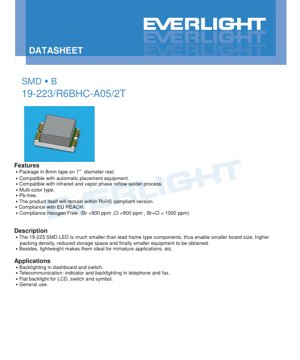
19-223 হল একটি কমপ্যাক্ট, সারফেস-মাউন্ট LED যা উচ্চ-ঘনত্বের ইলেকট্রনিক অ্যাসেম্বলির জন্য ডিজাইন করা হয়েছে। এটি একটি মাল্টি-কালার টাইপ, উজ্জ্বল লাল (R6 AlGaInP চিপ ব্যবহার করে) এবং নীল (BH InGaN চিপ ব্যবহার করে) নির্গত রঙে পাওয়া যায়, উভয়ই একটি ওয়াটার-ক্লিয়ার রজন প্যাকেজে আবদ্ধ। এর ছোট ফর্ম ফ্যাক্টর বোর্ডের আকার উল্লেখযোগ্যভাবে হ্রাস করে, প্যাকিং ঘনত্ব বাড়ায় এবং ছোট, হালকা শেষ সরঞ্জাম ডিজাইন করা সম্ভব করে, যা এটিকে মিনিয়েচার অ্যাপ্লিকেশনের জন্য আদর্শ করে তোলে।
1.1 মূল বৈশিষ্ট্য এবং সম্মতি
Key features include packaging on 8mm tape within 7-inch diameter reels for compatibility with automated placement equipment. The component is suitable for both infrared and vapor phase reflow soldering processes. It is a Pb-free product and is compliant with key environmental regulations including RoHS, EU REACH, and halogen-free standards (Br <900 ppm, Cl <900 ppm, Br+Cl < 1500 ppm).
1.2 লক্ষ্য অ্যাপ্লিকেশন
এই LED বহুমুখী এবং বিভিন্ন আলোকসজ্জা ও নির্দেশকের ভূমিকায় ব্যবহৃত হয়। প্রাথমিক অ্যাপ্লিকেশনগুলির মধ্যে রয়েছে ড্যাশবোর্ড, সুইচ এবং প্রতীকগুলির ব্যাকলাইটিং; টেলিফোন এবং ফ্যাক্স মেশিনের মতো টেলিযোগাযোগ ডিভাইসে নির্দেশক ও ব্যাকলাইটিং; LCD-এর জন্য ফ্ল্যাট ব্যাকলাইটিং; এবং সাধারণ-উদ্দেশ্য আলোকসজ্জা অ্যাপ্লিকেশন।
2. প্রযুক্তিগত প্যারামিটার: গভীর উদ্দেশ্যমূলক ব্যাখ্যা
2.1 Absolute Maximum Ratings
এই রেটিংগুলি সেই সীমা নির্ধারণ করে যার বাইরে ডিভাইসের স্থায়ী ক্ষতি হতে পারে। এগুলি 25°C পরিবেষ্টিত তাপমাত্রায় (Ta) নির্দিষ্ট করা হয়েছে।
- বিপরীত ভোল্টেজ (ভিআর): উভয় চিপ প্রকারের জন্য 5V। এটি অতিক্রম করলে জাংশন ব্রেকডাউন হতে পারে।
- সম্মুখ কারেন্ট (আইএফ): R6 (লাল): 25 mA (অবিরাম), BH (নীল): 20 mA (অবিরাম)।
- সর্বোচ্চ সম্মুখ প্রবাহ (IFP): 1/10 ডিউটি সাইকেল এবং 1kHz এ। R6: 50 mA, BH: 40 mA। এই রেটিংটি পালস অপারেশনের জন্য, অবিরাম DC এর জন্য নয়।
- ক্ষয়শক্তি (Pd): R6: 60 mW, BH: 75 mW. এটি প্যাকেজটি অপচয় করতে পারে এমন সর্বোচ্চ অনুমোদিত শক্তি, যা IF * VF হিসাবে গণনা করা হয়।
- Electrostatic Discharge (ESD) Human Body Model (HBM): R6: 2000V, BH: 150V. নীল (BH) চিপটি ESD-এর প্রতি উল্লেখযোগ্যভাবে বেশি সংবেদনশীল এবং আরও কঠোর হ্যান্ডলিং সতর্কতা প্রয়োজন।
- তাপমাত্রার পরিসীমা: অপারেটিং (Topr): -40°C থেকে +85°C। স্টোরেজ (Tstg): -40°C থেকে +90°C।
- সোল্ডারিং তাপমাত্রা: রিফ্লো: সর্বোচ্চ ১০ সেকেন্ডের জন্য ২৬০°সি সর্বোচ্চ তাপমাত্রা। হ্যান্ড সোল্ডারিং: সর্বোচ্চ ৩ সেকেন্ডের জন্য ৩৫০°সি।
2.2 Electro-Optical Characteristics
These are typical performance parameters measured at Ta=25°C and IF=20mA, unless otherwise stated. They define the light output and electrical behavior.
- Luminous Intensity (Iv): R6: 72.0 - 180.0 mcd. BH: 36.0 - 72.0 mcd. এটি অনুভূত উজ্জ্বলতার একটি পরিমাপ। বিস্তৃত পরিসর বিনিং-এর প্রয়োজনীয়তা নির্দেশ করে।
- Viewing Angle (2θ1/2): ১৩০ ডিগ্রি (সাধারণ)। এটি সেই কৌণিক বিস্তারকে সংজ্ঞায়িত করে যেখানে তীব্রতা সর্বোচ্চ মানের অন্তত অর্ধেক।
- সর্বোচ্চ তরঙ্গদৈর্ঘ্য (λp): R6: 632 nm (সাধারণ), BH: 468 nm (সাধারণ)। যে তরঙ্গদৈর্ঘ্যে বর্ণালী নির্গমন সবচেয়ে শক্তিশালী।
- প্রভাবশালী তরঙ্গদৈর্ঘ্য (λd): R6: 617.5 - 633.5 nm, BH: 464.5 - 476.5 nm। এটি আলোর অনুভূত রঙের সাথে সম্পর্কযুক্ত।
- বর্ণালী বিকিরণ ব্যান্ডউইডথ (Δλ): R6: 20 nm (সাধারণ), BH: 15 nm (সাধারণ)। সর্বোচ্চ তীব্রতার অর্ধেক বিন্দুতে বর্ণালী প্রস্থ।
- ফরওয়ার্ড ভোল্টেজ (ভিএফ): R6: 1.7V (ন্যূনতম), 2.0V (সাধারণ), 2.4V (সর্বোচ্চ)। BH: 2.7V (ন্যূনতম), 3.3V (সাধারণ), 3.7V (সর্বোচ্চ)। নির্দিষ্ট কারেন্টে পরিচালনার সময় LED-এর দুই প্রান্তে ভোল্টেজ ড্রপ।
- রিভার্স কারেন্ট (আইআর): VR=5V-এ পরিমাপ করা হয়েছে। R6: 10 μA (সর্বোচ্চ), BH: 50 μA (সর্বোচ্চ)।
সহনশীলতা: দীপ্তিমান তীব্রতা: ±11%, প্রাধান্য তরঙ্গদৈর্ঘ্য: ±1nm, সামনের ভোল্টেজ: ±0.1V।
3. Binning System Explanation
উৎপাদনে রঙ এবং উজ্জ্বলতার সামঞ্জস্য নিশ্চিত করতে, পরিমাপকৃত প্যারামিটারের ভিত্তিতে LED গুলিকে বিনে বিনে সাজানো হয়।
3.1 R6 (Red Chip) Binning
Luminous Intensity Bins (IF=20mA):
- Bin Q: 72.0 - 112.0 mcd
- Bin R: 112.0 - 180.0 mcd
- Bin E4: ৬১৭.৫ - ৬২১.৫ nm
- Bin E5: 621.5 - 625.5 nm
- Bin E6: 625.5 - 629.5 nm
- Bin E7: 629.5 - 633.5 nm
3.2 BH (Blue Chip) Binning
Luminous Intensity Bins (IF=20mA):
- Bin N2: 36.0 - 45.0 mcd
- Bin P1: 45.0 - 57.0 mcd
- Bin P2: 57.0 - 72.0 mcd
- Bin A9: 464.5 - 467.5 nm
- Bin A10: 467.5 - 470.5 nm
- Bin A11: 470.5 - 473.5 nm
- Bin A12: 473.5 - 476.5 nm
4. পারফরম্যান্স কার্ভ বিশ্লেষণ
The datasheet provides typical characteristic curves which are essential for understanding device behavior under non-standard conditions.
4.1 R6 (Red) Characteristics
বক্ররেখাগুলি সাধারণত দেখায়:
- Relative Luminous Intensity vs. Forward Current: দেখায় কিভাবে আলোর আউটপুট কারেন্টের সাথে বৃদ্ধি পায়, সাধারণত একটি অ-রৈখিক সম্পর্কে যা উচ্চতর কারেন্টে সম্পৃক্ত হয়।
- আপেক্ষিক দীপ্তিমান তীব্রতা বনাম পারিপার্শ্বিক তাপমাত্রা: তাপীয় নির্বাপন প্রভাব প্রদর্শন করে, যেখানে জাংশন তাপমাত্রা বৃদ্ধি পাওয়ার সাথে আলোর আউটপুট হ্রাস পায়।
- ফরওয়ার্ড ভোল্টেজ বনাম ফরওয়ার্ড কারেন্ট: ডায়োডের I-V বৈশিষ্ট্য বক্ররেখা প্রদর্শন করে।
- ফরওয়ার্ড ভোল্টেজ বনাম পারিপার্শ্বিক তাপমাত্রা: সামনের ভোল্টেজের নেতিবাচক তাপমাত্রা সহগ প্রদর্শন করে।
- সর্বোচ্চ তরঙ্গদৈর্ঘ্য বনাম পরিবেষ্টিত তাপমাত্রা: নির্দেশ করে কিভাবে নির্গত রঙ (তরঙ্গদৈর্ঘ্য) তাপমাত্রার সাথে পরিবর্তিত হয়।
4.2 BH (Blue) Characteristics
বক্ররেখাগুলো সাধারণত অন্তর্ভুক্ত করে:
- বর্ণালী বণ্টন: আপেক্ষিক তীব্রতা বনাম তরঙ্গদৈর্ঘ্যের একটি প্লট, যা প্রায় 468 nm-তে নির্গমন শিখর প্রদর্শন করে।
- ফরওয়ার্ড ভোল্টেজ বনাম ফরওয়ার্ড কারেন্ট: The I-V curve for the blue chip.
- Forward Current Derating Curve: Specifies the maximum allowable continuous forward current as a function of ambient temperature to stay within power dissipation limits.
- Radiation Diagram: একটি মেরু প্লট যা আলোর তীব্রতার স্থানিক বণ্টন (দেখার কোণ প্যাটার্ন) দেখায়।
- আপেক্ষিক দীপ্তিমান তীব্রতা বনাম পারিপার্শ্বিক তাপমাত্রা: তাপীয় কর্মক্ষমতা বক্ররেখা।
- Relative Luminous Intensity vs. Forward Current: দক্ষতা বক্ররেখা।
5. Mechanical and Package Information
5.1 Package Outline Dimensions
LED টি একটি সারফেস-মাউন্ট ডিভাইস। ডেটাশিটটিতে সমালোচনামূলক পরিমাপ সহ একটি বিস্তারিত মাত্রিক অঙ্কন (শীর্ষ, পার্শ্ব এবং নীচের দৃশ্য) প্রদান করা হয়েছে। মূল মাত্রাগুলির মধ্যে সাধারণত সামগ্রিক দৈর্ঘ্য, প্রস্থ এবং উচ্চতা, সেইসাথে সোল্ডার প্যাডের অবস্থান এবং মাত্রা অন্তর্ভুক্ত থাকে। অন্যথায় উল্লেখ না করা পর্যন্ত সমস্ত সহনশীলতা হল ±0.1mm। পরিমাপের একক হল মিলিমিটার (mm)।
5.2 পোলারিটি শনাক্তকরণ
ডিভাইসে ক্যাথোড সাধারণত চিহ্নিত করা থাকে, প্রায়শই প্যাকেজের নিচে একটি খাঁজ, একটি সবুজ বিন্দু বা একটি ভিন্ন রঙের প্যাড দ্বারা। ক্ষতি রোধ করতে সংযোজনকালে সঠিক পোলারিটি অবশ্যই মেনে চলতে হবে।
৬. সোল্ডারিং এবং অ্যাসেম্বলি নির্দেশিকা
৬.১ রিফ্লো সোল্ডারিং প্রোফাইল
একটি সীসা-মুক্ত রিফ্লো তাপমাত্রা প্রোফাইল সুপারিশ করা হয়:
- প্রি-হিটিং: ১৫০~২০০°C তাপমাত্রায় ৬০~১২০ সেকেন্ড।
- Time Above Liquidus (217°C): ৬০~১৫০ সেকেন্ড।
- সর্বোচ্চ তাপমাত্রা: সর্বোচ্চ 260°C।
- সর্বোচ্চ তাপমাত্রায় সময়: সর্বোচ্চ 10 সেকেন্ড।
- তাপমাত্রা বৃদ্ধির হার: সর্বোচ্চ 6°C/সেকেন্ড।
- 255°C-এর উপরে সময়: সর্বোচ্চ ৩০ সেকেন্ড।
- শীতলীকরণ হার: সর্বোচ্চ ৩°সেন্টিগ্রেড/সেকেন্ড।
6.2 সংরক্ষণ ও হ্যান্ডলিং সতর্কতা
Moisture Sensitivity: উপাদানগুলি একটি আর্দ্রতা-প্রতিরোধী ব্যাগে ডেসিক্যান্ট সহ প্যাকেজ করা হয়েছে।
- ব্যবহারের জন্য প্রস্তুত না হওয়া পর্যন্ত আর্দ্রতা-প্রতিরোধী ব্যাগটি খুলবেন না।
- খোলার পরে, অব্যবহৃত LED গুলি ≤30°C এবং ≤60% RH এ সংরক্ষণ করা উচিত।
- ব্যাগ খোলার পর "ফ্লোর লাইফ" ১৬৮ ঘন্টা (৭ দিন)।
- ফ্লোর লাইফ অতিক্রম করলে বা ডেসিক্যান্ট আর্দ্রতা নির্দেশ করলে, ব্যবহারের আগে ৬০ ±৫°সে তাপমাত্রায় ২৪ ঘন্টা বেকিং প্রয়োজন।
7. প্যাকেজিং এবং অর্ডার তথ্য
7.1 রিল এবং টেপ স্পেসিফিকেশন
LED গুলি উত্তল ক্যারিয়ার টেপে সরবরাহ করা হয়:
- ক্যারিয়ার টেপ প্রস্থ: 8 mm.
- Reel Diameter: 7 inches.
- Quantity per Reel: ২০০০ টুকরা।
7.2 লেবেলের ব্যাখ্যা
প্যাকেজিং লেবেলে বেশ কয়েকটি কোড অন্তর্ভুক্ত রয়েছে:
- CPN: গ্রাহকের পণ্য নম্বর।
- P/N: পণ্য নম্বর (যেমন, 19-223/R6BHC-A05/2T)।
- পরিমাণ: প্যাকিং পরিমাণ।
- CAT: Luminous Intensity Rank (Bin code).
- HUE: Chromaticity Coordinates & Dominant Wavelength Rank (Bin code).
- REF: Forward Voltage Rank.
- LOT No: ট্রেসেবিলিটির জন্য উৎপাদন লট নম্বর।
8. আবেদনের পরামর্শ এবং নকশা বিবেচ্য বিষয়
8.1 কারেন্ট লিমিটিং
ক্রিটিক্যাল: একটি বহিরাগত কারেন্ট-লিমিটিং রেজিস্টর বা কনস্ট্যান্ট-কারেন্ট ড্রাইভার অবশ্যই LED-এর সাথে সিরিজে ব্যবহৃত হবে। ফরওয়ার্ড ভোল্টেজের একটি নেতিবাচক তাপমাত্রা সহগ রয়েছে এবং একটি ছোট পরিবর্তন ফরওয়ার্ড কারেন্টে একটি বড়, সম্ভাব্য ধ্বংসাত্মক বৃদ্ধি ঘটাতে পারে। রোধের মান ওহমের সূত্র ব্যবহার করে গণনা করা যেতে পারে: R = (Vsupply - VF) / IF.
8.2 থার্মাল ম্যানেজমেন্ট
যদিও পাওয়ার ডিসিপেশন কম, সঠিক PCB লেআউট তাপ ব্যবস্থাপনায় সাহায্য করতে পারে। সোল্ডার প্যাডের চারপাশে পর্যাপ্ত তামার এলাকা নিশ্চিত করুন যা একটি হিট সিঙ্ক হিসেবে কাজ করবে, বিশেষ করে যদি সর্বোচ্চ রেটিংয়ের কাছাকাছি বা উচ্চ পরিবেষ্টিত তাপমাত্রায় পরিচালনা করা হয়। BH চিপের জন্য ডিরেটিং কার্ভ দেখুন।
8.3 অপটিক্যাল ডিজাইন
১৩০-ডিগ্রি দর্শন কোণ একটি প্রশিষ্ট বিম সরবরাহ করে। কেন্দ্রীভূত আলোর প্রয়োজন এমন প্রয়োগের জন্য, সেকেন্ডারি অপটিক্স (লেন্স) প্রয়োজন হতে পারে। ওয়াটার-ক্লিয়ার রজন সেইসব প্রয়োগের জন্য উপযুক্ত যেখানে LED রঙ নিজেই নির্দেশক। বিচ্ছুরিত বা রঙ-ছাঁকনি আউটপুটের জন্য, বাহ্যিক ডিফিউজার বা লেন্স বিবেচনা করা উচিত।
9. প্রযুক্তিগত তুলনা এবং পার্থক্য
এই উপাদানের প্রাথমিক সুবিধা হল এর ছোট এসএমডি ফুটপ্রিন্টের সাথে একই প্যাকেজ স্টাইলে দুটি স্বতন্ত্র, উচ্চ-কার্যকারী সেমিকন্ডাক্টর প্রযুক্তি (লালের জন্য AlGaInP এবং নীলের জন্য InGaN) এর প্রাপ্যতার সমন্বয়। এটি একাধিক রঙের প্রয়োজন এমন ডিজাইনের জন্য ক্রয় এবং সংযোজন সহজ করে। বড় থ্রু-হোল এলইডিগুলির তুলনায়, এটি উল্লেখযোগ্য স্থান সাশ্রয় এবং সম্পূর্ণ স্বয়ংক্রিয়, উচ্চ-গতির এসএমটি সংযোজন লাইনের সাথে সামঞ্জস্য প্রদান করে, উৎপাদন খরচ হ্রাস করে।
10. প্রায়শই জিজ্ঞাসিত প্রশ্নাবলী (প্রযুক্তিগত প্যারামিটার ভিত্তিক)
10.1 আমি কি একটি রেজিস্টর ছাড়া এই LED চালাতে পারি?
না। "ব্যবহারের সতর্কতা" বিভাগে এ বিষয়ে স্পষ্টভাবে সতর্ক করা হয়েছে। LED-এর সূচকীয় I-V বৈশিষ্ট্যের অর্থ হলো, যদি এটিকে সরাসরি এর ফরওয়ার্ড ভোল্টেজের চেয়ে বেশি ভোল্টেজের উৎসের সাথে সংযুক্ত করা হয়, তবে এটি একটি শর্ট সার্কিটের মতো আচরণ করে, যা তাৎক্ষণিক ওভারকারেন্ট এবং ব্যর্থতার দিকে নিয়ে যায়।
10.2 নীল LED-এর ESD রেটিং লাল LED-এর তুলনায় এত কম কেন?
InGaN-ভিত্তিক নীল এলইডির উপকরণ ও গঠন AlGaInP-ভিত্তিক লাল এলইডির তুলনায় স্বভাবতই ইলেক্ট্রোস্ট্যাটিক ডিসচার্জের প্রতি বেশি সংবেদনশীল। এটি সেমিকন্ডাক্টর প্রযুক্তির একটি মৌলিক বৈশিষ্ট্য। এর ফলে নীল প্রকারের জন্য কঠোরতর ইএসডি হ্যান্ডলিং পদ্ধতি প্রয়োজন হয়।
10.3 আমার ডিজাইনের জন্য বিন কোডগুলি (যেমন, R, E5, P2, A10) এর অর্থ কী?
যদি আপনার অ্যাপ্লিকেশনে কঠোর রঙ বা উজ্জ্বলতা সামঞ্জস্য প্রয়োজন হয় (যেমন, একটি মাল্টি-এলইডি অ্যারে বা ডিসপ্লেতে), অর্ডার করার সময় আপনাকে প্রয়োজনীয় বিন কোডগুলি নির্দিষ্ট করতে হবে। বিভিন্ন বিন মিশ্রিত করলে আপনার পণ্য জুড়ে রঙের আভা এবং তীব্রতায় দৃশ্যমান পার্থক্য দেখা দিতে পারে। কম গুরুত্বপূর্ণ নির্দেশক অ্যাপ্লিকেশনের জন্য, একটি বিস্তৃত বিন স্প্রেড গ্রহণযোগ্য হতে পারে।
10.4 "পিক" বনাম "প্রধান" তরঙ্গদৈর্ঘ্য কীভাবে ব্যাখ্যা করব?
Peak Wavelength (λp) হল সেই ভৌত তরঙ্গদৈর্ঘ্য যেখানে বর্ণালী শক্তি আউটপুট সর্বোচ্চ। Dominant Wavelength (λd) λd হল একরঙা আলোর তরঙ্গদৈর্ঘ্য যা মানুষের চোখে একই রঙ বলে মনে হবে। দৃশ্য প্রয়োগে রঙের স্পেসিফিকেশনের জন্য λd বেশি প্রাসঙ্গিক।
11. ব্যবহারিক নকশা ও ব্যবহারের উদাহরণ
দৃশ্যকল্প: একটি বহু-অবস্থা নির্দেশক প্যানেল নকশা করা। একটি কন্ট্রোল প্যানেলের জন্য "স্ট্যান্ডবাই," "অ্যাকটিভ," এবং "ফল্ট" অবস্থার জন্য পৃথক লাল এবং নীল সূচক প্রয়োজন। 19-223 সিরিজ ব্যবহার করে ডিজাইনার উভয় রঙের জন্য অভিন্ন ফুটপ্রিন্ট ব্যবহার করতে পারেন, যা PCB লেআউট সহজ করে। ডিজাইনার "ফল্ট" এর জন্য R6 চিপ (সামঞ্জস্যপূর্ণ লাল বর্ণের জন্য E5 বিনে বিন্যাস করা) এবং "অ্যাকটিভ" এর জন্য BH চিপ (সামঞ্জস্যপূর্ণ নীলের জন্য A10 বিনে বিন্যাস করা) নির্বাচন করেন। একটি 5V সরবরাহের জন্য একটি সাধারণ কারেন্ট-লিমিটিং রেজিস্টর মান গণনা করা হয়: লালের জন্য ~150Ω (IF=20mA, VF=2.0V) এবং নীলের জন্য ~85Ω (IF=20mA, VF=3.3V)। 130° এর প্রশস্ত দর্শন কোণ বিভিন্ন কোণ থেকে দৃশ্যমানতা নিশ্চিত করে। SMD প্যাকেজ প্যানেলকে খুব পাতলা হতে দেয়।
12. Principle Introduction
LED-তে আলো নির্গমন একটি সেমিকন্ডাক্টর p-n জাংশনে ইলেক্ট্রোলুমিনেসেন্সের উপর ভিত্তি করে। যখন একটি ফরওয়ার্ড ভোল্টেজ প্রয়োগ করা হয়, ইলেকট্রন এবং হোল সক্রিয় অঞ্চলে ইনজেক্ট করা হয় যেখানে তারা পুনর্মিলিত হয় এবং ফোটন (আলো) আকারে শক্তি মুক্ত করে। নির্গত আলোর রঙ (তরঙ্গদৈর্ঘ্য) সেমিকন্ডাক্টর উপাদানের ব্যান্ডগ্যাপ শক্তি দ্বারা নির্ধারিত হয়। R6 চিপটি একটি AlGaInP (Aluminum Gallium Indium Phosphide) কাঠামো ব্যবহার করে, যা লাল থেকে অ্যাম্বার আলো উৎপাদনের জন্য কার্যকর। BH চিপটি একটি InGaN (Indium Gallium Nitride) গঠন, যা নীল, সবুজ এবং সাদা (ফসফর সহ) আলো উৎপাদনের জন্য ব্যবহৃত হয়। বিভিন্ন উপাদান ব্যবস্থা তাদের ভিন্ন বৈদ্যুতিক বৈশিষ্ট্য (ফরওয়ার্ড ভোল্টেজ, ESD সংবেদনশীলতা) এবং অপটিক্যাল কর্মক্ষমতার জন্য দায়ী।
13. Development Trends
LED প্রযুক্তির সাধারণ প্রবণতা, যেখানে 19-223 এর মতো উপাদানগুলি অন্তর্ভুক্ত, তা হল উচ্চতর দক্ষতা (ওয়াট প্রতি আরও লুমেন), ছোট প্যাকেজে বর্ধিত শক্তি ঘনত্ব এবং উন্নত বর্ণ প্রদর্শন ও সামঞ্জস্যের দিকে। বিভিন্ন পরিবেশগত চাপের অধীনে নির্ভরযোগ্যতা ও দীর্ঘায়ু বৃদ্ধির উপরও জোর দেওয়া হচ্ছে। ভোক্তা ইলেকট্রনিক্সে ক্ষুদ্রীকরণের চাহিদা অপটিক্যাল আউটপুট বজায় রেখে বা উন্নত করে ক্রমাগত ছোট SMD LED ফুটপ্রিন্টের দিকে ধাবিত করছে। তদুপরি, স্মার্ট নিয়ন্ত্রণের সাথে একীকরণ এবং বিশেষায়িত তরঙ্গদৈর্ঘ্যের (যেমন, উদ্যানপালন বা সেন্সিংয়ের জন্য) LED-এর উন্নয়ন অগ্রগতির সক্রিয় ক্ষেত্র। পরিবেশগত মান (RoHS, Halogen-Free) এর সাথে সম্মতি এখন বৈশ্বিক বাজার প্রবেশের একটি মৌলিক প্রয়োজনীয়তা।
LED স্পেসিফিকেশন পরিভাষা
Complete explanation of LED technical terms
Photoelectric Performance
| টার্ম | ইউনিট/প্রতিনিধিত্ব | সরল ব্যাখ্যা | কেন গুরুত্বপূর্ণ |
|---|---|---|---|
| Luminous Efficacy | lm/W (lumens per watt) | প্রতি ওয়াট বিদ্যুতের জন্য আলোর আউটপুট, যত বেশি হবে শক্তি তত বেশি দক্ষ। | সরাসরি শক্তি দক্ষতা গ্রেড এবং বিদ্যুতের খরচ নির্ধারণ করে। |
| আলোক প্রবাহ | lm (lumens) | উৎস থেকে নির্গত মোট আলো, যা সাধারণত "উজ্জ্বলতা" নামে পরিচিত। | আলোটি যথেষ্ট উজ্জ্বল কিনা তা নির্ধারণ করে। |
| Viewing Angle | ° (ডিগ্রি), উদাহরণস্বরূপ, ১২০° | যে কোণে আলোর তীব্রতা অর্ধেকে নেমে আসে, তা বিমের প্রস্থ নির্ধারণ করে। | আলোকিত পরিসর এবং সমতা প্রভাবিত করে। |
| CCT (কালার টেম্পারেচার) | K (কেলভিন), উদাহরণস্বরূপ, 2700K/6500K | আলোর উষ্ণতা/শীতলতা, কম মান হলুদাভ/উষ্ণ, বেশি মান সাদাটে/শীতল। | আলোকসজ্জার পরিবেশ এবং উপযুক্ত পরিস্থিতি নির্ধারণ করে। |
| CRI / Ra | এককহীন, ০–১০০ | বস্তুর রং সঠিকভাবে উপস্থাপনের ক্ষমতা, Ra≥৮০ ভালো। | রঙের সত্যতা প্রভাবিত করে, মল, যাদুঘরের মতো উচ্চ চাহিদার স্থানে ব্যবহৃত হয়। |
| SDCM | MacAdam ellipse steps, e.g., "5-step" | Color consistency metric, smaller steps mean more consistent color. | Ensures uniform color across same batch of LEDs. |
| Dominant Wavelength | nm (nanometers), e.g., 620nm (red) | রঙিন LED-এর রঙের সাথে সম্পর্কিত তরঙ্গদৈর্ঘ্য। | লাল, হলুদ, সবুজ একরঙা LED-এর বর্ণচ্ছটা নির্ধারণ করে। |
| Spectral Distribution | Wavelength vs intensity curve | Shows intensity distribution across wavelengths. | রঙের রেন্ডারিং এবং গুণমানকে প্রভাবিত করে। |
Electrical Parameters
| টার্ম | Symbol | সরল ব্যাখ্যা | Design Considerations |
|---|---|---|---|
| Forward Voltage | Vf | LED চালু করার জন্য সর্বনিম্ন ভোল্টেজ, যেমন "শুরুর থ্রেশহোল্ড"। | ড্রাইভার ভোল্টেজ অবশ্যই ≥Vf হতে হবে, সিরিজে সংযুক্ত LED-গুলির জন্য ভোল্টেজ যোগ হয়। |
| ফরওয়ার্ড কারেন্ট | If | সাধারণ LED অপারেশনের জন্য বর্তমান মান। | Usually constant current drive, current determines brightness & lifespan. |
| Max Pulse Current | Ifp | স্বল্প সময়ের জন্য সহনীয় সর্বোচ্চ কারেন্ট, ডিমিং বা ফ্ল্যাশিংয়ের জন্য ব্যবহৃত। | Pulse width & duty cycle অবশ্যই be strictly controlled to avoid damage. |
| Reverse Voltage | Vr | সর্বোচ্চ বিপরীত ভোল্টেজ যা LED সহ্য করতে পারে, তার বেশি হলে ব্রেকডাউন হতে পারে। | সার্কিটকে অবশ্যই বিপরীত সংযোগ বা ভোল্টেজ স্পাইক প্রতিরোধ করতে হবে। |
| তাপীয় রোধ | Rth (°C/W) | চিপ থেকে সোল্ডারে তাপ স্থানান্তরের বিরোধিতা, যত কম হবে তত ভালো। | উচ্চ তাপীয় প্রতিরোধের জন্য শক্তিশালী তাপ অপসারণ প্রয়োজন। |
| ESD Immunity | V (HBM), উদাহরণস্বরূপ, 1000V | ইলেক্ট্রোস্ট্যাটিক ডিসচার্জ সহ্য করার ক্ষমতা, মান যত বেশি হবে, ক্ষতিগ্রস্ত হওয়ার সম্ভাবনা তত কম। | উৎপাদন প্রক্রিয়ায়, বিশেষত সংবেদনশীল LED-এর জন্য, অ্যান্টি-স্ট্যাটিক ব্যবস্থা প্রয়োজন। |
Thermal Management & Reliability
| টার্ম | মূল মেট্রিক | সরল ব্যাখ্যা | প্রভাব |
|---|---|---|---|
| জাংশন তাপমাত্রা | Tj (°C) | LED চিপের ভিতরের প্রকৃত অপারেটিং তাপমাত্রা। | প্রতি 10°C হ্রাস আয়ু দ্বিগুণ করতে পারে; খুব বেশি হলে আলোর ক্ষয়, রঙের পরিবর্তন ঘটায়। |
| লুমেন অবমূল্যায়ন | L70 / L80 (ঘন্টা) | প্রাথমিক উজ্জ্বলতার 70% বা 80% এ নামতে প্রয়োজনীয় সময়। | সরাসরি LED-এর "সার্ভিস লাইফ" নির্ধারণ করে। |
| Lumen Maintenance | % (e.g., 70%) | সময়ের পর বজায় রাখা উজ্জ্বলতার শতাংশ। | দীর্ঘমেয়াদী ব্যবহারে উজ্জ্বলতা ধরে রাখার হার নির্দেশ করে। |
| রঙের পরিবর্তন | Δu′v′ বা ম্যাকঅ্যাডাম উপবৃত্ত | ব্যবহারের সময় রঙ পরিবর্তনের মাত্রা। | আলোক দৃশ্যে রঙের সামঞ্জস্যকে প্রভাবিত করে। |
| Thermal Aging | উপাদান অবনতি | দীর্ঘমেয়াদী উচ্চ তাপমাত্রার কারণে অবনতি। | উজ্জ্বলতা হ্রাস, রঙের পরিবর্তন বা ওপেন-সার্কিট ব্যর্থতার কারণ হতে পারে। |
Packaging & Materials
| টার্ম | সাধারণ প্রকার | সরল ব্যাখ্যা | Features & Applications |
|---|---|---|---|
| প্যাকেজ প্রকার | EMC, PPA, Ceramic | হাউজিং উপাদান চিপ রক্ষা করে, অপটিক্যাল/থার্মাল ইন্টারফেস প্রদান করে। | EMC: ভাল তাপ প্রতিরোধ, কম খরচ; Ceramic: ভাল তাপ অপসারণ, দীর্ঘ জীবনকাল। |
| চিপ কাঠামো | ফ্রন্ট, ফ্লিপ চিপ | চিপ ইলেক্ট্রোড বিন্যাস। | ফ্লিপ চিপ: উন্নত তাপ অপসারণ, উচ্চতর কার্যকারিতা, উচ্চ-শক্তির জন্য। |
| Phosphor Coating | YAG, সিলিকেট, নাইট্রাইড | নীল চিপ ঢেকে রাখে, কিছুকে হলুদ/লালে রূপান্তরিত করে, সাদাতে মিশ্রিত করে। | বিভিন্ন ফসফর কার্যকারিতা, CCT, এবং CRI কে প্রভাবিত করে। |
| লেন্স/অপটিক্স | ফ্ল্যাট, মাইক্রোলেন্স, TIR | পৃষ্ঠের আলোক কাঠামো যা আলোর বণ্টন নিয়ন্ত্রণ করে। | দর্শন কোণ এবং আলোক বণ্টন বক্ররেখা নির্ধারণ করে। |
Quality Control & Binning
| টার্ম | বিনিং বিষয়বস্তু | সরল ব্যাখ্যা | উদ্দেশ্য |
|---|---|---|---|
| আলোক প্রবাহ বিন | কোড যেমন, 2G, 2H | উজ্জ্বলতা অনুসারে গ্রুপ করা, প্রতিটি গ্রুপের ন্যূনতম/সর্বোচ্চ লুমেন মান রয়েছে। | একই ব্যাচে অভিন্ন উজ্জ্বলতা নিশ্চিত করে। |
| Voltage Bin | কোড উদাহরণস্বরূপ, 6W, 6X | ফরওয়ার্ড ভোল্টেজ রেঞ্জ অনুসারে গোষ্ঠীবদ্ধ। | ড্রাইভার ম্যাচিং সহজতর করে, সিস্টেমের দক্ষতা উন্নত করে। |
| Color Bin | 5-step MacAdam ellipse | রঙের স্থানাঙ্ক অনুযায়ী গ্রুপ করা হয়েছে, যাতে সীমা সংকীর্ণ থাকে। | রঙের সামঞ্জস্য নিশ্চিত করে, ফিক্সচারের ভিতরে অসম রঙ এড়ায়। |
| CCT Bin | 2700K, 3000K ইত্যাদি। | CCT অনুসারে গ্রুপ করা, প্রতিটির নিজস্ব সংশ্লিষ্ট স্থানাঙ্ক পরিসীমা রয়েছে। | বিভিন্ন দৃশ্যের CCT প্রয়োজনীয়তা পূরণ করে। |
Testing & Certification
| টার্ম | Standard/Test | সরল ব্যাখ্যা | তাৎপর্য |
|---|---|---|---|
| LM-80 | লুমেন রক্ষণাবেক্ষণ পরীক্ষা | ধ্রুব তাপমাত্রায় দীর্ঘমেয়াদী আলোকসজ্জা, উজ্জ্বলতা ক্ষয় রেকর্ড করা। | LED জীবন অনুমান করতে ব্যবহৃত (TM-21 সহ)। |
| TM-21 | জীবন অনুমান মান | LM-80 তথ্যের ভিত্তিতে প্রকৃত অবস্থার অধীনে জীবন অনুমান করে। | বৈজ্ঞানিক জীবন পূর্বাভাস প্রদান করে। |
| IESNA | Illuminating Engineering Society | অপটিক্যাল, বৈদ্যুতিক, তাপীয় পরীক্ষা পদ্ধতি কভার করে। | শিল্প-স্বীকৃত পরীক্ষার ভিত্তি। |
| RoHS / REACH | পরিবেশগত সার্টিফিকেশন | ক্ষতিকর পদার্থ (সীসা, পারদ) নেই তা নিশ্চিত করে। | আন্তর্জাতিকভাবে বাজার প্রবেশের প্রয়োজনীয়তা। |
| ENERGY STAR / DLC | শক্তি দক্ষতা প্রত্যয়ন | আলোকসজ্জার জন্য শক্তি দক্ষতা এবং কর্মক্ষমতা সার্টিফিকেশন। | সরকারি ক্রয়, ভর্তুকি কর্মসূচিতে ব্যবহৃত হয়, প্রতিযোগিতামূলকতা বৃদ্ধি করে। |