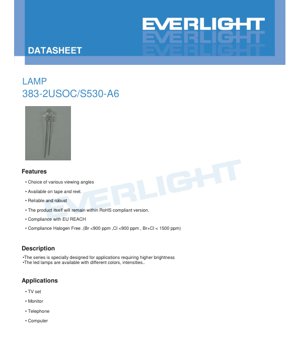
1. उत्पाद अवलोकन
यह दस्तावेज़ उच्च-चमक वाले एलईडी लैंप के विनिर्देशों का विवरण देता है, जिसे श्रेष्ठ प्रकाश उत्पादन की आवश्यकता वाले अनुप्रयोगों के लिए डिज़ाइन किया गया है। यह उपकरण सूर्यास्त-नारंगी रंग उत्पन्न करने के लिए एक AlGaInP (एल्यूमीनियम गैलियम इंडियम फॉस्फाइड) चिप का उपयोग करता है, जिसे पानी-साफ रेजिन पैकेज में संलग्न किया गया है। इसका प्राथमिक डिज़ाइन लक्ष्य एक कॉम्पैक्ट आकार में विश्वसनीय और मजबूत प्रदर्शन प्रदान करना है।
1.1 मुख्य लाभ और लक्षित बाजार
यह श्रृंखला विभिन्न अनुप्रयोग आवश्यकताओं के अनुरूप विभिन्न देखने के कोणों का विकल्प प्रदान करती है और स्वचालित असेंबली प्रक्रियाओं के लिए टेप और रील पर उपलब्ध है, जिससे उत्पादन दक्षता बढ़ती है। इसे विश्वसनीय और मजबूत होने के लिए डिज़ाइन किया गया है, जो सुसंगत प्रदर्शन सुनिश्चित करता है। यह उत्पाद प्रमुख पर्यावरणीय नियमों का अनुपालन करता है, जिसमें EU RoHS (रेस्ट्रिक्शन ऑफ हैजर्डस सब्सटेंसेज) निर्देश, EU REACH (रजिस्ट्रेशन, इवैल्यूएशन, ऑथराइजेशन एंड रेस्ट्रिक्शन ऑफ केमिकल्स) विनियम शामिल हैं, और हैलोजन-मुक्त है, जिसमें ब्रोमीन (Br) और क्लोरीन (Cl) की मात्रा को क्रमशः 900 ppm और संयुक्त रूप से 1500 ppm से कड़ाई से नियंत्रित किया गया है।
इस एलईडी के लक्षित अनुप्रयोग मुख्य रूप से उपभोक्ता इलेक्ट्रॉनिक्स और डिस्प्ले बैकलाइटिंग में हैं, जिसमें टेलीविज़न सेट, कंप्यूटर मॉनिटर, टेलीफोन और सामान्य कंप्यूटर संकेतक अनुप्रयोग शामिल हैं जहाँ एक विशिष्ट, चमकीला नारंगी संकेत आवश्यक है।
2. Technical Parameter Deep Dive
2.1 Absolute Maximum Ratings
ये रेटिंग उन सीमाओं को परिभाषित करती हैं जिनके परे डिवाइस को स्थायी क्षति हो सकती है। इन स्थितियों में या उनके नीचे संचालन की गारंटी नहीं है और विश्वसनीय दीर्घकालिक प्रदर्शन के लिए इससे बचना चाहिए।
- Continuous Forward Current (IF): 25 mA. यह अधिकतम DC धारा है जो LED पर लगातार लागू की जा सकती है।
- Peak Forward Current (IFP): 160 mA. यह अधिकतम स्पंदित धारा है, जो 1 kHz आवृत्ति पर 1/10 ड्यूटी साइकिल के तहत लागू होती है।
- रिवर्स वोल्टेज (VR): 5 V. रिवर्स बायस में इस वोल्टेज से अधिक होने पर LED जंक्शन क्षतिग्रस्त हो सकता है।
- इलेक्ट्रोस्टैटिक डिस्चार्ज (ESD) ह्यूमन बॉडी मॉडल: 2000 V. यह एलईडी की स्थिर विद्युत के प्रति संवेदनशीलता को दर्शाता है; उचित ईएसडी हैंडलिंग सावधानियां आवश्यक हैं।
- पावर डिसिपेशन (Pd): 60 mW. पैकेज द्वारा अपनी थर्मल सीमाओं को पार किए बिना व्यय की जा सकने वाली अधिकतम शक्ति।
- ऑपरेटिंग तापमान (Topr): -40°C से +85°C. वह परिवेश तापमान सीमा जिसमें उपकरण के कार्य करने के लिए डिज़ाइन किया गया है।
- Storage Temperature (Tstg): -40°C से +100°C. गैर-परिचालन भंडारण के लिए तापमान सीमा।
- Soldering Temperature (Tsol): 260°C for 5 seconds. The maximum temperature and time the leads can withstand during wave or reflow soldering.
2.2 Electro-Optical Characteristics
ये मापदंड 25°C के परिवेश तापमान (Ta) और 20 mA की अग्र धारा (IF) की एक मानक परीक्षण स्थिति पर मापे जाते हैं, जब तक कि अन्यथा निर्दिष्ट न किया गया हो। ये LED के विशिष्ट प्रदर्शन को परिभाषित करते हैं।
- Luminous Intensity (Iv): 6300 mcd (Min), 8000 mcd (Typ). यह एक विशिष्ट दिशा में LED की अनुभूत चमक का माप है। मापन अनिश्चितता ±10% है।
- देखने का कोण (2θ1/2): 6° (Typ). यह वह पूर्ण कोण है जिस पर दीप्त तीव्रता, 0° (अक्ष पर) की तीव्रता से आधी होती है। 6° का कोण एक बहुत संकीर्ण, केंद्रित प्रकाश पुंज को दर्शाता है।
- शिखर तरंगदैर्ध्य (λp): 621 nm (Typ). वह तरंगदैर्ध्य जिस पर प्रकाशिक आउटपुट शक्ति अधिकतम होती है।
- प्रमुख तरंगदैर्ध्य (λd): 615 nm (Typ). वह एकल तरंगदैर्ध्य जिसे मानव आँख द्वारा अनुभव किया जाता है और जो LED के रंग से मेल खाती है। अनिश्चितता ±1.0 nm है।
- स्पेक्ट्रम विकिरण बैंडविड्थ (Δλ): 18 nm (Typ). वह तरंगदैर्ध्य सीमा जहाँ विकिरण शक्ति शिखर शक्ति की कम से कम आधी होती है, जो वर्णक्रमीय शुद्धता को दर्शाती है।
- Forward Voltage (VF): 2.0 V (Typ), 2.4 V (Max). निर्दिष्ट धारा पर संचालित होने पर LED के सिरों पर वोल्टेज पात। अनिश्चितता ±0.1 V है।
- रिवर्स करंट (IR): 10 μA (Max). निर्दिष्ट रिवर्स वोल्टेज (5V) लगाने पर बहने वाली छोटी लीकेज करंट।
3. Performance Curve Analysis
डेटाशीट कई विशेषता वक्र प्रदान करती है जो दर्शाते हैं कि प्रमुख पैरामीटर कैसे संचालन स्थितियों के साथ बदलते हैं। ये सर्किट डिजाइन और थर्मल प्रबंधन के लिए आवश्यक हैं।
3.1 Spectral Distribution and Directivity
The Relative Intensity vs. Wavelength वक्र 621 nm के आसपास केंद्रित एक तीक्ष्ण शिखर दर्शाता है, जो नारंगी रंग के उत्सर्जन की पुष्टि करता है। Directivity वक्र दृष्टिगत रूप से अत्यंत संकीर्ण 6° दृश्य कोण को दर्शाता है, जो दिखाता है कि अक्ष से हटने पर तीव्रता कितनी तेजी से कम होती है, जो केंद्रित संकेतक अनुप्रयोगों के लिए आदर्श है।
3.2 विद्युत और तापीय निर्भरताएँ
The फॉरवर्ड करंट बनाम फॉरवर्ड वोल्टेज (IV कर्व) एक डायोड की विशिष्ट घातांकीय संबंध दर्शाता है। 20 mA पर, वोल्टेज लगभग 2.0V होता है। Relative Intensity vs. Forward Current वक्र दर्शाता है कि अधिकतम रेटेड निरंतर धारा तक प्रकाश उत्पादन धारा के साथ रैखिक रूप से बढ़ता है।
The Relative Intensity vs. Ambient Temperature curve is critical for thermal design. It shows that luminous output decreases as the ambient temperature rises. For example, at 85°C, the output may be only 50-60% of its value at 25°C. Conversely, the Forward Current vs. Ambient Temperature curve (likely under constant voltage) would show how current changes with temperature, important for designing constant-current drivers to maintain stable brightness.
4. Mechanical and Package Information
4.1 Package Dimensions
LED एक मानक 3mm गोल पैकेज में रखा गया है, जिसे अक्सर "T-1" आकार कहा जाता है। विस्तृत आयाम चित्र लेंस का व्यास, लीड स्पेसिंग, लीड व्यास और समग्र ऊंचाई निर्दिष्ट करता है। एक महत्वपूर्ण नोट निर्दिष्ट करता है कि फ्लैंज (गुंबद के आधार पर रिम) की ऊंचाई 1.5mm (0.059") से कम होनी चाहिए। सभी आयाम मिलीमीटर में हैं, जब तक कि अन्यथा घोषित न किया गया हो, ±0.25mm की मानक सहनशीलता के साथ। सटीक आयाम PCB फुटप्रिंट डिजाइन और आवासों में उचित फिट सुनिश्चित करने के लिए महत्वपूर्ण हैं।
4.2 ध्रुवता पहचान
LED में दो लीड होते हैं: एनोड (धनात्मक) और कैथोड (ऋणात्मक)। आमतौर पर, कैथोड को प्लास्टिक लेंस रिम पर एक सपाट स्थान या छोटी लीड द्वारा पहचाना जाता है। रिवर्स इंस्टॉलेशन को रोकने के लिए इस विशिष्ट पार्ट नंबर के लिए सटीक ध्रुवता चिह्न की पुष्टि करने के लिए डेटाशीट आरेख से परामर्श लेना चाहिए।
5. Soldering and Assembly Guidelines
उचित हैंडलिंग क्षति को रोकने और विश्वसनीयता सुनिश्चित करने के लिए आवश्यक है।
5.1 Lead Forming
- सील पर तनाव से बचने के लिए एपॉक्सी बल्ब के आधार से कम से कम 3 मिमी दूर बेंडिंग की जानी चाहिए।
- फॉर्मिंग किया जाना चाहिए पहले सोल्डरिंग.
- पैकेज पर तनाव से बचें। गलत संरेखित PCB छिद्र जो सम्मिलन के दौरान लीड्स पर ज़बरदस्ती करते हैं, दरारें या क्षति का कारण बन सकते हैं।
- लीड्स को कमरे के तापमान पर काटें।
5.2 सोल्डरिंग प्रक्रिया
हाथ से सोल्डरिंग: आयरन टिप का तापमान 300°C से अधिक नहीं होना चाहिए (अधिकतम 30W आयरन के लिए), और प्रति लीड सोल्डरिंग समय अधिकतम 3 सेकंड होना चाहिए। सोल्डर जॉइंट से एपॉक्सी बल्ब तक न्यूनतम 3mm की दूरी बनाए रखें।
वेव (DIP) सोल्डरिंग: प्रीहीट तापमान अधिकतम 60 सेकंड के लिए 100°C से अधिक नहीं होना चाहिए। सोल्डर बाथ का तापमान अधिकतम 260°C होना चाहिए और ड्वेल टाइम 5 सेकंड होना चाहिए। फिर से, जॉइंट से बल्ब तक 3mm की दूरी बनाए रखें।
एक अनुशंसित सोल्डरिंग प्रोफाइल ग्राफ आम तौर पर एक क्रमिक प्रीहीट रैंप, 260°C पर एक संक्षिप्त शिखर और एक नियंत्रित कूलिंग ढलान दिखाएगा। तेजी से ठंडा करने की अनुशंसा नहीं की जाती है। डिप या हैंड सोल्डरिंग एक से अधिक बार नहीं की जानी चाहिए।
5.3 भंडारण और सफाई
भंडारण: LEDs को ≤30°C और ≤70% सापेक्ष आर्द्रता पर संग्रहित किया जाना चाहिए। शिपिंग के बाद शेल्फ लाइफ 3 महीने है। लंबे समय तक भंडारण (1 वर्ष तक) के लिए, नाइट्रोजन वातावरण और डिसिकेंट के साथ एक सीलबंद कंटेनर का उपयोग करें। संक्षेपण को रोकने के लिए आर्द्र वातावरण में तापमान में तेजी से बदलाव से बचें।
सफाई: आवश्यकता होने पर, केवल कमरे के तापमान पर आइसोप्रोपिल अल्कोहल से अधिकतम एक मिनट तक सफाई करें। अल्ट्रासोनिक सफाई का उपयोग तभी करें जब बिल्कुल आवश्यक हो और केवल प्री-क्वालिफिकेशन के बाद, क्योंकि इससे आंतरिक क्षति हो सकती है।
6. Heat Management Principle
हालांकि यह एक उच्च-शक्ति एलईडी नहीं है, फिर भी ऊष्मा प्रबंधन एक महत्वपूर्ण डिज़ाइन विचार है। अग्र वोल्टेज और धारा ऊष्मा उत्पन्न करते हैं (शक्ति = Vf * If)। यह ऊष्मा, यदि विसरित नहीं की जाती है, तो एलईडी के अंदर जंक्शन तापमान बढ़ा देती है। प्रदर्शन वक्रों में दिखाए गए अनुसार, उच्च जंक्शन तापमान सीधे प्रकाश उत्पादन (दीप्त तीव्रता) को कम करता है और दीर्घकालिक क्षरण को तेज कर सकता है, जिससे एलईडी का जीवनकाल कम हो जाता है। इसलिए, अनुप्रयोग डिज़ाइन चरण के दौरान, एलईडी लीड से पीसीबी और संभवतः एक हीटसिंक तक के ऊष्मीय पथ पर विचार किया जाना चाहिए, खासकर यदि अधिकतम निरंतर धारा के निकट या उच्च परिवेश तापमान में संचालित किया जा रहा हो। 60mW की शक्ति क्षय रेटिंग पैकेज की सीमा है; इसे पार करने से जंक्शन तापमान सुरक्षित सीमा से अधिक हो जाएगा।
7. Packaging and Ordering Information
7.1 Packing Specification
एलईडी को ESD से बचाने के लिए एंटी-स्टैटिक बैग में पैक किया जाता है। पैकिंग पदानुक्रम इस प्रकार है:
1. Reel/Bag: प्रति एंटी-स्टैटिक बैग न्यूनतम 200 से 500 टुकड़े।
2. आंतरिक कार्टन: प्रति आंतरिक कार्टन 6 बैग।
3. मास्टर/बाहरी कार्टन: 10 इनर कार्टन प्रति मास्टर कार्टन।
7.2 लेबल स्पष्टीकरण
पैकेजिंग पर लेबल में कई कोड होते हैं:
- CPN: Customer's Part Number.
- P/N: Manufacturer's Part Number (e.g., 383-2USOC/S530-A6).
- QTY: पैकेज में टुकड़ों की संख्या।
- CAT: Luminous Intensity (Iv) के लिए रैंक या बिन।
- HUE: प्रमुख तरंगदैर्ध्य (λd) के लिए रैंक या बिन।
- REF: फॉरवर्ड वोल्टेज (Vf) के लिए रैंक या बिन।
- LOT No: Traceable manufacturing lot number.
8. Application Suggestions and Design Considerations
8.1 Typical Application Circuits
स्थिर चमक के लिए इस LED को एक स्थिर धारा स्रोत द्वारा संचालित किया जाना चाहिए। कम-धारा अनुप्रयोगों के लिए एक साधारण श्रृंखला रोकनेवाला आम है। रोकनेवाला मान (R) की गणना R = (Vsupply - Vf) / If के रूप में की जाती है। उदाहरण के लिए, 5V आपूर्ति, 2.0V का Vf, और 20mA के वांछित If के साथ: R = (5 - 2.0) / 0.02 = 150 Ω। रोकनेवाला की शक्ति रेटिंग कम से कम (5-2.0)*0.02 = 0.06W होनी चाहिए, इसलिए एक 1/8W या 1/4W रोकनेवाला पर्याप्त है। तापमान या आपूर्ति वोल्टेज भिन्नताओं पर स्थिर चमक की आवश्यकता वाले अनुप्रयोगों के लिए, एक समर्पित LED ड्राइवर IC की सिफारिश की जाती है।
8.2 Design Considerations
- देखने का कोण: 6° का संकीर्ण कोण इसे पैनल संकेतकों के लिए उपयुक्त बनाता है जहां प्रकाश सीधे दर्शक की ओर निर्देशित होना चाहिए, न कि विस्तृत क्षेत्र प्रकाश व्यवस्था के लिए।
- करंट लिमिटिंग: हमेशा करंट लिमिटिंग रेसिस्टर या सर्किट का उपयोग करें। सीधे वोल्टेज स्रोत से जोड़ने पर अत्यधिक करंट प्रवाहित होगा, जिससे LED नष्ट हो जाएगी।
- PCB Layout: सुनिश्चित करें कि PCB फुटप्रिंट डेटाशीट के आयामों और पोलैरिटी से मेल खाता है। लीड्स के आसपास पर्याप्त कॉपर क्षेत्र उपलब्ध कराएं ताकि यह एक मामूली हीटसिंक का कार्य कर सके।
- ESD सुरक्षा: यदि LED उपयोगकर्ता-सुलभ है, तो इनपुट लाइनों पर ESD सुरक्षा लागू करें, और असेंबली के दौरान ESD-सुरक्षित हैंडलिंग प्रक्रियाओं का पालन करें।
9. Technology Introduction and Differentiation
9.1 AlGaInP Chip Technology
यह एलईडी AlGaInP (एल्यूमीनियम गैलियम इंडियम फॉस्फाइड) अर्धचालक सामग्री का उपयोग करती है। यह सामग्री प्रणाली एम्बर, नारंगी, लाल और पीले-हरे स्पेक्ट्रम में प्रकाश उत्पन्न करने के लिए अत्यधिक कुशल है। GaAsP (गैलियम आर्सेनाइड फॉस्फाइड) जैसी पुरानी तकनीकों की तुलना में, AlGaInP एलईडी किसी दिए गए करंट के लिए काफी अधिक चमक और दक्षता प्रदान करती है, यही कारण है कि यह भाग केवल 20mA पर 8000 mcd प्राप्त कर सकता है। फैलाव या रंगीन लेंस के विपरीत, वाटर-क्लियर रेजिन लेंस प्रकाश निष्कर्षण को अधिकतम करता है, जिससे उच्च दीप्त तीव्रता में योगदान होता है।
9.2 Differentiation from Similar Products
इस विशिष्ट LED की प्रमुख विशिष्टताएं इसकी हैं अत्यधिक उच्च दीप्त तीव्रता (8000 mcd) एक मानक 20mA ड्राइव करंट पर और इसकी बहुत संकीर्ण दृश्य कोण (6°). कई मानक 3mm नारंगी एलईडी की तीव्रता 100-1000 एमसीडी सीमा में और व्यापक कोण (15-30°) के साथ हो सकती है। यह इसे एक विशेषज्ञ घटक बनाता है, उन अनुप्रयोगों के लिए जहाँ एक छोटे स्रोत से अत्यधिक दृश्यमान, केंद्रित नारंगी प्रकाश किरण की आवश्यकता होती है, जैसे कि पेशेवर उपकरण पर एक उच्च-चमक स्थिति संकेतक या एक सटीक ऑप्टिकल सेंसर ट्रिगर।
10. अक्सर पूछे जाने वाले प्रश्न (तकनीकी मापदंडों के आधार पर)
Q1: क्या मैं इस LED को लगातार 25mA पर चला सकता हूँ?
A1: हाँ, 25mA Absolute Maximum Continuous Forward Current है। इष्टतम दीर्घायु और वास्तविक थर्मल परिस्थितियों को ध्यान में रखते हुए, 20mA के सामान्य परीक्षण करंट पर या उससे थोड़ा नीचे संचालन करने की सिफारिश की जाती है।
Q2: चमकदार तीव्रता आम तौर पर 8000 mcd है। मेरा मापन अलग क्यों है?
A2: डेटाशीट ±10% मापन अनिश्चितता निर्दिष्ट करती है। इसके अलावा, तीव्रता विशिष्ट स्थितियों (20mA, 25°C) के तहत मापी जाती है जब फोटोडिटेक्टर अक्षीय स्थिति (0°) में रखा जाता है। करंट, तापमान या मापन कोण (विशेष रूप से 6° बीम के साथ महत्वपूर्ण) में कोई भी विचलन एक अलग रीडिंग का परिणाम देगा।
Q3: CAT, HUE और REF बिन का क्या अर्थ है?
A3: निर्माण भिन्नताओं के कारण, एलईडी को उत्पादन के बाद छांटा (बिन किया) जाता है। CAT समान प्रकाशीय तीव्रता के आधार पर एलईडी को समूहित करता है (उदाहरणार्थ, 7000-8000 mcd, 8000-9000 mcd)। HUE प्रमुख तरंगदैर्ध्य के आधार पर समूहित करता है (उदाहरणार्थ, 613-617 nm)। REF समूहों को फॉरवर्ड वोल्टेज के आधार पर वर्गीकृत किया जाता है (उदाहरण के लिए, 1.9-2.1V)। ऐसे अनुप्रयोगों के लिए जिनमें रंग या चमक की एकरूपता की आवश्यकता होती है, एक संकीर्ण बिन के भीतर निर्दिष्ट करना या खरीदना महत्वपूर्ण है।
Q4: 2000V ESD रेटिंग की व्याख्या कैसे करें?
A4: 2000V HBM (Human Body Model) रेटिंग एक LED के लिए अपेक्षाकृत मजबूत मानी जाती है, लेकिन फिर भी बुनियादी ESD सावधानियों की आवश्यकता होती है। इसका मतलब है कि डिवाइस आम तौर पर मानव मॉडल से 2000V डिस्चार्ज को झेल सकता है। हमेशा ग्राउंडेड सतहों पर हैंडल करें, कलाई पट्टियों का उपयोग करें, और एंटी-स्टैटिक सामग्री में पैकेज करें।
LED विनिर्देशन शब्दावली
LED तकनीकी शब्दों की पूर्ण व्याख्या
प्रकाशविद्युत प्रदर्शन
| पद | इकाई/प्रतिनिधित्व | सरल व्याख्या | महत्वपूर्ण क्यों |
|---|---|---|---|
| प्रकाशीय प्रभावकारिता | lm/W (लुमेन प्रति वाट) | विद्युत के प्रति वाट प्रकाश उत्पादन, उच्च मान का अर्थ है अधिक ऊर्जा कुशल। | सीधे ऊर्जा दक्षता ग्रेड और बिजली लागत निर्धारित करता है। |
| Luminous Flux | lm (lumens) | स्रोत द्वारा उत्सर्जित कुल प्रकाश, जिसे आमतौर पर "चमक" कहा जाता है। | यह निर्धारित करता है कि प्रकाश पर्याप्त चमकीला है या नहीं। |
| देखने का कोण | ° (डिग्री), उदाहरण के लिए, 120° | वह कोण जहाँ प्रकाश की तीव्रता आधी हो जाती है, बीम की चौड़ाई निर्धारित करता है। | प्रकाशन सीमा और एकरूपता को प्रभावित करता है। |
| CCT (Color Temperature) | K (केल्विन), उदाहरणार्थ, 2700K/6500K | प्रकाश की गर्माहट/ठंडक, कम मान पीलेपन/गर्म, अधिक मान सफेदी/ठंडे। | प्रकाश वातावरण और उपयुक्त परिदृश्य निर्धारित करता है। |
| CRI / Ra | Unitless, 0–100 | वस्तुओं के रंगों को सटीकता से प्रस्तुत करने की क्षमता, Ra≥80 अच्छा माना जाता है। | रंग की प्रामाणिकता को प्रभावित करता है, मॉल, संग्रहालय जैसे उच्च मांग वाले स्थानों में प्रयोग किया जाता है। |
| SDCM | MacAdam ellipse steps, e.g., "5-step" | Color consistency metric, smaller steps mean more consistent color. | एक ही बैच के एलईडी में समान रंग सुनिश्चित करता है। |
| प्रमुख तरंगदैर्ध्य | nm (nanometers), jaise ki, 620nm (laal) | Rangin LEDs ke rang ke anuroop taldherav. | Laal, peele, hare ekrang LEDs ke rang ka hue nirdhaarit karta hai. |
| स्पेक्ट्रम वितरण | तरंगदैर्ध्य बनाम तीव्रता वक्र | तरंगदैर्ध्यों में तीव्रता वितरण दर्शाता है। | रंग प्रतिपादन और गुणवत्ता को प्रभावित करता है। |
Electrical Parameters
| पद | प्रतीक | सरल व्याख्या | डिज़ाइन विचार |
|---|---|---|---|
| Forward Voltage | Vf | Minimum voltage to turn on LED, like "starting threshold". | ड्राइवर वोल्टेज ≥Vf होना चाहिए, श्रृंखला एलईडी के लिए वोल्टेज जुड़ते हैं। |
| Forward Current | यदि | सामान्य एलईडी संचालन के लिए वर्तमान मान। | Usually constant current drive, current determines brightness & lifespan. |
| अधिकतम स्पंद धारा | Ifp | छोटी अवधि के लिए सहन योग्य शिखर धारा, जिसका उपयोग मंद प्रकाश या चमक के लिए किया जाता है। | Pulse width & duty cycle must be strictly controlled to avoid damage. |
| Reverse Voltage | Vr | अधिकतम रिवर्स वोल्टेज जिसे LED सहन कर सकता है, इससे अधिक होने पर ब्रेकडाउन हो सकता है। | सर्किट को रिवर्स कनेक्शन या वोल्टेज स्पाइक्स को रोकना चाहिए। |
| Thermal Resistance | Rth (°C/W) | चिप से सोल्डर तक ऊष्मा स्थानांतरण के लिए प्रतिरोध, जितना कम उतना बेहतर। | उच्च तापीय प्रतिरोध के लिए अधिक मजबूत ऊष्मा अपव्यय की आवश्यकता होती है। |
| ESD Immunity | V (HBM), e.g., 1000V | Ability to withstand electrostatic discharge, higher means less vulnerable. | उत्पादन में एंटी-स्टैटिक उपायों की आवश्यकता, विशेष रूप से संवेदनशील एलईडी के लिए। |
Thermal Management & Reliability
| पद | Key Metric | सरल व्याख्या | Impact |
|---|---|---|---|
| Junction Temperature | Tj (°C) | एलईडी चिप के अंदर का वास्तविक संचालन तापमान। | प्रत्येक 10°C कमी जीवनकाल को दोगुना कर सकती है; बहुत अधिक तापमान प्रकाश क्षय और रंग परिवर्तन का कारण बनता है। |
| Lumen Depreciation | L70 / L80 (hours) | प्रारंभिक चमक के 70% या 80% तक गिरने में लगने वाला समय। | सीधे तौर पर LED "service life" को परिभाषित करता है। |
| ल्यूमेन रखरखाव | % (e.g., 70%) | समय के बाद बची हुई चमक का प्रतिशत। | दीर्घकालिक उपयोग में चमक की अवधारणा को दर्शाता है। |
| Color Shift | Δu′v′ या मैकएडम दीर्घवृत्त | उपयोग के दौरान रंग परिवर्तन की डिग्री। | प्रकाश व्यवस्था के दृश्यों में रंग स्थिरता को प्रभावित करता है। |
| Thermal Aging | Material degradation | दीर्घकालिक उच्च तापमान के कारण ह्रास। | चमक में कमी, रंग परिवर्तन, या ओपन-सर्किट विफलता का कारण बन सकता है। |
Packaging & Materials
| पद | सामान्य प्रकार | सरल व्याख्या | Features & Applications |
|---|---|---|---|
| पैकेज प्रकार | EMC, PPA, Ceramic | हाउसिंग सामग्री चिप की सुरक्षा करती है, प्रकाशीय/तापीय इंटरफेस प्रदान करती है। | EMC: अच्छी हीट रेजिस्टेंस, कम लागत; सिरेमिक: बेहतर हीट डिसिपेशन, लंबी लाइफ। |
| Chip Structure | Front, Flip Chip | Chip electrode arrangement. | Flip chip: better heat dissipation, higher efficacy, for high-power. |
| फॉस्फर कोटिंग | YAG, सिलिकेट, नाइट्राइड | नीले चिप को कवर करता है, कुछ को पीले/लाल में बदलता है, सफेद में मिलाता है। | विभिन्न फॉस्फर प्रभावकारिता, CCT, और CRI को प्रभावित करते हैं। |
| Lens/Optics | फ्लैट, माइक्रोलेंस, TIR | सतह पर प्रकाश वितरण को नियंत्रित करने वाली प्रकाशीय संरचना। | देखने के कोण और प्रकाश वितरण वक्र निर्धारित करता है। |
Quality Control & Binning
| पद | Binning Content | सरल व्याख्या | उद्देश्य |
|---|---|---|---|
| Luminous Flux Bin | Code e.g., 2G, 2H | Grouped by brightness, each group has min/max lumen values. | Ensures uniform brightness in same batch. |
| Voltage Bin | Code e.g., 6W, 6X | फॉरवर्ड वोल्टेज रेंज के अनुसार समूहीकृत। | ड्राइवर मिलान में सहायता करता है, सिस्टम दक्षता में सुधार करता है। |
| Color Bin | 5-step MacAdam ellipse | रंग निर्देशांकों के आधार पर समूहीकृत, सुनिश्चित करता है कि सीमा सघन हो। | रंग स्थिरता की गारंटी देता है, फिक्स्चर के भीतर असमान रंग से बचाता है। |
| CCT Bin | 2700K, 3000K आदि। | CCT के अनुसार समूहीकृत, प्रत्येक की संबंधित निर्देशांक सीमा होती है। | विभिन्न दृश्य CCT आवश्यकताओं को पूरा करता है। |
Testing & Certification
| पद | Standard/Test | सरल व्याख्या | महत्व |
|---|---|---|---|
| LM-80 | लुमेन रखरखाव परीक्षण | स्थिर तापमान पर दीर्घकालिक प्रकाश व्यवस्था, चमक क्षय का रिकॉर्डिंग। | LED जीवन का अनुमान लगाने के लिए उपयोग किया जाता है (TM-21 के साथ)। |
| TM-21 | जीवन अनुमान मानक | LM-80 डेटा के आधार पर वास्तविक परिस्थितियों में जीवन का अनुमान लगाता है। | वैज्ञानिक जीवन पूर्वानुमान प्रदान करता है। |
| IESNA | Illuminating Engineering Society | प्रकाशिक, विद्युत, तापीय परीक्षण विधियों को शामिल करता है। | उद्योग-मान्यता प्राप्त परीक्षण आधार। |
| RoHS / REACH | पर्यावरण प्रमाणन | हानिकारक पदार्थों (सीसा, पारा) की अनुपस्थिति सुनिश्चित करता है। | अंतरराष्ट्रीय स्तर पर बाजार पहुंच आवश्यकता। |
| ENERGY STAR / DLC | Energy efficiency certification | Energy efficiency and performance certification for lighting. | Used in government procurement, subsidy programs, enhances competitiveness. |