विषय सूची
- 1. उत्पाद अवलोकन
- 1.1 मुख्य लाभ
- 1.2 Target Market & Applications
- 2. In-Depth Technical Parameter Analysis
- 2.1 Absolute Maximum Ratings
- 2.2 इलेक्ट्रो-ऑप्टिकल विशेषताएँ (Ta=25°C)
- 3. प्रदर्शन वक्र विश्लेषण
- 3.1 Relative Intensity vs. Wavelength
- 3.2 Directivity Pattern
- 3.3 फॉरवर्ड करंट बनाम फॉरवर्ड वोल्टेज (I-V कर्व)
- 3.4 Relative Intensity vs. Forward Current
- 3.5 Temperature Dependence Curves
- 4. Mechanical & Package Information
- 4.1 पैकेज आयाम
- 4.2 ध्रुवीयता पहचान
- 5. Soldering & Assembly Guidelines
- 5.1 Lead Forming
- 5.2 सोल्डरिंग प्रक्रिया
- 5.3 अनुशंसित सोल्डरिंग प्रोफाइल
- 5.4 सफ़ाई
- 5.5 भंडारण की स्थितियाँ
- 6. Thermal & Electrical Management
- 6.1 हीट प्रबंधन
- 6.2 ESD (इलेक्ट्रोस्टैटिक डिस्चार्ज) संवेदनशीलता
- 7. Packaging & Ordering Information
- 7.1 पैकिंग विशिष्टता
- 7.2 लेबल स्पष्टीकरण
- 8. एप्लिकेशन डिज़ाइन विचार
- 8.1 सर्किट डिज़ाइन
- 8.2 PCB लेआउट
- 8.3 ऑप्टिकल इंटीग्रेशन
- 9. Technical Comparison & Differentiation
- 10. अक्सर पूछे जाने वाले प्रश्न (FAQ)
- 11. डिज़ाइन-इन केस स्टडी उदाहरण
- 12. प्रौद्योगिकी सिद्धांत परिचय
- 13. Industry Trends & Context
1. उत्पाद अवलोकन
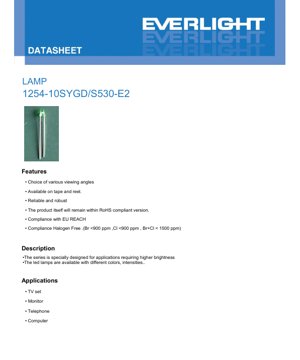
1254-10SYGD/S530-E2 एक उच्च-चमक वाला एलईडी लैंप है जो श्रेष्ठ प्रकाशमान आउटपुट की आवश्यकता वाले अनुप्रयोगों के लिए डिज़ाइन किया गया है। यह उपकरण AlGaInP चिप तकनीक का उपयोग करके हरे फैलाव वाले रेजिन पैकेज के साथ एक शानदार पीले-हरे प्रकाश का उत्पादन करता है। यह विश्वसनीयता और मजबूती के लिए इंजीनियर किया गया है, जिससे यह विभिन्न इलेक्ट्रॉनिक डिस्प्ले और संकेतक अनुप्रयोगों के लिए उपयुक्त है।
1.1 मुख्य लाभ
- उच्च चमक: विशेष रूप से उच्च प्रकाशीय तीव्रता की मांग वाले अनुप्रयोगों के लिए डिज़ाइन किया गया।
- अनुपालन: The product complies with RoHS, EU REACH, and is Halogen Free (Br <900 ppm, Cl <900 ppm, Br+Cl < 1500 ppm).
- पैकेजिंग विकल्प: स्वचालित असेंबली प्रक्रियाओं के लिए टेप और रील पर उपलब्ध।
- देखने का कोण विकल्प: विभिन्न अनुप्रयोग आवश्यकताओं के अनुरूप विभिन्न देखने के कोणों के साथ पेश किया गया।
1.2 Target Market & Applications
यह एलईडी उपभोक्ता इलेक्ट्रॉनिक्स और कंप्यूटिंग उद्योगों के लिए लक्षित है। इसके प्राथमिक अनुप्रयोगों में निम्नलिखित में बैकलाइटिंग और स्थिति संकेत शामिल हैं:
- टेलीविज़न सेट
- कंप्यूटर मॉनिटर
- टेलीफोन
- पर्सनल कंप्यूटर
2. In-Depth Technical Parameter Analysis
यह खंड डेटाशीट में निर्दिष्ट प्रमुख तकनीकी मापदंडों की विस्तृत, वस्तुनिष्ठ व्याख्या प्रदान करता है।
2.1 Absolute Maximum Ratings
ये रेटिंग उन सीमाओं को परिभाषित करती हैं जिनके परे डिवाइस को स्थायी क्षति हो सकती है। इन स्थितियों में संचालन की गारंटी नहीं है।
- Continuous Forward Current (IF): 25 mA. यह अधिकतम DC धारा है जो लगातार लागू की जा सकती है।
- Peak Forward Current (IFP): 60 mA (Duty 1/10 @ 1kHz). Pulsed operation के लिए उपयुक्त।
- Reverse Voltage (VR): 5 V. Reverse bias में इस वोल्टेज से अधिक होने पर junction breakdown हो सकता है।
- Power Dissipation (Pd): 60 mW. Ta=25°C पर पैकेज द्वारा अवशोषित की जा सकने वाली अधिकतम शक्ति।
- Operating & Storage Temperature: क्रमशः -40°C से +85°C और -40°C से +100°C, पर्यावरणीय सीमाओं को परिभाषित करते हुए।
- Soldering Temperature (Tsol): 260°C for 5 seconds, specifying the reflow soldering profile tolerance.
2.2 इलेक्ट्रो-ऑप्टिकल विशेषताएँ (Ta=25°C)
ये मानक परीक्षण स्थितियों (IF=20mA) के तहत मापे गए विशिष्ट प्रदर्शन पैरामीटर हैं।
- दीप्त तीव्रता (Iv): 40 (न्यूनतम), 63 (विशिष्ट) mcd। यह अनुभव की गई चमक को मात्रात्मक रूप से व्यक्त करता है। डिज़ाइन में ±10% मापन अनिश्चितता पर विचार किया जाना चाहिए।
- Viewing Angle (2θ1/2): 40° (Typ). This is the full angle at which the luminous intensity drops to half its peak value, defining the beam spread.
- Dominant Wavelength (λd): 573 nm (Typ). यह मानव आँख द्वारा अनुभव की जाने वाली एकल तरंगदैर्ध्य है, जो पीले-हरे रंग को परिभाषित करती है। मापन अनिश्चितता ±1.0nm है।
- Peak Wavelength (λp): 575 nm (Typ). वह तरंगदैर्ध्य जिस पर स्पेक्ट्रल पावर वितरण अधिकतम होता है।
- Forward Voltage (VF): 1.7 (Min), 2.0 (Typ), 2.4 (Max) V. 20mA पर LED के पार वोल्टेज ड्रॉप। Max V के आधार पर सर्किट डिज़ाइन में करंट-लिमिटिंग रेसिस्टर आवश्यक है।F.
- Reverse Current (IR): 10 μA (Max) at VR=5V.
3. प्रदर्शन वक्र विश्लेषण
डेटाशीट कई विशेषता वक्र प्रदान करती है जो गैर-मानक स्थितियों में डिवाइस व्यवहार को समझने के लिए महत्वपूर्ण हैं।
3.1 Relative Intensity vs. Wavelength
यह वक्र उत्सर्जित प्रकाश के स्पेक्ट्रम वितरण को दर्शाता है, जो 575nm के आसपास केंद्रित है और इसकी विशिष्ट स्पेक्ट्रम बैंडविड्थ (Δλ) 20nm है। यह AlGaInP चिप की एकवर्णी प्रकृति की पुष्टि करता है।
3.2 Directivity Pattern
ध्रुवीय आरेख प्रकाश के स्थानिक वितरण को दर्शाता है, जो 40° के दृश्य कोण से संबंधित है। यह एक विशिष्ट लैम्बर्टियन या निकट-लैम्बर्टियन उत्सर्जन पैटर्न दिखाता है जो विसरित लेंस एलईडी के लिए सामान्य है।
3.3 फॉरवर्ड करंट बनाम फॉरवर्ड वोल्टेज (I-V कर्व)
यह घातांकीय वक्र ड्राइवर डिजाइन के लिए मौलिक है। यह लगाए गए वोल्टेज और परिणामी धारा के बीच संबंध दर्शाता है। "नी" वोल्टेज लगभग 1.8V-2.0V होता है, जिसके बाद छोटी वोल्टेज वृद्धि के साथ धारा तेजी से बढ़ती है, जो वोल्टेज नियंत्रण नहीं बल्कि धारा नियंत्रण की आवश्यकता को रेखांकित करता है।
3.4 Relative Intensity vs. Forward Current
यह वक्र ड्राइव करंट और प्रकाश उत्पादन के बीच सुपर-रैखिक संबंध को प्रदर्शित करता है। जबकि करंट बढ़ाने से चमक बढ़ती है, यह जंक्शन तापमान भी बढ़ाता है और यदि अधिकतम रेटिंग्स से अधिक हो जाता है तो लुमेन ह्रास को तेज कर सकता है।
3.5 Temperature Dependence Curves
Relative Intensity vs. Ambient Temperature: Shows the light output decreasing as ambient temperature (Ta) rises. This thermal derating is critical for applications in high-temperature environments.
Forward Current vs. Ambient Temperature: स्थिर वोल्टेज बायस के तहत, एक डायोड के लिए फॉरवर्ड करंट आमतौर पर तापमान के साथ बढ़ता है। यह वक्र संभवतः किसी पैरामीटर को बनाए रखने के लिए आवश्यक करंट समायोजन दर्शाता है, जो थर्मल प्रबंधन के महत्व पर जोर देता है।
4. Mechanical & Package Information
4.1 पैकेज आयाम
एलईडी में एक मानक 5mm गोल रेडियल लीडेड पैकेज है। प्रमुख आयामों में शामिल हैं:
- कुल व्यास: 5.0mm (नाममात्र)।
- लीड स्पेसिंग: 2.54mm (मानक 0.1-इंच पिच).
- कुल ऊंचाई सीमित है, और फ्लैंज ऊंचाई 1.5mm से कम निर्दिष्ट की गई है.
- आयामों के लिए मानक सहनशीलता ±0.25mm है, जब तक कि अन्यथा निर्दिष्ट न किया गया हो.
यांत्रिक चित्र PCB फुटप्रिंट डिजाइन के लिए आवश्यक है, जो उचित फिट और संरेखण सुनिश्चित करता है।
4.2 ध्रुवीयता पहचान
कैथोड आमतौर पर लेंस रिम पर एक सपाट स्थान या एक छोटी लीड द्वारा पहचाना जाता है। असेंबली के दौरान सही अभिविन्यास सुनिश्चित करने के लिए इस मॉडल पर उपयोग किए गए विशिष्ट मार्कर के लिए डेटाशीट ड्राइंग से परामर्श लेना चाहिए।
5. Soldering & Assembly Guidelines
विश्वसनीयता के लिए उचित हैंडलिंग महत्वपूर्ण है। डेटाशीट विस्तृत निर्देश प्रदान करती है।
5.1 Lead Forming
- सील पर तनाव से बचने के लिए एपॉक्सी बल्ब बेस से कम से कम 3 मिमी दूर झुकाना होगा।
- फॉर्मिंग कमरे के तापमान पर, सोल्डरिंग से पहले की जानी चाहिए। पहले सोल्डरिंग, कमरे के तापमान पर।
- PCB होल संरेखण सटीक होना चाहिए ताकि माउंटिंग स्ट्रेस से बचा जा सके।
5.2 सोल्डरिंग प्रक्रिया
Hand Soldering: आयरन टिप तापमान ≤300°C (अधिकतम 30W), समय ≤3 सेकंड प्रति लीड। सोल्डर जॉइंट से एपॉक्सी बल्ब तक ≥3mm दूरी बनाए रखें।
वेव/डीआईपी सोल्डरिंग: प्रीहीट ≤100°C (≤60 सेकंड)। सोल्डर बाथ ≤260°C पर ≤5 सेकंड के लिए। सोल्डर जॉइंट से एपॉक्सी बल्ब तक ≥3mm दूरी बनाए रखें।
सामान्य नियम: उच्च तापमान पर लीड्स पर तनाव से बचें। एक से अधिक बार सोल्डर न करें। झटके/कंपन से सुरक्षित रखते हुए, कमरे के तापमान पर धीरे-धीरे ठंडा होने दें। सबसे कम प्रभावी तापमान का उपयोग करें।
5.3 अनुशंसित सोल्डरिंग प्रोफाइल
एक ग्राफिकल प्रोफाइल प्रदान की गई है, जो आमतौर पर एक क्रमिक प्रीहीट, लिक्विडस (जैसे, 260°C) से ऊपर एक निर्धारित समय और एक नियंत्रित कूलिंग दर दिखाती है। इस प्रोफाइल का पालन थर्मल शॉक को रोकता है।
5.4 सफ़ाई
यदि आवश्यक हो, तो केवल कमरे के तापमान पर आइसोप्रोपाइल अल्कोहल से ≤1 मिनट के लिए साफ करें। जब तक पूर्व-योग्यता प्राप्त न हो, अल्ट्रासोनिक सफाई का उपयोग न करें, क्योंकि यह आंतरिक संरचना को नुकसान पहुंचा सकती है।
5.5 भंडारण की स्थितियाँ
≤30°C और ≤70% सापेक्ष आर्द्रता पर भंडारित करें। शिपिंग के बाद शेल्फ लाइफ 3 महीने है। लंबे समय तक भंडारण (1 वर्ष तक) के लिए, नाइट्रोजन वातावरण और डेसिकेंट के साथ एक सीलबंद कंटेनर का उपयोग करें। संक्षेपण को रोकने के लिए आर्द्र वातावरण में तापमान में तेजी से बदलाव से बचें।
6. Thermal & Electrical Management
6.1 हीट प्रबंधन
LED performance and lifetime are strongly temperature-dependent. Design must consider:
- Current Derating: The operating current should be reduced appropriately at higher ambient temperatures, as indicated by derating curves (implied in the datasheet notes).
- Ambient Control: अंतिम अनुप्रयोग में एलईडी के आसपास के तापमान का प्रबंधन किया जाना चाहिए, जो अक्सर पीसीबी लेआउट, हीटसिंकिंग या एयरफ्लो के माध्यम से किया जाता है।
6.2 ESD (इलेक्ट्रोस्टैटिक डिस्चार्ज) संवेदनशीलता
एलईडी चिप इलेक्ट्रोस्टैटिक डिस्चार्ज और सर्ज वोल्टेज के प्रति संवेदनशील है। हैंडलिंग और असेंबली के दौरान मानक ESD सावधानियों का पालन किया जाना चाहिए, जैसे कि ग्राउंडेड वर्कस्टेशन और कलाई पट्टियों का उपयोग करना।
7. Packaging & Ordering Information
7.1 पैकिंग विशिष्टता
एलईडी को नमी प्रतिरोध और इलेक्ट्रोस्टैटिक और विद्युत चुम्बकीय क्षेत्रों से सुरक्षा सुनिश्चित करने के लिए पैक किया गया है।
- प्राथमिक पैकिंग: एंटी-इलेक्ट्रोस्टैटिक बैग।
- द्वितीयक पैकिंग: 4 बैग वाला आंतरिक कार्टन.
- तृतीयक पैकेजिंग: 10 आंतरिक कार्टन वाला बाहरी कार्टन.
- पैकिंग मात्रा: प्रति बैग न्यूनतम 200 से 1000 टुकड़े। मानक बाहरी कार्टन में 40 बैग होते हैं (बैग की संख्या के आधार पर 8,000 से 40,000 टुकड़े)।
7.2 लेबल स्पष्टीकरण
पैकिंग लेबल में ट्रेसबिलिटी और बिनिंग के लिए कई कोड शामिल हैं:
- CPN: Customer's Production Number.
- P/N: Manufacturer's Production Number (1254-10SYGD/S530-E2).
- QTY: पैकेज में मात्रा।
- CAT: रैंक्स ऑफ ल्यूमिनस इंटेंसिटी (ब्राइटनेस बिन)।
- HUE: प्रमुख तरंगदैर्ध्य की श्रेणियाँ (रंग बिन).
- REF: अग्र वोल्टेज की श्रेणियाँ (वोल्टेज बिन).
- LOT No: Manufacturing lot number for traceability.
8. एप्लिकेशन डिज़ाइन विचार
8.1 सर्किट डिज़ाइन
हमेशा एक श्रृंखला करंट-लिमिटिंग रेसिस्टर का उपयोग करें। रेसिस्टर मान (R) की गणना इस प्रकार करें: R = (Vsupply - वीF) / मैंF. अधिकतम V का उपयोग करेंF डेटाशीट (2.4V) से यह सुनिश्चित करने के लिए कि सबसे खराब स्थितियों में भी धारा सीमा से अधिक न हो। 5V आपूर्ति और 20mA लक्ष्य के लिए: R = (5V - 2.4V) / 0.02A = 130Ω। सुरक्षा के अंतर के लिए अगले मानक मान (जैसे, 150Ω) का उपयोग करें।
8.2 PCB लेआउट
सुनिश्चित करें कि छेदों के बीच की दूरी 2.54mm लीड स्पेसिंग से मेल खाती है। यदि उच्च धाराओं या निरंतर संचालन की अपेक्षा है, तो गर्मी के नष्ट होने में सहायता के लिए लीड्स के चारों ओर पर्याप्त तांबे का क्षेत्र या थर्मल रिलीफ प्रदान करें।
8.3 ऑप्टिकल इंटीग्रेशन
40° का व्यूइंग एंगल और डिफ्यूज्ड लेंस एक विस्तृत, मृदु प्रकाश पैटर्न प्रदान करते हैं जो पैनल संकेतकों के लिए उपयुक्त है। केंद्रित प्रकाश व्यवस्था के लिए, बाहरी ऑप्टिक्स की आवश्यकता हो सकती है। हरा डिफ्यूज्ड रेजिन एक समान रंग उपस्थिति प्राप्त करने में सहायता करता है।
9. Technical Comparison & Differentiation
जबकि विशिष्ट प्रतिस्पर्धी डेटा प्रदान नहीं किया गया है, इस भाग के प्रमुख विभेदक, इसके डेटाशीट के आधार पर, शामिल हैं:
- सामग्री प्रौद्योगिकी: AlGaInP अर्धचालक सामग्री का उपयोग, जो पीले, नारंगी, लाल और हरे तरंगदैर्ध्य उत्पन्न करने के लिए अत्यधिक कुशल है, अक्सर इन रंगों के लिए पुरानी प्रौद्योगिकियों की तुलना में उच्च चमक और दक्षता प्रदान करता है।
- अनुपालन: आधुनिक पर्यावरणीय नियमों (RoHS, REACH, हैलोजन-मुक्त) के साथ व्यापक अनुपालन वैश्विक बाजारों, विशेष रूप से यूरोप को लक्षित करने वाले उत्पादों के लिए एक महत्वपूर्ण लाभ है।
- Robust Specifications: स्पष्ट पूर्ण अधिकतम रेटिंग्स और विस्तृत हैंडलिंग/सोल्डरिंग दिशानिर्देश, कम विस्तृत दस्तावेज़ीकरण वाले पुर्जों की तुलना में उच्च असेंबली उपज और फ़ील्ड विश्वसनीयता में योगदान करते हैं।
10. अक्सर पूछे जाने वाले प्रश्न (FAQ)
Q1: क्या मैं इस LED को लगातार 25mA पर चला सकता हूँ?
A1: निरंतर अग्र धारा के लिए Absolute Maximum Rating 25mA है। विश्वसनीय दीर्घकालिक संचालन के लिए, इस मान को कम करके (derate) प्रयोग करना मानक प्रथा है। इष्टतम जीवनकाल और स्थिरता के लिए विशिष्ट 20mA स्थिति पर संचालन की सिफारिश की जाती है।
Q2: दीप्त तीव्रता 40-63 mcd है। यह सीमा क्यों है?
A2: यह सीमा निर्माण भिन्नता को दर्शाती है। एलईडी को आमतौर पर चमक बिन (लेबल पर "CAT") में वर्गीकृत किया जाता है। किसी अनुप्रयोग में एकसमान चमक के लिए, एक ही बिन से एलईडी निर्दिष्ट करें या चुनें।
Q3: क्या हीटसिंक की आवश्यकता है?
A3: मध्यम परिवेश के तापमान में 20mA पर संचालन के लिए, एकल एलईडी के लिए आमतौर पर समर्पित हीटसिंक की आवश्यकता नहीं होती है। हालांकि, पीसीबी स्तर (कॉपर पैड) पर थर्मल प्रबंधन एक अच्छी प्रथा है। ऐरे, उच्च धाराओं, या उच्च परिवेश के तापमान के लिए, थर्मल विश्लेषण आवश्यक है।
Q4: क्या मैं इसे बाहरी अनुप्रयोगों के लिए उपयोग कर सकता हूं?
A4: ऑपरेटिंग तापमान सीमा -40°C तक फैली हुई है, जो कई बाहरी वातावरणों के लिए उपयुक्त है। हालांकि, पैकेज विशेष रूप से वॉटरप्रूफिंग या यूवी प्रतिरोध के लिए रेटेड नहीं है। सीधे बाहरी संपर्क के लिए, अतिरिक्त पर्यावरणीय सुरक्षा (कन्फॉर्मल कोटिंग, एन्क्लोजर) की आवश्यकता होगी।
11. डिज़ाइन-इन केस स्टडी उदाहरण
Scenario: एक नेटवर्क राउटर के लिए एक स्टेटस इंडिकेटर पैनल डिजाइन करना।
Requirement: लिंक गतिविधि और पावर स्थिति दिखाने के लिए कई पीले-हरे एलईडी।
डिज़ाइन चरण:
1. वर्तमान सेटिंग: प्रत्येक एलईडी के लिए 15mA ड्राइव करंट चुनें ताकि अच्छी दृश्यता सुनिश्चित हो सके और 25mA अधिकतम सीमा से नीचे मार्जिन मिल सके, जिससे दीर्घायु बढ़े।
2. सर्किट गणना: 3.3V सिस्टम रेल और अधिकतम V के उपयोग के साथF=2.4V: R = (3.3V - 2.4V) / 0.015A = 60Ω. 62Ω 5% प्रतिरोधक का उपयोग करें।
3. PCB डिज़ाइन: LED को 2.54mm ग्रिड पर रखें। लीड्स के लिए छोटे थर्मल रिलीफ पैड का उपयोग करें। रूटिंग को सरल बनाने के लिए LED को समूहित करें।
4. असेंबली: निर्दिष्ट वेव सोल्डरिंग प्रोफाइल (260°C, अधिकतम 5s) का पालन करें। एपॉक्सी बल्ब के 3mm के भीतर सोल्डर विकिंग न होने का ध्यान रखें।
5. परिणाम: एक विश्वसनीय, लगातार चमकदार संकेतक पैनल जिसका रंग एक समान है, जो बड़े पैमाने पर उत्पादन के लिए उपयुक्त है।
12. प्रौद्योगिकी सिद्धांत परिचय
यह एलईडी एक एलगैलिनपी (एल्यूमीनियम गैलियम इंडियम फॉस्फाइड) अर्धचालक चिप पर आधारित है। जब अग्र वोल्टेज लगाया जाता है, तो इलेक्ट्रॉन और होल पीएन जंक्शन के सक्रिय क्षेत्र में पुनर्संयोजित होते हैं, जिससे फोटॉन (प्रकाश) के रूप में ऊर्जा मुक्त होती है। विशिष्ट रंग (चमकीला पीला-हरा, 573nm) एलगैलिनपी मिश्र धातु संरचना की बैंडगैप ऊर्जा द्वारा निर्धारित होता है। हरे रंग का विसरित एपॉक्सी रेजिन पैकेज कई उद्देश्यों को पूरा करता है: यह प्रकाश उत्पादन को आकार देने के लिए एक लेंस के रूप में कार्य करता है, यांत्रिक सुरक्षा प्रदान करता है, और चिप से उत्सर्जित प्रकाश की उपस्थिति और विसरण को संशोधित करने के लिए फॉस्फोर या रंजकों को शामिल करता है।
13. Industry Trends & Context
जबकि सरफेस-माउंट डिवाइस (एसएमडी) एलईडी लघुकरण के लिए नए डिज़ाइनों पर हावी हैं, 5mm राउंड पैकेज जैसे थ्रू-होल एलईडी कई कारणों से प्रासंगिक बने हुए हैं: ये प्रोटोटाइपिंग, ब्रेडबोर्डिंग और उन अनुप्रयोगों के लिए आदर्श हैं जिनमें उच्च एकल-बिंदु चमक की आवश्यकता होती है या जहां यांत्रिक शक्ति के लिए थ्रू-होल माउंटिंग को प्राथमिकता दी जाती है। ऐसे घटकों का रुझान उच्च दक्षता (प्रति वाट अधिक लुमेन), स्थिरता के लिए कठोर रंग और चमक बिनिंग, और विकसित होने वाले पर्यावरणीय और सुरक्षा मानकों के अनुपालन की गारंटी की ओर है। विस्तृत सोल्डरिंग और हैंडलिंग दिशानिर्देश स्वचालित उत्पादन वातावरण में विनिर्माण उपज और दीर्घकालिक विश्वसनीयता में सुधार पर उद्योग के फोकस को दर्शाते हैं।
LED Specification Terminology
एलईडी तकनीकी शब्दों की संपूर्ण व्याख्या
प्रकाशविद्युत प्रदर्शन
| शब्द | इकाई/प्रतिनिधित्व | सरल व्याख्या | महत्वपूर्ण क्यों |
|---|---|---|---|
| दीप्त प्रभावकारिता | lm/W (लुमेन प्रति वाट) | प्रति वाट बिजली से प्रकाश उत्पादन, उच्च का अर्थ है अधिक ऊर्जा कुशल। | सीधे ऊर्जा दक्षता ग्रेड और बिजली लागत निर्धारित करता है। |
| Luminous Flux | lm (लुमेन) | स्रोत द्वारा उत्सर्जित कुल प्रकाश, जिसे आमतौर पर "चमक" कहा जाता है। | प्रकाश पर्याप्त चमकदार है या नहीं, यह निर्धारित करता है। |
| Viewing Angle | ° (degrees), e.g., 120° | वह कोण जहाँ प्रकाश की तीव्रता आधी रह जाती है, यह बीम की चौड़ाई निर्धारित करता है। | प्रकाशन सीमा और एकरूपता को प्रभावित करता है। |
| CCT (रंग तापमान) | K (केल्विन), उदाहरणार्थ, 2700K/6500K | प्रकाश की गर्माहट/ठंडक, कम मान पीलेपन/गर्माहट, अधिक मान सफेदी/ठंडक दर्शाते हैं। | प्रकाश व्यवस्था का वातावरण और उपयुक्त परिदृश्य निर्धारित करता है। |
| CRI / Ra | इकाईहीन, 0–100 | वस्तुओं के रंगों को सटीकता से प्रस्तुत करने की क्षमता, Ra≥80 अच्छा माना जाता है। | रंग की प्रामाणिकता को प्रभावित करता है, मॉल, संग्रहालय जैसे उच्च मांग वाले स्थानों में प्रयुक्त। |
| SDCM | मैकएडम दीर्घवृत्त चरण, उदाहरण के लिए, "5-चरण" | रंग स्थिरता मापदंड, छोटे चरण अधिक सुसंगत रंग का संकेत देते हैं। | एलईडी के समान बैच में एकसमान रंग सुनिश्चित करता है। |
| Dominant Wavelength | nm (नैनोमीटर), उदाहरणार्थ, 620nm (लाल) | रंगीन एलईडी के रंग के अनुरूप तरंगदैर्ध्य। | लाल, पीले, हरे मोनोक्रोम LED के रंग का स्वर निर्धारित करता है। |
| Spectral Distribution | Wavelength vs intensity curve | Shows intensity distribution across wavelengths. | Affects color rendering and quality. |
विद्युत पैरामीटर्स
| शब्द | प्रतीक | सरल व्याख्या | डिज़ाइन विचार |
|---|---|---|---|
| अग्र वोल्टेज | Vf | एलईडी चालू करने के लिए न्यूनतम वोल्टेज, जैसे "प्रारंभिक सीमा"। | ड्राइवर वोल्टेज ≥Vf होना चाहिए, श्रृंखला एलईडी के लिए वोल्टेज जुड़ते हैं। |
| Forward Current | If | सामान्य एलईडी ऑपरेशन के लिए करंट मान। | Usually constant current drive, current determines brightness & lifespan. |
| Max Pulse Current | Ifp | कम समय के लिए सहन योग्य शिखर धारा, जो मंदन या चमकने के लिए प्रयुक्त होती है। | Pulse width & duty cycle must be strictly controlled to avoid damage. |
| Reverse Voltage | Vr | Max reverse voltage LED can withstand, beyond may cause breakdown. | सर्किट को रिवर्स कनेक्शन या वोल्टेज स्पाइक्स को रोकना चाहिए। |
| Thermal Resistance | Rth (°C/W) | चिप से सोल्डर तक ऊष्मा स्थानांतरण के लिए प्रतिरोध, कम होना बेहतर है। | उच्च तापीय प्रतिरोध के लिए मजबूत ऊष्मा अपव्यय की आवश्यकता होती है। |
| ESD Immunity | V (HBM), e.g., 1000V | इलेक्ट्रोस्टैटिक डिस्चार्ज को सहन करने की क्षमता, उच्च मान का अर्थ है कम संवेदनशीलता। | उत्पादन में एंटी-स्टैटिक उपायों की आवश्यकता, विशेष रूप से संवेदनशील एलईडी के लिए। |
Thermal Management & Reliability
| शब्द | मुख्य मापदंड | सरल व्याख्या | प्रभाव |
|---|---|---|---|
| जंक्शन तापमान | Tj (°C) | एलईडी चिप के अंदर का वास्तविक कार्यशील तापमान। | हर 10°C कमी जीवनकाल को दोगुना कर सकती है; बहुत अधिक तापमान प्रकाश क्षय और रंग परिवर्तन का कारण बनता है। |
| Lumen Depreciation | L70 / L80 (घंटे) | चमक के प्रारंभिक स्तर के 70% या 80% तक गिरने में लगने वाला समय। | सीधे तौर पर LED की "सेवा जीवन" को परिभाषित करता है। |
| लुमेन रखरखाव | % (उदाहरण के लिए, 70%) | समय के बाद बची हुई चमक का प्रतिशत। | दीर्घकालिक उपयोग में चमक की स्थिरता को दर्शाता है। |
| Color Shift | Δu′v′ या मैकएडम दीर्घवृत्त | उपयोग के दौरान रंग परिवर्तन की डिग्री। | प्रकाश व्यवस्था के दृश्यों में रंग स्थिरता को प्रभावित करता है। |
| Thermal Aging | सामग्री का क्षरण | दीर्घकालिक उच्च तापमान के कारण ह्रास। | इससे चमक में कमी, रंग परिवर्तन, या ओपन-सर्किट विफलता हो सकती है। |
Packaging & Materials
| शब्द | सामान्य प्रकार | सरल व्याख्या | Features & Applications |
|---|---|---|---|
| पैकेज प्रकार | EMC, PPA, Ceramic | हाउसिंग सामग्री चिप की सुरक्षा करती है, ऑप्टिकल/थर्मल इंटरफेस प्रदान करती है। | EMC: अच्छी हीट रेजिस्टेंस, कम लागत; Ceramic: बेहतर हीट डिसिपेशन, लंबी लाइफ। |
| Chip Structure | फ्रंट, फ्लिप चिप | चिप इलेक्ट्रोड व्यवस्था. | फ्लिप चिप: बेहतर ताप अपव्यय, उच्च प्रभावकारिता, उच्च-शक्ति के लिए। |
| फॉस्फर कोटिंग | YAG, सिलिकेट, नाइट्राइड | नीले चिप को कवर करता है, कुछ को पीले/लाल में परिवर्तित करता है, सफेद में मिलाता है। | विभिन्न फॉस्फर प्रभावकारिता, CCT, और CRI को प्रभावित करते हैं। |
| लेंस/ऑप्टिक्स | फ्लैट, माइक्रोलेंस, TIR | सतह पर प्रकाश वितरण को नियंत्रित करने वाली प्रकाशीय संरचना। | दृश्य कोण और प्रकाश वितरण वक्र निर्धारित करता है। |
Quality Control & Binning
| शब्द | बिनिंग सामग्री | सरल व्याख्या | उद्देश्य |
|---|---|---|---|
| Luminous Flux Bin | कोड उदाहरणार्थ, 2G, 2H | चमक के आधार पर समूहीकृत, प्रत्येक समूह के न्यूनतम/अधिकतम लुमेन मान होते हैं। | एक ही बैच में समान चमक सुनिश्चित करता है। |
| Voltage Bin | Code e.g., 6W, 6X | Grouped by forward voltage range. | Facilitates driver matching, improves system efficiency. |
| Color Bin | 5-step MacAdam ellipse | रंग निर्देशांक के आधार पर समूहीकृत, सुनिश्चित करता है कि सीमा सघन हो। | रंग स्थिरता की गारंटी देता है, फिक्स्चर के भीतर असमान रंग से बचाता है। |
| CCT Bin | 2700K, 3000K आदि। | CCT के अनुसार समूहीकृत, प्रत्येक की अपनी संबंधित निर्देशांक सीमा है। | विभिन्न दृश्य CCT आवश्यकताओं को पूरा करता है। |
Testing & Certification
| शब्द | Standard/Test | सरल व्याख्या | महत्त्व |
|---|---|---|---|
| LM-80 | लुमेन रखरखाव परीक्षण | निरंतर तापमान पर दीर्घकालिक प्रकाश व्यवस्था, चमक क्षय रिकॉर्ड करना। | LED जीवन का अनुमान लगाने के लिए उपयोग किया जाता है (TM-21 के साथ)। |
| TM-21 | जीवन अनुमान मानक | LM-80 डेटा के आधार पर वास्तविक परिस्थितियों में जीवन का अनुमान लगाता है। | वैज्ञानिक जीवन पूर्वानुमान प्रदान करता है। |
| IESNA | Illuminating Engineering Society | प्रकाशिक, विद्युत, तापीय परीक्षण विधियों को शामिल करता है। | उद्योग-मान्यता प्राप्त परीक्षण आधार। |
| RoHS / REACH | पर्यावरण प्रमाणन | हानिकारक पदार्थों (सीसा, पारा) की अनुपस्थिति सुनिश्चित करता है। | अंतरराष्ट्रीय स्तर पर बाजार पहुंच की आवश्यकता। |
| ENERGY STAR / DLC | ऊर्जा दक्षता प्रमाणन | प्रकाश व्यवस्था के लिए ऊर्जा दक्षता और प्रदर्शन प्रमाणन। | सरकारी खरीद, सब्सिडी कार्यक्रमों में प्रयुक्त, प्रतिस्पर्धात्मकता बढ़ाता है। |