सामग्री
- 1. उत्पाद अवलोकन
- 1.1 मुख्य लाभ और लक्षित बाजार
- 2. तकनीकी मापदंडों का गहन विश्लेषण
- 2.1 पूर्ण अधिकतम रेटिंग
- 2.2 प्रकाश-विद्युत विशेषताएँ
- 3. प्रदर्शन वक्र विश्लेषण
- 3.1 सापेक्ष तीव्रता vs. तरंगदैर्ध्य
- 3.2 दिशात्मक पैटर्न
- 3.3 अग्र धारा vs. अग्र वोल्टेज (I-V वक्र)
- 3.4 रिलेटिव इंटेंसिटी बनाम फॉरवर्ड करंट
- 3.5 तापमान निर्भरता वक्र
- 4. मैकेनिकल और पैकेजिंग जानकारी
- 4.1 पैकेज आयाम
- 4.2 ध्रुवीयता पहचान
- 5. सोल्डरिंग और असेंबली मार्गदर्शिका
- 5.1 लीड फॉर्मिंग
- 5.2 भंडारण
- 5.3 वेल्डिंग प्रक्रिया
- 5.4 सफाई
- 5.5 ताप प्रबंधन
- 6. पैकेजिंग और आर्डर जानकारी
- 6.1 पैकेजिंग विनिर्देश
- 6.2 लेबल विवरण
- 6.3 घटक चयन मार्गदर्शिका और मॉडल संख्या
- 7. अनुप्रयोग सुझाव
- 7.1 विशिष्ट अनुप्रयोग परिदृश्य
- 7.2 डिज़ाइन विचार
- यद्यपि इसे अत्यधिक संवेदनशील निर्दिष्ट नहीं किया गया है, संयोजन प्रक्रिया के दौरान अच्छे ESD हैंडलिंग प्रोटोकॉल का पालन किया जाना चाहिए।
- सोल्डरिंग, भंडारण और हैंडलिंग के लिए व्यापक निर्देश निर्माण-योग्यता और अंतिम-उपयोगकर्ता विश्वसनीयता पर ध्यान दर्शाते हैं।
- उच्च आर्द्रता एपॉक्सी एनकैप्सुलेशन में नमी अवशोषण का कारण बनती है। बाद की उच्च-तापमान प्रक्रियाओं (जैसे वेल्डिंग) के दौरान, यह फंसी हुई नमी तेजी से फैलती है, जिससे आंतरिक दरार या परत अलग होना ("पॉपकॉर्न" प्रभाव) होता है, जिससे LED क्षतिग्रस्त हो जाती है।
- पीली-हरी LED की हरी विसरित राल एक स्पष्ट, चौड़े दृश्य कोण वाली "सक्रिय" स्थिति प्रदर्शन प्रदान करती है। विस्तृत वेल्डिंग निर्देश PCB असेंबली प्रक्रिया के दौरान विश्वसनीय स्थापना सुनिश्चित करते हैं।
- सेमीकंडक्टर चिप। यह सामग्री प्रणाली एक सब्सट्रेट (आमतौर पर GaAs) पर विकसित की जाती है, जो दृश्यमान स्पेक्ट्रम के लाल, नारंगी, पीले और पीले-हरे क्षेत्रों में विद्युत ऊर्जा को प्रकाश ऊर्जा में परिवर्तित करने में विशेष रूप से कुशल है। Al, Ga, In और P परमाणुओं की विशिष्ट संरचना बैंडगैप ऊर्जा निर्धारित करती है, जो उत्सर्जित प्रकाश की तरंगदैर्ध्य तय करती है। लगभग 573-575 nm की तरंगदैर्ध्य पीले-हरे रंग के स्वर से मेल खाती है। चिप को एपॉक्सी राल में एनकैप्सुलेट किया जाता है। "हरी विसरित" राल में प्रकीर्णन कण होते हैं, जो प्रकाश को अधिक समान रूप से वितरित करने में मदद करते हैं, जिससे पारदर्शी राल की तुलना में दृश्य कोण बढ़ता है और चकाचौंध कम होती है।
- LED विनिर्देश शब्दावली का विस्तृत विवरण
- 1. प्रकाशविद्युत प्रदर्शन के मुख्य मापदंड
- 2. विद्युत मापदंड
- 3. ताप प्रबंधन एवं विश्वसनीयता
- 4. पैकेजिंग एवं सामग्री
- पांच। गुणवत्ता नियंत्रण और ग्रेडिंग
- छह। परीक्षण और प्रमाणन
1. उत्पाद अवलोकन
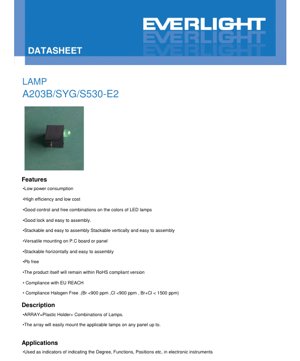
A203B/SYG/S530-E2 एक कम बिजली खपत, उच्च दक्षता वाला एलईडी लैंप सरणी है, जिसे विभिन्न प्रकार के इलेक्ट्रॉनिक उपकरणों और यंत्रों में दृश्य संकेतक के रूप में उपयोग के लिए डिज़ाइन किया गया है। यह एक प्लास्टिक स्टैंड से बना है जो कई एलईडी लैंप संयोजनों को समायोजित कर सकता है, जो डिज़ाइन और अनुप्रयोग के लिए लचीलापन प्रदान करता है। इस उत्पाद की विशेषताओं में आसान असेंबली, स्टैकेबल डिज़ाइन (ऊर्ध्वाधर और क्षैतिज दोनों दिशाओं का समर्थन), और प्रिंटेड सर्किट बोर्ड या पैनल पर कई स्थापना विकल्प शामिल हैं।
1.1 मुख्य लाभ और लक्षित बाजार
इस LED ऐरे के मुख्य लाभों में इसकी कम बिजली खपत विशेषता शामिल है, जो अंतिम अनुप्रयोगों की ऊर्जा दक्षता में सुधार करने में सहायक है, तथा उच्च चमकदार तीव्रता, जो स्पष्ट दृश्य संकेतन सुनिश्चित करती है। इसका डिज़ाइन रंग संयोजनों पर अच्छा नियंत्रण सुविधाजनक बनाता है, और एक विश्वसनीय लॉकिंग तंत्र प्रदान करता है ताकि असेंबली मजबूत रहे। यह विशेष रूप से उन अनुप्रयोग परिदृश्यों के लिए उपयुक्त है जिन्हें स्थिति संकेतन की आवश्यकता होती है, जैसे कि इलेक्ट्रॉनिक उपकरणों में संचालन मोड, स्तर, कार्य या स्थिति प्रदर्शित करना। यह उत्पाद RoHS, REACH और हैलोजन मुक्त जैसे पर्यावरणीय मानकों का अनुपालन करता है और उन बाजारों के लिए उपयुक्त है जिनमें नियामक अनुपालन की सख्त आवश्यकताएं होती हैं।
2. तकनीकी मापदंडों का गहन विश्लेषण
यह खंड स्पेसिफिकेशन शीट में निर्दिष्ट प्रमुख तकनीकी मापदंडों की विस्तृत, वस्तुनिष्ठ व्याख्या प्रदान करता है।
2.1 पूर्ण अधिकतम रेटिंग
डिवाइस की निरंतर अग्र धारा (IF) रेटिंग 25 mA है। इस मान से अधिक होने पर स्थायी क्षति हो सकती है। पल्स स्थितियों (ड्यूटी साइकिल 1/10, आवृत्ति 1 kHz) में, अनुमत शिखर अग्र धारा (IFP) 60 mA है। अधिकतम रिवर्स वोल्टेज (VR) 5 V है; उच्च रिवर्स वोल्टेज लगाने से जंक्शन ब्रेकडाउन हो सकता है। पावर डिसिपेशन (Pd) 60 mW तक सीमित है, जो थर्मल प्रबंधन के लिए महत्वपूर्ण है। ऑपरेटिंग तापमान रेंज -40°C से +85°C है, और स्टोरेज तापमान रेंज -40°C से +100°C है। सोल्डरिंग तापमान 260°C पर, अधिकतम 5 सेकंड के लिए निर्दिष्ट है, जो एक मानक लीड-फ्री सोल्डरिंग तापमान प्रोफाइल है।
2.2 प्रकाश-विद्युत विशेषताएँ
मानक परीक्षण स्थितियों 25°C और 20 mA फॉरवर्ड करंट पर मापी गई प्रमुख विशेषताएँ निम्नलिखित हैं:
- फॉरवर्ड वोल्टेज (VF):टाइपिकल मान 2.0V है, रेंज 1.7V (न्यूनतम) से 2.4V (अधिकतम) तक है। यह पैरामीटर ड्राइव सर्किट डिजाइन और उचित वोल्टेज आपूर्ति सुनिश्चित करने के लिए महत्वपूर्ण है।
- प्रदीप्ति तीव्रता (IV):विशिष्ट मान 80 mcd, न्यूनतम मान 40 mcd है। यह मानक परिस्थितियों में LED की चमक को परिभाषित करता है।
- देखने का कोण (2θ1/2):विशिष्ट पूर्ण देखने का कोण 45 डिग्री है। यह उस कोणीय सीमा को दर्शाता है जहाँ प्रदीप्ति तीव्रता कम से कम उसके शिखर मान की आधी होती है, जो प्रकाश पुंज के पैटर्न को परिभाषित करती है।
- तरंगदैर्ध्य:शिखर तरंगदैर्ध्य (λp) का विशिष्ट मान 575 nm है, प्रमुख तरंगदैर्ध्य (λd) का विशिष्ट मान 573 nm है, उत्सर्जित रंग स्पेक्ट्रम के चमकीले पीले-हरे क्षेत्र में स्थित है। स्पेक्ट्रमी बैंडविड्थ (Δλ) का विशिष्ट मान 20 nm है।
- रिवर्स करंट (IR):5V रिवर्स वोल्टेज पर अधिकतम 10 μA, जो एक अच्छी जंक्शन गुणवत्ता को दर्शाता है।
3. प्रदर्शन वक्र विश्लेषण
डेटाशीट में कई विशेषता वक्र शामिल हैं, जो विभिन्न परिस्थितियों में डिवाइस के व्यवहार की गहन समझ प्रदान करते हैं।
3.1 सापेक्ष तीव्रता vs. तरंगदैर्ध्य
यह वक्र उत्सर्जित प्रकाश का स्पेक्ट्रल पावर वितरण दर्शाता है। A203B/SYG/S530-E2 के लिए, वक्र 573-575 nm (पीला-हरा) के केंद्र के आसपास केंद्रित होगा, जिसका विशिष्ट FWHM 20 nm है। यह संकीर्ण बैंडविड्थ AlGaInP-आधारित LED की विशेषता है, जो संतृप्त, शुद्ध रंग उत्पन्न करती है।
3.2 दिशात्मक पैटर्न
दिशात्मकता वक्र (विकिरण पैटर्न) दर्शाता है कि प्रकाश की तीव्रता देखने के कोण के साथ कैसे बदलती है। 45 डिग्री का विशिष्ट देखने का कोण एक लैम्बर्टियन या निकट-लैम्बर्टियन वितरण को इंगित करता है, जहाँ तीव्रता 0 डिग्री (उत्सर्जक सतह के लंबवत) पर अधिकतम होती है और किनारों की ओर धीरे-धीरे कम होती जाती है।
3.3 अग्र धारा vs. अग्र वोल्टेज (I-V वक्र)
यह मौलिक वक्र एक अर्धचालक डायोड में करंट और वोल्टेज के बीच घातीय संबंध को दर्शाता है। इस LED के लिए, 20 mA के विशिष्ट ऑपरेटिंग बिंदु पर, फॉरवर्ड वोल्टेज लगभग 2.0V होता है। करंट-सीमित रोकनेवाला चुनने या निरंतर-धारा ड्राइवर डिजाइन करने के लिए यह वक्र महत्वपूर्ण है।
3.4 रिलेटिव इंटेंसिटी बनाम फॉरवर्ड करंट
यह वक्र दर्शाता है कि अनुशंसित ऑपरेटिंग सीमा के भीतर, चमकदार तीव्रता आम तौर पर फॉरवर्ड करंट के समानुपाती होती है। हालांकि, बहुत अधिक धाराओं पर, बढ़ती गर्मी के कारण दक्षता कम हो सकती है। अनुशंसित 20mA पर काम करने से इष्टतम प्रदर्शन और लंबी उम्र सुनिश्चित होती है।
3.5 तापमान निर्भरता वक्र
सापेक्ष तीव्रता बनाम परिवेश तापमान:LED का प्रकाश उत्पादन आमतौर पर परिवेश तापमान बढ़ने के साथ कम हो जाता है। यह वक्र उच्च तापमान वाले वातावरण में संचालित होने वाले अनुप्रयोगों के लिए महत्वपूर्ण है, क्योंकि स्थिर चमक बनाए रखने के लिए इसमें प्रकाशिक या विद्युत क्षतिपूर्ति की आवश्यकता हो सकती है।
अग्र धारा बनाम परिवेश तापमान:यह वक्र डायोड के अग्र वोल्टेज पात और तापमान के बीच संबंध दिखा सकता है, जो तापमान संवेदन अनुप्रयोगों के लिए एक महत्वपूर्ण पैरामीटर है, हालांकि यहाँ इसका स्पष्ट रूप से विस्तृत वर्णन नहीं किया गया है।
4. मैकेनिकल और पैकेजिंग जानकारी
4.1 पैकेज आयाम
डेटाशीट में LED लैंप सरणी का विस्तृत आयाम चित्र शामिल है। मुख्य आयामों में प्लास्टिक स्टैंड की कुल लंबाई, चौड़ाई, ऊंचाई, व्यक्तिगत LED स्थितियों के बीच की दूरी (यदि लागू हो), और पिन आकार एवं पिच शामिल हैं। टिप्पणी बताती है कि सभी आयाम मिलीमीटर में हैं, जब तक कि अन्यथा निर्दिष्ट न हो, सामान्य सहनशीलता ±0.25 mm है। पिन पिच उस बिंदु पर मापी जाती है जहां पिन पैकेज बॉडी से बाहर निकलती है, जो PCB लेआउट डिजाइन के लिए महत्वपूर्ण है।
4.2 ध्रुवीयता पहचान
यद्यपि प्रदान किए गए पाठ में स्पष्ट रूप से प्रदर्शित नहीं है, लेकिन एक विशिष्ट एलईडी सरणी में ध्रुवीयता को इंगित करने के लिए चिह्न होंगे, जैसे कि लंबी एनोड पिन, पैकेज पर सपाट किनारा या कैथोड के पास एक बिंदु। सही ढंग से ध्रुवीयता कनेक्ट करना सामान्य संचालन के लिए आवश्यक है।
5. सोल्डरिंग और असेंबली मार्गदर्शिका
उचित हैंडलिंग विश्वसनीयता के लिए महत्वपूर्ण है। गाइड सामग्री विस्तृत है:
5.1 लीड फॉर्मिंग
- आंतरिक चिप और बॉन्डिंग तारों पर तनाव से बचने के लिए मोड़ एपॉक्सी एलईडी बल्ब के आधार से कम से कम 3 मिमी की दूरी पर होना चाहिए।
- फॉर्मिंग होनी चाहिएवेल्डिंग से पहले soldering.
- पूर्ण। मोल्डिंग प्रक्रिया के दौरान अत्यधिक तनाव एपॉक्सी में दरार या सेमीकंडक्टर को नुकसान पहुंचा सकता है, जिससे प्रदर्शन कम हो सकता है या विफलता हो सकती है।
- लीड कटिंग कमरे के तापमान पर की जानी चाहिए।
- स्थापना तनाव से बचने के लिए PCB होल को LED लीड के साथ पूरी तरह से संरेखित होना चाहिए।
5.2 भंडारण
- अनुशंसित भंडारण स्थितियां: शिपमेंट की तारीख से 3 महीने के भीतर, तापमान ≤30°C, सापेक्ष आर्द्रता ≤70%।
- लंबी अवधि के भंडारण (अधिकतम 1 वर्ष) के लिए, नाइट्रोजन वातावरण और डिसिकेंट युक्त सील कंटेनर का उपयोग करें।
- संक्षेपण को रोकने के लिए आर्द्र वातावरण में तापमान में अचानक परिवर्तन से बचें।
5.3 वेल्डिंग प्रक्रिया
सामान्य नियम:वेल्ड बिंदु से एपॉक्सी एलईडी तक न्यूनतम दूरी 3 मिमी रखें।
हैंड सोल्डरिंग:सोल्डरिंग आयरन टिप तापमान ≤300°C (अधिकतम 30W सोल्डरिंग आयरन के लिए), प्रत्येक सोल्डर जोड़ का सोल्डरिंग समय ≤3 सेकंड।
वेव सोल्डरिंग/डिप सोल्डरिंग:प्रीहीट ≤100°C, समय ≤60 सेकंड। सोल्डर बाथ तापमान ≤260°C, समय ≤5 सेकंड।
प्रमुख सावधानियां:
1. जब LED सोल्डरिंग से गर्म हो, तो पिन पर किसी भी यांत्रिक तनाव से बचें।
2. एक ही सोल्डर जोड़ पर बार-बार सोल्डरिंग (डिप या हैंड सोल्डरिंग) न करें।
3. LED को कमरे के तापमान तक ठंडा होने से पहले, झटके/कंपन से बचाएं।
4. पीक सोल्डरिंग तापमान से तेजी से ठंडा होने से बचें।
5. हमेशा न्यूनतम प्रभावी सोल्डरिंग तापमान का उपयोग करें।
6. अनुशंसित सोल्डरिंग प्रोफाइल प्रदान की गई है, जो आमतौर पर हीट-अप, प्रीहीट, पीक तापमान तक तेजी से वृद्धि और नियंत्रित कूलिंग चरण दिखाती है।
5.4 सफाई
- यदि आवश्यक हो, तो केवल कमरे के तापमान पर आइसोप्रोपिल अल्कोहल से सफाई करें, समय ≤1 मिनट।
- कमरे के तापमान पर हवा में सुखाएं।
- जब तक बिल्कुल आवश्यक न हो और केवल पूर्ण पूर्व-योग्यता परीक्षण के बाद ही,अल्ट्रासोनिक सफाई का उपयोग न करें, क्योंकि अल्ट्रासोनिक ऊर्जा आंतरिक संरचना को नुकसान पहुंचा सकती है।
5.5 ताप प्रबंधन
डेटाशीट इस बात पर जोर देती है कि एप्लिकेशन डिजाइन चरण में थर्मल प्रबंधन पर विचार किया जाना चाहिए। अत्यधिक जंक्शन तापमान प्रकाश उत्पादन (ल्यूमेन डिप्रेशन) को कम करेगा और जीवनकाल को छोटा करेगा। कार्य परिवेश तापमान के आधार पर, किसी भी प्रदान की गई डेरेटिंग कर्व का संदर्भ लेते हुए, करंट को उचित रूप से कम किया जाना चाहिए। उच्च विश्वसनीयता वाले अनुप्रयोगों के लिए, पर्याप्त हीट सिंकिंग या एयरफ्लो सुनिश्चित करना महत्वपूर्ण है।
6. पैकेजिंग और आर्डर जानकारी
6.1 पैकेजिंग विनिर्देश
उत्पाद पैकेजिंग को स्थैतिक बिजली निर्वहन (ESD) और नमी के प्रवेश को रोकने के लिए डिज़ाइन किया गया है:
1. प्राथमिक पैकेजिंग:प्रति एंटीस्टैटिक बैग 200 पीस।
2. द्वितीयक पैकेजिंग:प्रत्येक आंतरिक बॉक्स में 4 पाउच (800 टुकड़े)।
3. तृतीयक पैकेजिंग:प्रत्येक बाहरी कार्टन में 10 आंतरिक बॉक्स (8,000 टुकड़े)।
6.2 लेबल विवरण
पैकेजिंग पर लेबल में कई कोड शामिल हैं:
• CPN:ग्राहक भाग संख्या।
• P/N:निर्माता भाग संख्या (उदाहरण के लिए, A203B/SYG/S530-E2)।
• QTY:मात्रा शामिल है।
• CAT:ग्रेड या बिनिंग कोड (उदाहरण के लिए, चमकदार तीव्रता या तरंग दैर्ध्य के लिए)।
• HUE:प्रमुख तरंग दैर्ध्य।
• REF:संदर्भ कोड।
• LOT No:ट्रेसेबल उत्पादन बैच संख्या।
6.3 घटक चयन मार्गदर्शिका और मॉडल संख्या
सूचीबद्ध विशिष्ट घटक संख्या है333-2SYGD/S530-E2-L। इस प्रकार विभाजित:
• चिप सामग्री:AlGaInP (एल्यूमीनियम गैलियम इंडियम फॉस्फाइड), एक अर्धचालक सामग्री जो पीला, नारंगी, लाल और हरा प्रकाश उत्पन्न करने में उच्च दक्षता रखती है।
• उत्सर्जित प्रकाश का रंग:चमकीला पीला-हरा।
• रेजिन रंग:हरा विसरित। विसरित रेजिन देखने के कोण को व्यापक बनाने और एलईडी बिंदु प्रकाश स्रोत की उपस्थिति को नरम बनाने में सहायता करता है।
7. अनुप्रयोग सुझाव
7.1 विशिष्ट अनुप्रयोग परिदृश्य
जैसा पहले बताया गया है, मुख्य अनुप्रयोग इलेक्ट्रॉनिक उपकरणों मेंसंकेतकके रूप में है। इसमें शामिल हैं:
• नियंत्रण पैनल पर स्थिति संकेतक (पावर ऑन/ऑफ, स्टैंडबाय, खराबी)।
• स्तर या डिग्री संकेतक (उदाहरण के लिए, सिग्नल शक्ति, बैटरी स्तर)।
• कार्य मोड चयनकर्ता।
• यांत्रिक उपकरणों पर स्थिति संकेतक।
ऐरे की स्टैकेबल और संयोजन योग्य विशेषताएँ कस्टम बार ग्राफ़, बहु-अवस्था डिस्प्ले या क्लस्टर संकेतक पैनल बनाने की अनुमति देती हैं।
7.2 डिज़ाइन विचार
- करंट सीमित करना:फॉरवर्ड करंट को हमेशा 20mA (या डीरेटिंग के लिए इससे कम) तक सीमित करने के लिए श्रृंखला रोकनेवाला या निरंतर-धारा ड्राइवर का उपयोग करें। सूत्र R = (Vपावर स्रोत- VF) / IF.
- का उपयोग करके रोकनेवाला मान की गणना करें।PCB लेआउट:
- सुनिश्चित करें कि होल का आकार और स्थिति फुटप्रिंट ड्राइंग से मेल खाता हो। एपॉक्सी एलईडी के चारों ओर पर्याप्त क्लीयरेंस प्रदान करें।थर्मल डिज़ाइन:
- ऐरे या उच्च ड्यूटी साइकल ऑपरेशन के लिए, सामूहिक ताप उत्पादन पर विचार करें। सुनिश्चित करें कि PCB या पैनल प्रभावी ढंग से गर्मी को दूर कर सकता है।ESD सुरक्षा:
यद्यपि इसे अत्यधिक संवेदनशील निर्दिष्ट नहीं किया गया है, संयोजन प्रक्रिया के दौरान अच्छे ESD हैंडलिंग प्रोटोकॉल का पालन किया जाना चाहिए।
8. तकनीकी तुलना और विभेदीकरण
1. हालांकि डेटाशीट अन्य उत्पादों के साथ प्रत्यक्ष तुलना प्रदान नहीं करती है, इस LED ऐरे की प्रमुख विभेदक विशेषताओं का अनुमान लगाया जा सकता है:ऐरे प्रारूप:
2. एकीकृत प्लास्टिक होल्डर जो कई LEDs के लिए है, अलग-अलग डिस्क्रीट LEDs स्थापित करने की तुलना में असेंबली को सरल बनाता है, स्थिरता और गति में सुधार करता है।स्टैकेबिलिटी:
3. इकाइयों को लंबवत और क्षैतिज रूप से स्टैक करने की क्षमता, कॉम्पैक्ट, मल्टी-लेयर इंडिकेटर घटकों के निर्माण के लिए एक अनूठी यांत्रिक विशेषता है।व्यापक अनुपालन:
4. RoHS, REACH और हैलोजन-मुक्त मानकों को एक साथ पूरा करना, वैश्विक बाजार (विशेष रूप से यूरोप) के लिए उत्पादों के लिए एक महत्वपूर्ण लाभ है।विस्तृत प्रक्रिया निर्देश:
सोल्डरिंग, भंडारण और हैंडलिंग के लिए व्यापक निर्देश निर्माण-योग्यता और अंतिम-उपयोगकर्ता विश्वसनीयता पर ध्यान दर्शाते हैं।
9. अक्सर पूछे जाने वाले प्रश्न (तकनीकी मापदंडों पर आधारित)
Q1: क्या मैं इस LED को सीधे 5V पावर स्रोत से चला सकता हूँ?A:
नहीं। इसका विशिष्ट फॉरवर्ड वोल्टेज 2.0V है। इसे सीधे 5V से जोड़ने पर अत्यधिक करंट प्रवाहित होगा, जिससे LED क्षतिग्रस्त हो सकती है। करंट-सीमित रोकनेवाला (रोकनेवाला) का उपयोग करना आवश्यक है। उदाहरण के लिए, 5V पावर स्रोत के साथ: R = (5V - 2.0V) / 0.020A = 150 Ω।
Q2: पीक वेवलेंथ (575 nm) और डोमिनेंट वेवलेंथ (573 nm) में क्या अंतर है?A:
पीक वेवलेंथ वह तरंगदैर्ध्य है जिस पर उत्सर्जित प्रकाश शक्ति अधिकतम होती है। डोमिनेंट वेवलेंथ वह मोनोक्रोमैटिक प्रकाश तरंगदैर्ध्य है जो LED के मानवीय धारणा वाले रंग से मेल खाती है। ये आमतौर पर करीब होते हैं लेकिन पूरी तरह समान नहीं, खासकर स्पेक्ट्रल रूप से असममित LED के लिए।
Q3: ल्यूमिनस इंटेंसिटी का विशिष्ट मान केवल 80 mcd है। क्या यह पर्याप्त चमकीला है?A:
चमक विशिष्ट अनुप्रयोग पर निर्भर करती है। कई इंडोर इंडिकेटर अनुप्रयोगों के लिए जहाँ निकट से देखा जाता है, 80 mcd पर्याप्त है। दूर से देखने या उज्ज्वल वातावरण में उपयोग के लिए, अधिक तीव्रता वाले LED की आवश्यकता हो सकती है।
Q4: भंडारण आर्द्रता सीमा 70% RH क्यों है?A:
उच्च आर्द्रता एपॉक्सी एनकैप्सुलेशन में नमी अवशोषण का कारण बनती है। बाद की उच्च-तापमान प्रक्रियाओं (जैसे वेल्डिंग) के दौरान, यह फंसी हुई नमी तेजी से फैलती है, जिससे आंतरिक दरार या परत अलग होना ("पॉपकॉर्न" प्रभाव) होता है, जिससे LED क्षतिग्रस्त हो जाती है।
10. वास्तविक उपयोग के मामले
परिदृश्य: बहु-कार्यात्मक परीक्षण उपकरण पैनल डिजाइन करना
एक इंजीनियर मल्टी-चैनल सिग्नल एनालाइज़र के लिए फ्रंट पैनल डिजाइन कर रहा है। प्रत्येक चैनल को कई स्थितियों को इंगित करने की आवश्यकता है: पावर (हरा), सक्रिय माप (पीला-हरा), त्रुटि (लाल) और डेटा तैयार (नीला)।
A203B ऐरे का उपयोग करके कार्यान्वयन:
1. इंजीनियर ने आधार के रूप में A203B माउंट का उपयोग किया।
2. उन्होंने इसे चार अलग-अलग एलईडी चिप्स से भरा (या एकाधिक सॉकेट्स का उपयोग किया, प्रत्येक सॉकेट एक रंग के लिए)।
3. स्टैकेबल डिज़ाइन ने उन्हें चार सॉकेट्स (प्रत्येक चैनल के लिए एक) प्रत्येक इनपुट पोर्ट के बगल में लंबवत रूप से संरेखित करने की अनुमति दी, प्रत्येक चैनल के लिए एक कॉम्पैक्ट, व्यवस्थित स्टेटस कॉलम बनाया।
4. एलईडी को डिवाइस के माइक्रोकंट्रोलर द्वारा करंट-लिमिटिंग रेसिस्टर्स के माध्यम से संचालित किया जाता है। 20mA का ड्राइव करंट सुसंगत चमक सुनिश्चित करता है।
पीली-हरी LED की हरी विसरित राल एक स्पष्ट, चौड़े दृश्य कोण वाली "सक्रिय" स्थिति प्रदर्शन प्रदान करती है। विस्तृत वेल्डिंग निर्देश PCB असेंबली प्रक्रिया के दौरान विश्वसनीय स्थापना सुनिश्चित करते हैं।
11. तकनीकी परिचययह एलईडी आधारित हैAlGaInP (एल्युमिनियम गैलियम इंडियम फॉस्फाइड)
सेमीकंडक्टर चिप। यह सामग्री प्रणाली एक सब्सट्रेट (आमतौर पर GaAs) पर विकसित की जाती है, जो दृश्यमान स्पेक्ट्रम के लाल, नारंगी, पीले और पीले-हरे क्षेत्रों में विद्युत ऊर्जा को प्रकाश ऊर्जा में परिवर्तित करने में विशेष रूप से कुशल है। Al, Ga, In और P परमाणुओं की विशिष्ट संरचना बैंडगैप ऊर्जा निर्धारित करती है, जो उत्सर्जित प्रकाश की तरंगदैर्ध्य तय करती है। लगभग 573-575 nm की तरंगदैर्ध्य पीले-हरे रंग के स्वर से मेल खाती है। चिप को एपॉक्सी राल में एनकैप्सुलेट किया जाता है। "हरी विसरित" राल में प्रकीर्णन कण होते हैं, जो प्रकाश को अधिक समान रूप से वितरित करने में मदद करते हैं, जिससे पारदर्शी राल की तुलना में दृश्य कोण बढ़ता है और चकाचौंध कम होती है।
12. विकास प्रवृत्तियाँ
1. जैसा कि इस स्पेसिफिकेशन शीट और उद्योग के सामान्य रुझानों से पता चलता है, इंडिकेटर एलईडी प्रौद्योगिकी के विकास के रुझानों में शामिल हैं:दक्षता वृद्धि:
2. निरंतर विकास का उद्देश्य समान या कम ड्राइव करंट पर उच्च ल्यूमिनस इंटेंसिटी (एमसीडी) उत्पन्न करना है, जिससे बिजली की खपत और कम हो जाए।लघुरूपण:
3. हालांकि यह एक थ्रू-होल ऐरे है, लेकिन व्यापक रुझान छोटे फुटप्रिंट और स्वचालित असेंबली के लिए सरफेस माउंट डिवाइस (एसएमडी) पैकेजिंग को अपनाने का है।बढ़ी हुई विश्वसनीयता और मजबूती:
4. एपॉक्सी सामग्री, चिप माउंटिंग तकनीक और बॉन्डिंग वायर में सुधार लगातार ऑपरेटिंग लाइफ और कठोर वातावरण के प्रति सहनशीलता बढ़ा रहे हैं।अधिक सख्त पर्यावरण अनुपालन:
5. स्पष्ट रूप से उल्लेख किया गया है कि RoHS, REACH और हैलोजन-मुक्त अनुपालन अब मानक बन गए हैं और बुनियादी आवश्यकताओं के रूप में जारी रहेंगे, संभवतः अन्य पदार्थ प्रतिबंधों तक विस्तारित होंगे।स्मार्ट एकीकरण:
LED विनिर्देश शब्दावली का विस्तृत विवरण
LED तकनीकी शब्दावली की पूर्ण व्याख्या
1. प्रकाशविद्युत प्रदर्शन के मुख्य मापदंड
| शब्दावली | इकाई/प्रतिनिधित्व | सामान्य व्याख्या | यह महत्वपूर्ण क्यों है |
|---|---|---|---|
| दीप्त प्रभावकारिता (Luminous Efficacy) | lm/W (लुमेन प्रति वाट) | प्रति वाट विद्युत ऊर्जा से उत्सर्जित दीप्त फ्लक्स, जितना अधिक होगा उतनी ही अधिक ऊर्जा दक्षता। | सीधे लैंप की ऊर्जा दक्षता रेटिंग और बिजली लागत निर्धारित करता है। |
| ल्यूमिनस फ्लक्स (Luminous Flux) | lm (लुमेन) | प्रकाश स्रोत द्वारा उत्सर्जित प्रकाश की कुल मात्रा, जिसे आमतौर पर "चमक" कहा जाता है। | यह निर्धारित करता है कि लैंप पर्याप्त रूप से चमकीला है या नहीं। |
| दृश्य कोण (Viewing Angle) | ° (डिग्री), जैसे 120° | प्रकाश तीव्रता आधी रह जाने पर का कोण, जो बीम की चौड़ाई निर्धारित करता है। | प्रकाश के विस्तार और एकरूपता को प्रभावित करता है। |
| रंग तापमान (CCT) | K (केल्विन), जैसे 2700K/6500K | प्रकाश के रंग की गर्माहट या ठंडक, कम मान पीला/गर्म, अधिक मान सफेद/ठंडा। | प्रकाश व्यवस्था का माहौल और उपयुक्त परिदृश्य निर्धारित करता है। |
| कलर रेंडरिंग इंडेक्स (CRI / Ra) | इकाई रहित, 0–100 | प्रकाश स्रोत द्वारा वस्तुओं के वास्तविक रंगों को प्रदर्शित करने की क्षमता, Ra≥80 उत्तम माना जाता है। | रंग की वास्तविकता को प्रभावित करता है, शॉपिंग मॉल, आर्ट गैलरी जैसे उच्च आवश्यकता वाले स्थानों में उपयोग किया जाता है। |
| क्रोमैटिसिटी टॉलरेंस (SDCM) | मैकएडम अंडाकार चरण संख्या, जैसे "5-step" | रंग एकरूपता का मात्रात्मक मापक, चरण संख्या जितनी कम होगी रंग उतने ही अधिक सुसंगत होंगे। | एक ही बैच के दीपकों के रंग में कोई अंतर नहीं होने की गारंटी। |
| प्रमुख तरंगदैर्ध्य (Dominant Wavelength) | nm (नैनोमीटर), जैसे 620nm (लाल) | रंगीन एलईडी के रंग से संबंधित तरंगदैर्ध्य मान। | लाल, पीले, हरे आदि एकवर्णी एलईडी के रंगत (ह्यू) का निर्धारण करता है। |
| स्पेक्ट्रम वितरण (Spectral Distribution) | तरंगदैर्ध्य बनाम तीव्रता वक्र | एलईडी द्वारा उत्सर्जित प्रकाश की विभिन्न तरंगदैर्ध्य पर तीव्रता वितरण को प्रदर्शित करता है। | रंग प्रतिपादन एवं रंग गुणवत्ता को प्रभावित करता है। |
2. विद्युत मापदंड
| शब्दावली | प्रतीक | सामान्य व्याख्या | डिज़ाइन विचार |
|---|---|---|---|
| फॉरवर्ड वोल्टेज (Forward Voltage) | Vf | LED को चालू करने के लिए आवश्यक न्यूनतम वोल्टेज, एक "स्टार्ट-अप थ्रेशोल्ड" के समान। | ड्राइवर पावर सप्लाई वोल्टेज ≥ Vf होना चाहिए, कई LEDs को श्रृंखला में जोड़ने पर वोल्टेज जुड़ जाता है। |
| फॉरवर्ड करंट (Forward Current) | If | एलईडी को सामान्य रूप से चमकने के लिए आवश्यक करंट मान। | आमतौर पर कॉन्स्टेंट करंट ड्राइव का उपयोग किया जाता है, करंट चमक और आयु निर्धारित करता है। |
| अधिकतम पल्स करंट (Pulse Current) | Ifp | अल्प समय में सहन करने योग्य चरम धारा, डिमिंग या फ्लैश के लिए। | पल्स चौड़ाई और ड्यूटी साइकिल को सख्ती से नियंत्रित किया जाना चाहिए, अन्यथा अत्यधिक गर्मी से क्षति होगी। |
| रिवर्स वोल्टेज (Reverse Voltage) | Vr | LED द्वारा सहन की जा सकने वाली अधिकतम रिवर्स वोल्टेज, इससे अधिक होने पर ब्रेकडाउन हो सकता है। | सर्किट में रिवर्स कनेक्शन या वोल्टेज स्पाइक से बचाव आवश्यक है। |
| थर्मल रेजिस्टेंस (Thermal Resistance) | Rth (°C/W) | चिप से सोल्डर पॉइंट तक गर्मी के प्रवाह में प्रतिरोध, कम मान बेहतर ऊष्मा अपव्यय को दर्शाता है। | उच्च थर्मल रेजिस्टेंस के लिए मजबूत हीट सिंक डिज़ाइन की आवश्यकता होती है, अन्यथा जंक्शन तापमान बढ़ जाता है। |
| इलेक्ट्रोस्टैटिक डिस्चार्ज इम्यूनिटी (ESD Immunity) | V (HBM), जैसे 1000V | एंटीस्टैटिक शॉक प्रतिरोध, उच्च मान इलेक्ट्रोस्टैटिक क्षति के प्रति कम संवेदनशीलता दर्शाता है। | उत्पादन में एंटीस्टैटिक उपाय करने आवश्यक हैं, विशेष रूप से उच्च संवेदनशीलता वाले LED के लिए। |
3. ताप प्रबंधन एवं विश्वसनीयता
| शब्दावली | प्रमुख संकेतक | सामान्य व्याख्या | प्रभाव |
|---|---|---|---|
| जंक्शन तापमान (Junction Temperature) | Tj (°C) | LED चिप का आंतरिक वास्तविक कार्य तापमान। | प्रत्येक 10°C कमी से, जीवनकाल दोगुना हो सकता है; अत्यधिक तापमान से ल्यूमेन ह्रास और रंग विस्थापन होता है। |
| ल्यूमेन डिप्रिसिएशन (Lumen Depreciation) | L70 / L80 (घंटे) | चमक प्रारंभिक मान के 70% या 80% तक गिरने में लगने वाला समय। | एलईडी की "सेवा जीवन" को सीधे परिभाषित करें। |
| लुमेन रखरखाव (Lumen Maintenance) | % (जैसे 70%) | एक निश्चित अवधि के उपयोग के बाद शेष चमक का प्रतिशत। | दीर्घकालिक उपयोग के बाद चमक बनाए रखने की क्षमता को दर्शाता है। |
| रंग परिवर्तन (Color Shift) | Δu′v′ या मैकएडम एलिप्स | उपयोग के दौरान रंग में परिवर्तन की मात्रा। | प्रकाश व्यवस्था के दृश्य की रंग एकरूपता को प्रभावित करता है। |
| थर्मल एजिंग (Thermal Aging) | सामग्री प्रदर्शन में गिरावट | दीर्घकालिक उच्च तापमान के कारण एनकैप्सुलेशन सामग्री का अवक्रमण। | इससे चमक में कमी, रंग परिवर्तन या ओपन-सर्किट विफलता हो सकती है। |
4. पैकेजिंग एवं सामग्री
| शब्दावली | सामान्य प्रकार | सामान्य व्याख्या | विशेषताएँ एवं अनुप्रयोग |
|---|---|---|---|
| पैकेजिंग प्रकार | EMC, PPA, सिरेमिक | चिप की सुरक्षा करने वाली और प्रकाशिक एवं ऊष्मीय इंटरफेस प्रदान करने वाली आवरण सामग्री। | EMC उच्च ताप सहनशीलता, कम लागत; सिरेमिक बेहतर ताप अपव्यय, लंबी आयु। |
| चिप संरचना | फॉरवर्ड माउंट, फ्लिप चिप (Flip Chip) | चिप इलेक्ट्रोड व्यवस्था विधि। | फ्लिप चिप बेहतर ताप अपव्यय, उच्च प्रकाश दक्षता, उच्च शक्ति के लिए उपयुक्त। |
| फॉस्फर कोटिंग | YAG, सिलिकेट, नाइट्राइड | ब्लू LED चिप पर लगाया जाता है, जो प्रकाश के एक भाग को पीले/लाल प्रकाश में परिवर्तित करता है और सफेद प्रकाश बनाने के लिए मिश्रित होता है। | विभिन्न फॉस्फर दक्षता, कलर टेम्परेचर और कलर रेंडरिंग को प्रभावित करते हैं। |
| लेंस/ऑप्टिकल डिज़ाइन | प्लेन, माइक्रोलेंस, टोटल इंटरनल रिफ्लेक्शन | पैकेजिंग सतह की प्रकाशिक संरचना, प्रकाश वितरण को नियंत्रित करती है। | उत्सर्जन कोण और प्रकाश वितरण वक्र निर्धारित करता है। |
पांच। गुणवत्ता नियंत्रण और ग्रेडिंग
| शब्दावली | ग्रेडिंग सामग्री | सामान्य व्याख्या | उद्देश्य |
|---|---|---|---|
| ल्यूमिनस फ्लक्स ग्रेडिंग | कोड जैसे 2G, 2H | चमक के स्तर के अनुसार समूहीकरण, प्रत्येक समूह का न्यूनतम/अधिकतम लुमेन मान होता है। | यह सुनिश्चित करें कि एक ही बैच के उत्पादों की चमक समान हो। |
| वोल्टेज ग्रेडिंग | कोड जैसे 6W, 6X | फॉरवर्ड वोल्टेज रेंज के अनुसार समूहीकरण। | ड्राइविंग पावर मिलान की सुविधा, सिस्टम दक्षता में सुधार। |
| रंग विभेदीकरण ग्रेडिंग | 5-step MacAdam ellipse | रंग निर्देशांक के अनुसार समूहीकरण, यह सुनिश्चित करना कि रंग अत्यंत सीमित सीमा के भीतर रहें। | रंग एकरूपता सुनिश्चित करना, एक ही ल्यूमिनेयर के भीतर रंग असमानता से बचना। |
| कलर टेम्परेचर ग्रेडिंग | 2700K, 3000K, आदि | रंग तापमान के अनुसार समूहीकृत, प्रत्येक समूह की संबंधित निर्देशांक सीमा होती है। | विभिन्न परिदृश्यों की रंग तापमान आवश्यकताओं को पूरा करना। |
छह। परीक्षण और प्रमाणन
| शब्दावली | मानक/परीक्षण | सामान्य व्याख्या | महत्व |
|---|---|---|---|
| LM-80 | ल्यूमेन रखरखाव परीक्षण | निरंतर तापमान परिस्थितियों में लंबे समय तक जलाकर, चमक क्षय डेटा रिकॉर्ड किया जाता है। | एलईडी जीवनकाल का अनुमान लगाने के लिए (TM-21 के साथ संयोजन में)। |
| TM-21 | जीवनकाल प्रक्षेपण मानक | LM-80 डेटा के आधार पर वास्तविक उपयोग की स्थितियों में जीवनकाल का अनुमान लगाना। | वैज्ञानिक जीवनकाल पूर्वानुमान प्रदान करना। |
| IESNA मानक | इल्युमिनेटिंग इंजीनियरिंग सोसाइटी मानक | प्रकाशिक, विद्युत और ऊष्मा परीक्षण विधियों को शामिल करना। | उद्योग द्वारा स्वीकृत परीक्षण आधार। |
| RoHS / REACH | पर्यावरण प्रमाणन | उत्पाद हानिकारक पदार्थों (जैसे सीसा, पारा) से मुक्त होने की गारंटी देना। | अंतरराष्ट्रीय बाजार में प्रवेश के लिए पात्रता शर्तें। |
| ENERGY STAR / DLC | ऊर्जा दक्षता प्रमाणन | प्रकाश उत्पादों के लिए ऊर्जा दक्षता और प्रदर्शन प्रमाणन। | सामान्यतः सरकारी खरीद, सब्सिडी परियोजनाओं में उपयोग किया जाता है, बाजार प्रतिस्पर्धा बढ़ाने के लिए। |