सामग्री
- 1. उत्पाद अवलोकन
- 1.1 मुख्य लाभ
- 1.2 लक्षित अनुप्रयोग
- 2. घटक चयन एवं तकनीकी मापदंड
- 2.1 घटक चयन मार्गदर्शिका
- 2.2 पूर्ण अधिकतम रेटिंग (Ta=25°C)
- 2.3 ऑप्टोइलेक्ट्रॉनिक विशेषताएँ (Ta=25°C)
- 3. प्रदर्शन वक्र विश्लेषण
- 3.1 SUR (लाल LED) विशेषताएँ
- 3.2 SYG (पीला-हरा LED) विशेषताएँ
- 4. यांत्रिक एवं पैकेजिंग जानकारी
- 4.1 पैकेज आयाम
- 4.2 ध्रुवीयता पहचान
- 5. सोल्डरिंग और असेंबली गाइड
- 5.1 लीड फॉर्मिंग
- 5.2 भंडारण
- 5.3 सोल्डरिंग प्रक्रिया
- 6. पैकेजिंग और ऑर्डर जानकारी
- 6.1 पैकेजिंग विनिर्देश
- 6.2 लेबल विवरण
- 7. अनुप्रयोग सुझाव और डिजाइन विचार
- 7.1 विशिष्ट अनुप्रयोग परिदृश्य
- 7.2 डिज़ाइन विचार
- 8. तकनीकी तुलना और विभेदीकरण
- 9. सामान्य प्रश्न (तकनीकी मापदंडों पर आधारित)
- 9.1 SUR और SYG में क्या अंतर है?
- 9.2 क्या मैं अधिक चमकदार आउटपुट के लिए इन LED को 30mA से चला सकता हूँ?
- 9.3 फॉरवर्ड वोल्टेज की एक सीमा (1.7V-2.4V) है। मैं सर्किट को कैसे डिज़ाइन करूँ?
- 9.4 "ऊर्ध्वाधर और क्षैतिज रूप से स्टैक करने योग्य" का क्या अर्थ है?
- 10. कार्य सिद्धांत एवं प्रौद्योगिकी अवलोकन
- 11. उद्योग पृष्ठभूमि एवं रुझान
- LED स्पेसिफिकेशन शब्दावली का विस्तृत विवरण
- 1. प्रकाशविद्युत प्रदर्शन के मुख्य संकेतक
- दो, विद्युत मापदंड
- तीन, ताप प्रबंधन और विश्वसनीयता
- चार, पैकेजिंग और सामग्री
- पाँच, गुणवत्ता नियंत्रण और ग्रेडिंग
- छह, परीक्षण और प्रमाणन
1. उत्पाद अवलोकन
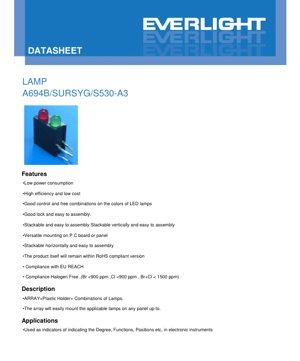
A694B/SURSYG/S530-A3 एक बहुउद्देशीय एलईडी लैंप सरणी है, जिसे विभिन्न प्रकार के इलेक्ट्रॉनिक उपकरणों में स्थिति या कार्यात्मक संकेतक के रूप में उपयोग के लिए डिज़ाइन किया गया है। यह एक प्लास्टिक स्टैंड से बना है, जो विभिन्न एलईडी लैंप बीड्स के संयोजन की अनुमति देता है, जिससे डिज़ाइन और अनुप्रयोग में लचीलापन प्रदान होता है। यह उत्पाद कम बिजली की खपत, उच्च दक्षता और आसान असेंबली के लिए डिज़ाइन किया गया है, और पैनलों और मुद्रित सर्किट बोर्ड (पीसीबी) में एकीकरण के लिए उपयुक्त है।
1.1 मुख्य लाभ
- कम बिजली की खपत:ऊर्जा-कुशल संचालन के लिए विशेष रूप से डिज़ाइन किया गया।
- उच्च दक्षता और कम लागत:संकेतक प्रकाश अनुप्रयोगों के लिए लागत-प्रभावी समाधान प्रदान करता है।
- लचीला डिज़ाइन:सरणी के भीतर एलईडी रंगों पर उत्कृष्ट नियंत्रण और स्वतंत्र संयोजन की अनुमति देता है।
- असेंबली में आसान:एक अच्छी लॉकिंग मैकेनिज्म के साथ, असेंबली में आसान। यह सरणी ऊर्ध्वाधर और क्षैतिज स्टैकिंग का समर्थन करती है।
- स्थापना के विविध तरीके:PCB या पैनल पर स्थापित किया जा सकता है।
- पर्यावरण अनुपालन:产品符合RoHS、欧盟REACH标准,且为无卤素产品(Br <900 ppm, Cl <900 ppm, Br+Cl < 1500 ppm)。
1.2 लक्षित अनुप्रयोग
मुख्य रूप से इलेक्ट्रॉनिक उपकरणों और नियंत्रण पैनलों में स्तर, कार्य, स्थिति और अन्य स्थिति जानकारी प्रदर्शित करने के लिए एक संकेतक लैंप के रूप में उपयोग किया जाता है।
2. घटक चयन एवं तकनीकी मापदंड
2.1 घटक चयन मार्गदर्शिका
यह सरणी विभिन्न प्रकार के एलईडी के साथ कॉन्फ़िगर की जा सकती है। डेटाशीट में दो पार्ट नंबर निर्दिष्ट किए गए हैं:
- 234-10SURD/S530-A3:AlGaInP चिप सामग्री का उपयोग करता है, चमकदार लाल प्रकाश उत्सर्जित करता है। राल का रंग लाल प्रसार प्रकार का है।
- 234-10SYGD/S530-E2:AlGaInP चिप सामग्री का उपयोग करता है, चमकदार पीला-हरा प्रकाश उत्सर्जित करता है। राल का रंग हरा प्रसार प्रकार का है।
2.2 पूर्ण अधिकतम रेटिंग (Ta=25°C)
निम्नलिखित रेटिंग उन सीमित स्थितियों को परिभाषित करती हैं जो डिवाइस को स्थायी क्षति पहुंचा सकती हैं।
| पैरामीटर | प्रतीक | रेटिंग | इकाई | टिप्पणी |
|---|---|---|---|---|
| निरंतर अग्र धारा | IF | 25 | mA | SUR और SYG दोनों प्रकारों के लिए उपयुक्त। |
| शिखर अग्र धारा (ड्यूटी साइकिल 1/10 @ 1KHz) | IFP | 60 | mA | SUR और SYG दोनों प्रकारों के लिए उपयुक्त। |
| रिवर्स वोल्टेज | VR | 5 | V | |
| पावर खपत | Pd | 60 | mW | SUR और SYG दोनों प्रकारों के लिए उपयुक्त। |
| ऑपरेटिंग तापमान | Topr | -40 ~ +85 | °C | |
| भंडारण तापमान | Tstg | -40 ~ +100 | °C | |
| सोल्डरिंग तापमान | Tsol | 260 | °C | अधिकतम 5 सेकंड। |
2.3 ऑप्टोइलेक्ट्रॉनिक विशेषताएँ (Ta=25°C)
ये निर्दिष्ट परीक्षण स्थितियों के तहत विशिष्ट विद्युत और प्रकाशीय प्रदर्शन पैरामीटर हैं।
| पैरामीटर | प्रतीक | न्यूनतम मान | विशिष्ट मान | अधिकतम मान | इकाई | शर्त |
|---|---|---|---|---|---|---|
| अग्र वोल्टता | VF | 1.7 | 2.0 | 2.4 | V | IF=20mA(SUR & SYG) |
| Reverse current | IR | -- | -- | 10 | µA | VR=5V(SUR & SYG) |
| Luminous intensity | IV | 40 | 80 | -- | mcd | IF=20mA (SUR) |
| Luminous intensity | IV | 25 | 50 | -- | mcd | IF=20mA (SYG) |
| देखने का कोण (2θ1/2) | -- | -- | 60 | -- | 度 | IF=20mA(SUR & SYG) |
| शिखर तरंगदैर्ध्य | λp | -- | 632 | -- | nm | IF=20mA (SUR) |
| शिखर तरंगदैर्ध्य | λp | -- | 575 | -- | nm | IF=20mA (SYG) |
| प्रमुख तरंगदैर्ध्य | λd | -- | 624 | -- | nm | IF=20mA (SUR) |
| प्रमुख तरंगदैर्ध्य | λd | -- | 573 | -- | nm | IF=20mA (SYG) |
| Spectral Radiant Bandwidth | Δλ | -- | 20 | -- | nm | IF=20mA(SUR & SYG) |
3. प्रदर्शन वक्र विश्लेषण
स्पेसिफिकेशन शीट SUR (लाल) और SYG (पीला-हरा) दो प्रकार के एलईडी के लिए विशेषता वक्र प्रदान करती है, जो विभिन्न परिस्थितियों में उनके प्रदर्शन को दर्शाती है।
3.1 SUR (लाल LED) विशेषताएँ
सापेक्ष तीव्रता बनाम तरंगदैर्ध्य:स्पेक्ट्रम वितरण दिखाता है, जिसका विशिष्ट शिखर तरंगदैर्ध्य लगभग 632 nm है।दिशात्मक पैटर्न:60-डिग्री व्यूइंग एंगल (2θ1/2) को दर्शाता है।फॉरवर्ड करंट बनाम फॉरवर्ड वोल्टेज (I-V वक्र):यह करंट और वोल्टेज के बीच संबंध दर्शाता है, जो ड्राइवर डिज़ाइन के लिए महत्वपूर्ण है। 20mA पर, टाइपिकल VF2.0V है।रिलेटिव इंटेंसिटी बनाम फॉरवर्ड करंट:दिखाता है कि कैसे लाइट आउटपट करंट बढ़ने के साथ बढ़ता है, जब तक कि अधिकतम रेटेड स्तर तक न पहुंच जाए।रिलेटिव इंटेंसिटी बनाम एनवायरनमेंटल टेम्परेचर:दर्शाता है कि एनवायरनमेंटल टेम्परेचर बढ़ने के साथ, ल्यूमिनस इंटेंसिटी कम हो जाती है।फॉरवर्ड करंट बनाम एनवायरनमेंटल टेम्परेचर:डेरेटिंग आवश्यकताओं को समझने के लिए उपयोगी हो सकता है।
3.2 SYG (पीला-हरा LED) विशेषताएँ
SYG प्रकार के लिए समान वक्र समूह प्रदान किए गए हैं, मुख्य अंतर तरंगदैर्ध्य (विशिष्ट शिखर 575 nm) और चमक तीव्रता मान में है। तापमान और धारा निर्भरता के संबंध में समग्र प्रवृत्ति SUR प्रकार के समान है।
4. यांत्रिक एवं पैकेजिंग जानकारी
4.1 पैकेज आयाम
विस्तृत आयाम चित्र डेटाशीट में प्रदान किए गए हैं। प्रमुख स्पष्टीकरण शामिल हैं:
- सभी आयाम मिलीमीटर (mm) में हैं।
- जब तक अन्यथा निर्दिष्ट न हो, मानक सहनशीलता ±0.25mm है।
- पिन पिच को उस स्थान पर मापा जाता है जहां पिन पैकेज बॉडी से बाहर निकलती है।
4.2 ध्रुवीयता पहचान
पैकेज ड्राइंग एनोड और कैथोड पिन दर्शाती है। सही कार्यक्षमता सुनिश्चित करने और क्षति को रोकने के लिए असेंबली के दौरान सही पोलैरिटी पर ध्यान देना आवश्यक है।
5. सोल्डरिंग और असेंबली गाइड
5.1 लीड फॉर्मिंग
- बेंड पॉइंट एपॉक्सी एलईडी के आधार से कम से कम 3 मिमी दूर होना चाहिए।
- सोल्डरिंग से पहले लीड को फॉर्म किया जाना चाहिए।
- क्षति या टूटने से बचने के लिए, एलईडी पैकेज पर तनाव डालने से बचें।
- कमरे के तापमान पर लीड को काटें।
- सुनिश्चित करें कि पीसीबी होल और एलईडी लीड पूरी तरह से संरेखित हैं, ताकि इंस्टॉलेशन स्ट्रेस से बचा जा सके।
5.2 भंडारण
- अनुशंसित भंडारण स्थितियाँ: तापमान ≤30°C, सापेक्ष आर्द्रता (RH) ≤70%।
- इस स्थिति में, शिपमेंट के बाद शेल्फ लाइफ 3 महीने है।
- लंबे समय तक भंडारण (अधिकतम 1 वर्ष) के लिए, कृपया डिसिकेंट युक्त नाइट्रोजन सील कंटेनर का उपयोग करें।
- संक्षेपण को रोकने के लिए उच्च आर्द्रता वाले वातावरण में तापमान में अचानक परिवर्तन से बचें।
5.3 सोल्डरिंग प्रक्रिया
सोल्डर जॉइंट और एपॉक्सी एलईडी के बीच कम से कम 3 मिमी की न्यूनतम दूरी बनाए रखी जानी चाहिए।
| विधि | पैरामीटर | शर्त |
|---|---|---|
| हस्त वेल्डिंग | सोल्डरिंग आयरन टिप तापमान | अधिकतम 300°C (अधिकतम शक्ति 30W) |
| वेल्डिंग समय | अधिकतम 3 सेकंड | |
| डिप सोल्डरिंग (वेव सोल्डरिंग) | प्रीहीट तापमान | अधिकतम 100°C (अधिकतम 60 सेकंड) |
| सोल्डर बाथ तापमान और समय | अधिकतम 260°C, अधिकतम 5 सेकंड | |
| फ्लक्स | मानक प्रक्रिया के अनुसार |
अन्य महत्वपूर्ण सावधानियां:
- उच्च तापमान पर पिन पर यांत्रिक तनाव न डालें।
- डिप सोल्डरिंग या हैंड सोल्डरिंग एक बार से अधिक न करें।
- सोल्डरिंग के बाद, LED के कमरे के तापमान तक ठंडा होने से पहले, इसे झटके/कंपन से बचाएं।
- तेजी से ठंडा करने की प्रक्रिया से बचें।
- हमेशा सबसे कम प्रभावी तापमान और सबसे कम समय का उपयोग करें।
6. पैकेजिंग और ऑर्डर जानकारी
6.1 पैकेजिंग विनिर्देश
LED को नमी-रोधी सामग्री में पैक किया जाता है।
- यूनिट पैक:प्रति एंटीस्टैटिक ट्रे 270 पीस।
- आंतरिक बॉक्स:प्रत्येक आंतरिक बॉक्स में 4 ट्रे होती हैं (कुल 1,080 टुकड़े)।
- बाहरी कार्टन:प्रत्येक बाहरी कार्टन में 10 आंतरिक बॉक्स होते हैं (कुल 10,800 टुकड़े)।
6.2 लेबल विवरण
पैकेजिंग लेबल में निम्नलिखित जानकारी शामिल होती है:
- CPN:ग्राहक उत्पादन संख्या।
- P/N:उत्पादन संख्या (उदाहरणार्थ, A694B/SURSYG/S530-A3)।
- मात्रा:पैकेजिंग मात्रा।
- श्रेणी:चमकदार तीव्रता ग्रेड (ग्रेडिंग)।
- रंग टोन:प्रमुख तरंगदैर्ध्य ग्रेड (ग्रेडिंग)।
- संदर्भ:फॉरवर्ड वोल्टेज ग्रेड (ग्रेडिंग)।
- LOT No:ट्रेसबिलिटी के लिए बैच नंबर।
7. अनुप्रयोग सुझाव और डिजाइन विचार
7.1 विशिष्ट अनुप्रयोग परिदृश्य
यह LED ऐरे उन एप्लिकेशन्स के लिए आदर्श है जिन्हें स्पष्ट, बहुरंगी स्थिति संकेत की आवश्यकता होती है:
- टेस्ट और मापन उपकरण के फ्रंट पैनल।
- औद्योगिक नियंत्रण यूनिट और PLC।
- ऑडियो-वीडियो उपकरण स्थिति प्रदर्शन।
- नेटवर्क और संचार उपकरण सूचक लैंप।
- कोई भी उपकरण जिसे "सीमा, कार्य, स्थिति" के दृश्य संकेत की आवश्यकता हो।
7.2 डिज़ाइन विचार
- करंट लिमिटिंग:IFको 20mA (सामान्य) या अधिकतम 25mA निरंतर धारा तक सीमित करने के लिए श्रृंखला प्रतिरोध या स्थिर धारा ड्राइवर का उपयोग अवश्य करें। प्रतिरोध मान सूत्र R = (Vस्रोत- VF) / IF.
- शक्ति अपव्यय:परिवेश के तापमान को ध्यान में रखते हुए, सुनिश्चित करें कि प्रत्येक LED का कुल शक्ति अपव्यय (VF* IF) 60mW से अधिक न हो।
- देखने का कोण:60 डिग्री का दृष्टिकोण एक विस्तृत बीम प्रदान करता है, जो फ्रंट पैनल माउंटिंग के लिए उपयुक्त है, जहां उपयोगकर्ता अक्ष से थोड़ा हटकर देख सकते हैं।
- थर्मल प्रबंधन:हालांकि ये कम बिजली वाले संकेतक एलईडी हैं, लेकिन उचित पीसीबी लेआउट और वेंटिलेशन रहित संलग्न स्थानों से बचना प्रदर्शन और जीवनकाल को बनाए रखने में मदद करेगा, विशेष रूप से उच्च परिवेशी तापमान पर।
- ईएसडी सुरक्षा:हालांकि इसे स्पष्ट रूप से संवेदनशील घटक के रूप में वर्गीकृत नहीं किया गया है, लेकिन असेंबली के दौरान मानक ईएसडी रोकथाम उपायों का पालन करने की सिफारिश की जाती है।
8. तकनीकी तुलना और विभेदीकरण
यह एलईडी ऐरे अपने मॉड्यूलर "स्टैंड + एलईडी" अवधारणा के माध्यम से विभेदन प्राप्त करता है। एकल अलग-अलग एलईडी के विपरीत, यह एक पूर्व-असेंबल्ड बहु-एलईडी समाधान प्रदान करता है, जो पैनल डिजाइन और असेंबली को सरल बनाता है। स्टैकेबल विशेषता एक प्रमुख लाभ है, जो डिजाइनरों को कस्टम टूलिंग की आवश्यकता के बिना रैखिक या ब्लॉक संकेतक बनाने की अनुमति देती है। लाल और पीला-हरा दोनों AlGaInP तकनीक का उपयोग करते हैं, जो अच्छी चमक दक्षता और रंग संतृप्ति प्रदान करते हैं। आधुनिक पर्यावरणीय मानकों (RoHS, REACH, हेलोजन-मुक्त) का अनुपालन एक बुनियादी आवश्यकता है, लेकिन यहां स्पष्ट रूप से पुष्टि की गई है, जो कई बाजारों के लिए बहुत महत्वपूर्ण है।
9. सामान्य प्रश्न (तकनीकी मापदंडों पर आधारित)
9.1 SUR और SYG में क्या अंतर है?
SUR चमकदार लाल एलईडी (विशिष्ट तरंगदैर्ध्य λd624nm) को दर्शाता है, जबकि SYG चमकदार पीली-हरी एलईडी (विशिष्ट तरंगदैर्ध्य λd573nm) को दर्शाता है। ये दोनों एक ही AlGaInP चिप तकनीक का उपयोग करते हैं, लेकिन अलग-अलग रंग उत्पन्न करने के लिए इनमें अलग डोपेंट मिलाए जाते हैं।
9.2 क्या मैं अधिक चमकदार आउटपुट के लिए इन LED को 30mA से चला सकता हूँ?
नहीं। निरंतर अग्र धारा (IF) का पूर्ण अधिकतम रेटिंग 25mA है। इस रेटिंग से अधिक होने पर एलईडी को स्थायी क्षति हो सकती है और किसी भी विश्वसनीयता विनिर्देश को अमान्य कर सकती है। विशिष्ट कार्यकारी धारा 20mA है।
9.3 फॉरवर्ड वोल्टेज की एक सीमा (1.7V-2.4V) है। मैं सर्किट को कैसे डिज़ाइन करूँ?
सभी डिवाइसों को उचित करंट लिमिटिंग मिले, इस सुनिश्चित करने के लिए वर्स्ट-केस परिदृश्य के आधार पर डिज़ाइन करें। श्रृंखला प्रतिरोध की गणना में अधिकतम VF(2.4V) का उपयोग करें, ताकि VFवाले कम LED का उपयोग करने पर भी करंट सीमा से अधिक न हो। या फिर, VF variation के प्रति सहनशील एक स्थिर करंट स्रोत का उपयोग करें।
9.4 "ऊर्ध्वाधर और क्षैतिज रूप से स्टैक करने योग्य" का क्या अर्थ है?
प्लास्टिक होल्डर का यांत्रिक डिज़ाइन कई ऐरे यूनिट्स को साथ-साथ (क्षैतिज) या ऊपर-नीचे (ऊर्ध्वाधर) भौतिक रूप से जोड़ने की अनुमति देता है, जिससे अतिरिक्त होल्डर या फिक्स्चर के बिना ही बड़े इंडिकेशन पैनल या कस्टम आकार बनाए जा सकते हैं।
10. कार्य सिद्धांत एवं प्रौद्योगिकी अवलोकन
इस ऐरे में LED, AlGaInP (अल्युमीनियम गैलियम इंडियम फॉस्फाइड) सेमीकंडक्टर तकनीक पर आधारित हैं। जब p-n जंक्शन पर फॉरवर्ड वोल्टेज लगाया जाता है, तो इलेक्ट्रॉन और होल पुनर्संयोजित होते हैं और फोटॉन (प्रकाश) के रूप में ऊर्जा मुक्त करते हैं। AlGaInP परत की विशिष्ट संरचना उत्सर्जित प्रकाश की तरंगदैर्ध्य (रंग) निर्धारित करती है। चिप के ऊपर एक डिफ्यूज़र प्रकार के रेजिन लेंस का उपयोग प्रकाश को बिखेरने के लिए किया जाता है, जिससे 60 डिग्री का चौड़ा व्यूइंग एंगल और अधिक समान उपस्थिति प्राप्त होती है। ऐरे अवधारणा में इन अलग-अलग LED घटकों को एक एकीकृत प्लास्टिक आवास में माउंट करना शामिल है, जो यांत्रिक समर्थन, संरेखण प्रदान करता है और कई LED के विद्युत कनेक्शन प्रक्रिया को सरल बनाता है।
11. उद्योग पृष्ठभूमि एवं रुझान
इंडिकेटर एलईडी एक परिपक्व तकनीक है, लेकिन रुझान दक्षता बढ़ाने, बिजली की खपत कम करने और डिजाइन एकीकरण बढ़ाने पर केंद्रित हैं। वैश्विक पर्यावरणीय नियमों से प्रेरित होकर, RoHS, REACH और हैलोजन-मुक्त मानकों का अनुपालन आदर्श बन गया है। साथ ही, स्वचालित असेंबली के लिए सरफेस माउंट डिवाइस (SMD) इंडिकेटर्स की ओर एक रुझान है, लेकिन इस ऐरे जैसे थ्रू-होल डिजाइन उन अनुप्रयोगों के लिए प्रासंगिक बने हुए हैं जिन्हें उच्च यांत्रिक शक्ति, आसान मैनुअल असेंबली, या विशिष्ट सौंदर्य आकृति की आवश्यकता होती है। इस उत्पाद की मॉड्यूलर और स्टैकेबल प्रकृति डिजाइनरों को विकास समय और लागत कम करने के लिए लचीले बिल्डिंग-ब्लॉक घटक प्रदान करने के रुझान के अनुरूप है।
LED स्पेसिफिकेशन शब्दावली का विस्तृत विवरण
एलईडी तकनीकी शब्दावली की पूर्ण व्याख्या
1. प्रकाशविद्युत प्रदर्शन के मुख्य संकेतक
| शब्दावली | इकाई/प्रतिनिधित्व | सामान्य व्याख्या | यह महत्वपूर्ण क्यों है |
|---|---|---|---|
| दीप्त प्रभावकारिता (Luminous Efficacy) | lm/W (लुमेन प्रति वाट) | प्रति वाट विद्युत ऊर्जा से उत्सर्जित दीप्त फ्लक्स, जितना अधिक होगा उतनी ही अधिक ऊर्जा दक्षता। | सीधे तौर पर प्रकाश उपकरण की ऊर्जा दक्षता श्रेणी और बिजली लागत निर्धारित करता है। |
| ल्यूमिनस फ्लक्स (Luminous Flux) | lm (लुमेन) | प्रकाश स्रोत द्वारा उत्सर्जित कुल प्रकाश मात्रा, जिसे आमतौर पर "चमक" कहा जाता है। | यह निर्धारित करता है कि प्रकाश उपकरण पर्याप्त रूप से चमकीला है या नहीं। |
| व्यूइंग एंगल (Viewing Angle) | ° (डिग्री), जैसे 120° | वह कोण जब प्रकाश तीव्रता आधी रह जाती है, जो प्रकाश पुंज की चौड़ाई निर्धारित करता है। | प्रकाश के दायरे और एकरूपता को प्रभावित करता है। |
| रंग तापमान (CCT) | K (केल्विन), जैसे 2700K/6500K | प्रकाश का रंग गर्म या ठंडा होना, कम मान पीला/गर्म, अधिक मान सफेद/ठंडा दर्शाता है। | प्रकाश व्यवस्था का माहौल और उपयुक्त परिदृश्य निर्धारित करता है। |
| कलर रेंडरिंग इंडेक्स (CRI / Ra) | कोई इकाई नहीं, 0–100 | प्रकाश स्रोत द्वारा वस्तुओं के वास्तविक रंगों को प्रदर्शित करने की क्षमता, Ra≥80 उत्तम माना जाता है। | रंगों की वास्तविकता को प्रभावित करता है, मॉल, कला दीर्घाओं आदि उच्च आवश्यकता वाले स्थानों में प्रयोग किया जाता है। |
| क्रोमैटिसिटी टॉलरेंस (SDCM) | MacAdam Ellipse Steps, e.g., "5-step" | A quantitative indicator of color consistency; a smaller step number indicates better color consistency. | Ensures no color variation among luminaires from the same batch. |
| Dominant Wavelength | nm (nanometer), e.g., 620nm (red) | The wavelength value corresponding to the color of a colored LED. | लाल, पीले, हरे आदि एकवर्णी एलईडी के रंग-संवेदन (ह्यू) को निर्धारित करता है। |
| स्पेक्ट्रम वितरण (Spectral Distribution) | तरंगदैर्ध्य बनाम तीव्रता वक्र | एलईडी द्वारा उत्सर्जित प्रकाश की विभिन्न तरंगदैर्ध्य पर तीव्रता वितरण को प्रदर्शित करता है। | रंग प्रतिपादन एवं रंग गुणवत्ता को प्रभावित करता है। |
दो, विद्युत मापदंड
| शब्दावली | प्रतीक | सामान्य व्याख्या | डिज़ाइन ध्यान देने योग्य बातें |
|---|---|---|---|
| फॉरवर्ड वोल्टेज (Forward Voltage) | Vf | LED को चालू करने के लिए आवश्यक न्यूनतम वोल्टेज, एक "स्टार्ट-अप थ्रेशोल्ड" के समान। | ड्राइवर पावर सप्लाई वोल्टेज ≥ Vf होना चाहिए, कई LEDs को श्रृंखला में जोड़ने पर वोल्टेज जुड़ जाता है। |
| फॉरवर्ड करंट (Forward Current) | If | एलईडी को सामान्य रूप से चमकाने के लिए आवश्यक करंट मान। | आमतौर पर कॉन्स्टेंट करंट ड्राइव का उपयोग किया जाता है, करंट चमक और आयु निर्धारित करता है। |
| अधिकतम पल्स करंट (Pulse Current) | Ifp | अल्प समय के लिए सहन करने योग्य पीक करंट, डिमिंग या फ्लैश के लिए उपयोग किया जाता है। | पल्स चौड़ाई और ड्यूटी साइकल को सख्ती से नियंत्रित किया जाना चाहिए, अन्यथा अत्यधिक गर्मी से क्षति हो सकती है। |
| रिवर्स वोल्टेज (Reverse Voltage) | Vr | LED द्वारा सहन की जा सकने वाली अधिकतम रिवर्स वोल्टेज, इससे अधिक होने पर ब्रेकडाउन हो सकता है। | सर्किट में रिवर्स कनेक्शन या वोल्टेज स्पाइक को रोकना आवश्यक है। |
| थर्मल रेजिस्टेंस (Thermal Resistance) | Rth (°C/W) | चिप से सोल्डर पॉइंट तक गर्मी के प्रवाह में प्रतिरोध, कम मान बेहतर हीट डिसिपेशन दर्शाता है। | उच्च थर्मल रेजिस्टेंस के लिए मजबूत हीट सिंक डिज़ाइन की आवश्यकता होती है, अन्यथा जंक्शन तापमान बढ़ जाता है। |
| इलेक्ट्रोस्टैटिक डिस्चार्ज इम्युनिटी (ESD Immunity) | V (HBM), जैसे 1000V | स्टैटिक बिजली के झटके को सहन करने की क्षमता, उच्च मान का अर्थ है स्टैटिक डैमेज से अधिक सुरक्षा। | उत्पादन में स्थैतिक बिजली सुरक्षा उपाय करने आवश्यक हैं, विशेष रूप से उच्च संवेदनशीलता वाले LED के लिए। |
तीन, ताप प्रबंधन और विश्वसनीयता
| शब्दावली | प्रमुख संकेतक | सामान्य व्याख्या | प्रभाव |
|---|---|---|---|
| जंक्शन तापमान (Junction Temperature) | Tj (°C) | LED चिप के अंदर का वास्तविक कार्य तापमान। | प्रत्येक 10°C कमी पर, जीवनकाल दोगुना हो सकता है; अत्यधिक तापमान से ल्यूमेन ह्रास और रंग विस्थापन होता है। |
| ल्यूमेन डिप्रिसिएशन (Lumen Depreciation) | L70 / L80 (घंटे) | चमक प्रारंभिक मान के 70% या 80% तक गिरने में लगने वाला समय। | LED के "उपयोगी जीवन" को सीधे परिभाषित करता है। |
| लुमेन रखरखाव दर (Lumen Maintenance) | % (जैसे 70%) | एक निश्चित अवधि के उपयोग के बाद शेष चमक का प्रतिशत। | दीर्घकालिक उपयोग के बाद चमक बनाए रखने की क्षमता को दर्शाता है। |
| रंग परिवर्तन (Color Shift) | Δu′v′ या मैकएडम दीर्घवृत्त | उपयोग के दौरान रंग में परिवर्तन की मात्रा। | प्रकाश व्यवस्था के दृश्य की रंग एकरूपता को प्रभावित करता है। |
| Thermal Aging | सामग्री प्रदर्शन में गिरावट | दीर्घकालिक उच्च तापमान के कारण एनकैप्सुलेशन सामग्री का क्षरण। | इससे चमक में कमी, रंग परिवर्तन या ओपन-सर्किट विफलता हो सकती है। |
चार, पैकेजिंग और सामग्री
| शब्दावली | सामान्य प्रकार | सामान्य व्याख्या | विशेषताएं और अनुप्रयोग |
|---|---|---|---|
| पैकेजिंग प्रकार | EMC, PPA, सिरेमिक | चिप की सुरक्षा करने और प्रकाशिकी, ऊष्मीय इंटरफेस प्रदान करने वाली आवरण सामग्री। | EMC उच्च तापसहिष्णुता, कम लागत; सिरेमिक उत्कृष्ट ताप अपव्यय, लंबी आयु। |
| चिप संरचना | फॉरवर्ड माउंट, फ्लिप चिप (Flip Chip) | चिप इलेक्ट्रोड व्यवस्था विधि। | फ्लिप चिप बेहतर ताप अपव्यय, उच्च प्रकाश दक्षता, उच्च शक्ति के लिए उपयुक्त। |
| फॉस्फर कोटिंग | YAG, सिलिकेट, नाइट्राइड | ब्लू LED चिप पर लगाया जाता है, जो प्रकाश के एक भाग को पीले/लाल प्रकाश में परिवर्तित करता है और सफेद प्रकाश बनाने के लिए मिश्रित होता है। | विभिन्न फॉस्फर दक्षता, कलर टेम्परेचर और कलर रेंडरिंग को प्रभावित करते हैं। |
| लेंस/ऑप्टिकल डिज़ाइन | फ्लैट, माइक्रोलेंस, टोटल इंटरनल रिफ्लेक्शन | पैकेजिंग सतह पर ऑप्टिकल संरचना, जो प्रकाश वितरण को नियंत्रित करती है। | उत्सर्जन कोण और प्रकाश वितरण वक्र निर्धारित करता है। |
पाँच, गुणवत्ता नियंत्रण और ग्रेडिंग
| शब्दावली | ग्रेडिंग सामग्री | सामान्य व्याख्या | उद्देश्य |
|---|---|---|---|
| लुमेनस फ्लक्स ग्रेडिंग | कोड जैसे 2G, 2H | चमक के स्तर के अनुसार समूहीकृत, प्रत्येक समूह में न्यूनतम/अधिकतम लुमेन मान होते हैं। | यह सुनिश्चित करें कि एक ही बैच के उत्पादों की चमक समान हो। |
| वोल्टेज ग्रेडिंग | कोड जैसे 6W, 6X | फॉरवर्ड वोल्टेज रेंज के अनुसार समूहीकृत। | ड्राइवर पावर स्रोत के मिलान को सुविधाजनक बनाना और सिस्टम दक्षता बढ़ाना। |
| रंग विभेदीकरण ग्रेडिंग | 5-step MacAdam ellipse | रंग निर्देशांक के अनुसार समूहीकरण, यह सुनिश्चित करना कि रंग अत्यंत सीमित सीमा के भीतर रहें। | रंग एकरूपता सुनिश्चित करना, एक ही ल्यूमिनेयर के भीतर रंग असमानता से बचना। |
| कलर टेम्परेचर ग्रेडिंग | 2700K, 3000K, आदि। | रंग तापमान के अनुसार समूहीकृत, प्रत्येक समूह के लिए संबंधित निर्देशांक सीमा होती है। | विभिन्न परिदृश्यों की रंग तापमान आवश्यकताओं को पूरा करना। |
छह, परीक्षण और प्रमाणन
| शब्दावली | मानक/परीक्षण | सामान्य व्याख्या | महत्व |
|---|---|---|---|
| LM-80 | ल्यूमेन रखरखाव परीक्षण | निरंतर तापमान परिस्थितियों में लंबे समय तक जलाकर, चमक क्षय डेटा रिकॉर्ड करना। | LED जीवनकाल का अनुमान लगाने के लिए (TM-21 के साथ संयोजन में)। |
| TM-21 | जीवनकाल प्रक्षेपण मानक | LM-80 डेटा के आधार पर वास्तविक उपयोग की स्थितियों में जीवनकाल का अनुमान लगाना। | वैज्ञानिक जीवनकाल पूर्वानुमान प्रदान करना। |
| IESNA मानक | इल्युमिनेटिंग इंजीनियरिंग सोसायटी मानक | प्रकाशिक, विद्युत और ऊष्मा परीक्षण विधियों को शामिल करना। | उद्योग द्वारा स्वीकृत परीक्षण आधार। |
| RoHS / REACH | पर्यावरण प्रमाणन | उत्पादों को हानिकारक पदार्थों (जैसे सीसा, पारा) से मुक्त सुनिश्चित करना। | अंतरराष्ट्रीय बाजार में प्रवेश के लिए पात्रता शर्तें। |
| ENERGY STAR / DLC | ऊर्जा दक्षता प्रमाणन | प्रकाश व्यवस्था उत्पादों के लिए ऊर्जा दक्षता और प्रदर्शन प्रमाणन। | सरकारी खरीद, सब्सिडी परियोजनाओं में आमतौर पर उपयोग किया जाता है, बाजार प्रतिस्पर्धा बढ़ाने के लिए। |