सामग्री
- 1. उत्पाद अवलोकन
- 1.1 मुख्य लाभ और उत्पाद स्थिति
- 1.2 लक्षित बाजार और अनुप्रयोग
- 2. तकनीकी मापदंड गहन विश्लेषण
- 2.1 डिवाइस चयन और पूर्ण अधिकतम रेटिंग
- 2.2 ऑप्टोइलेक्ट्रॉनिक विशेषताओं का विश्लेषण
- 3. बिनिंग प्रणाली विवरण
- 3.1 ल्यूमिनस तीव्रता बिनिंग
- 3.2 प्रमुख तरंगदैर्ध्य बिनिंग
- 4. प्रदर्शन वक्र विश्लेषण
- 4.1 स्पेक्ट्रम वितरण और दिशात्मकता
- 4.2 विद्युत और ऊष्मीय विशेषताएँ
- 5. यांत्रिक और पैकेजिंग जानकारी
- 5.1 पैकेज आयाम और सहनशीलता
- 5.2 ध्रुवीयता पहचान
- 6. सोल्डरिंग और असेंबली गाइड
- 6.1 लीड फॉर्मिंग (यदि लागू हो)
- 6.2 भंडारण की शर्तें
- 6.3 सोल्डरिंग प्रक्रिया
- 7. पैकेजिंग और ऑर्डर जानकारी
- 7.1 नमी-रोधी पैकेजिंग
- 7.2 लेबल विवरण और कैरियर टेप विनिर्देश
- 7.3 पैकेजिंग मात्रा और मॉडल संख्या
- 8. अनुप्रयोग सुझाव और डिजाइन विचार
- 8.1 विशिष्ट अनुप्रयोग सर्किट
- 8.2 ताप प्रबंधन
- 8.3 प्रकाशीय एकीकरण
- 9. तकनीकी तुलना एवं विभेदीकरण
- 10. सामान्य प्रश्न (तकनीकी मापदंडों के आधार पर)
- 11. वास्तविक डिजाइन एवं उपयोग के उदाहरण
- 12. कार्य सिद्धांत का संक्षिप्त परिचय
- 13. तकनीकी रुझान एवं पृष्ठभूमि
- LED विनिर्देश शब्दावली का विस्तृत विवरण
- 1. प्रकाश-विद्युत प्रदर्शन के मुख्य मापदंड
- 2. विद्युत मापदंड
- 3. ताप प्रबंधन एवं विश्वसनीयता
- 4. पैकेजिंग एवं सामग्री
- पाँच, गुणवत्ता नियंत्रण और ग्रेडिंग
- छह, परीक्षण और प्रमाणन
1. उत्पाद अवलोकन
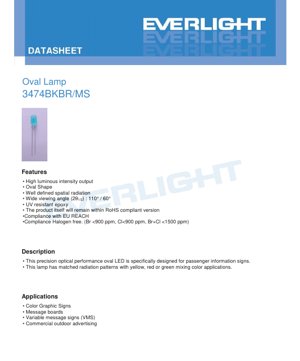
यह दस्तावेज़ मॉडल 3474BKBR/MS के उच्च-सटीक ऑप्टिकल प्रदर्शन वाले अंडाकार एलईडी लैंप की तकनीकी विशिष्टताओं का विस्तार से वर्णन करता है। यह उपकरण उन अनुप्रयोगों के लिए डिज़ाइन किया गया है जिन्हें सूचना प्रदर्शन प्रणालियों में उच्च दृश्यता और विश्वसनीय प्रदर्शन की आवश्यकता होती है।
1.1 मुख्य लाभ और उत्पाद स्थिति
इस अण्डाकार LED का प्राथमिक डिज़ाइन लक्ष्य यात्री सूचना संकेतों एवं इसी प्रकार के प्रदर्शन अनुप्रयोगों की सेवा करना है। इसका मुख्य लाभ इसके अद्वितीय प्रकाशीय डिज़ाइन से उत्पन्न होता है:
- उच्च दीप्त तीव्रता आउटपुट:यह चमकदार, स्पष्ट प्रकाश प्रदान करता है, जो दिन के प्रकाश में पठनीय संकेत प्राप्त करने की कुंजी है।
- अण्डाकार एवं सुस्पष्ट विकिरण पैटर्न:अण्डाकार लेंस संरचना एक सुस्पष्ट स्थानिक विकिरण पैटर्न बनाती है, जो प्रकाश वितरण को संकेतों में सामान्य आयताकार या अण्डाकार प्रदर्शन छिद्रों के लिए अनुकूलित करती है।
- विस्तृत एवं असममित दृष्टिकोण:दृष्टिकोण (2θ1/2) एक अक्ष पर 110° और लंबवत अक्ष पर 60° है। यह असममित पैटर्न विशिष्ट साइन इंस्टॉलेशन कॉन्फ़िगरेशन में प्रकाश को प्रेक्षकों की ओर प्रभावी ढंग से निर्देशित करने के लिए आदर्श है।
- मजबूत सामग्री संरचना:यूवी-प्रतिरोधी एपॉक्सी का उपयोग दीर्घकालिक विश्वसनीयता को बढ़ाता है और बाहरी या उच्च यूवी वातावरण में उपयोग के दौरान लेंस के पीले पड़ने या खराब होने से बचाता है।
- पर्यावरण अनुपालन:本产品设计符合RoHS(有害物质限制)、欧盟REACH法规,并且不含卤素(溴<900 ppm,氯<900 ppm,溴+氯<1500 ppm)。
1.2 लक्षित बाजार और अनुप्रयोग
यह एलईडी मुख्य रूप से वाणिज्यिक और यातायात संकेत बाजार के लिए है। इसका मिलान करने वाला विकिरण पैटर्न इसे रंगीन अनुप्रयोगों में पीले, लाल या हरे फिल्टर या द्वितीयक ऑप्टिक्स के साथ उपयोग के लिए उपयुक्त बनाता है। विशिष्ट उपयोग के मामलों में शामिल हैं:
- रंगीन ग्राफिक संकेत
- सूचना बोर्ड
- परिवर्तनीय सूचना संकेत
- वाणिज्यिक आउटडोर विज्ञापन डिस्प्ले
2. तकनीकी मापदंड गहन विश्लेषण
यह खंड स्पेसिफिकेशन शीट में परिभाषित प्रमुख विद्युत, प्रकाशिक और ऊष्मीय मापदंडों की विस्तृत, वस्तुनिष्ठ व्याख्या प्रदान करता है।
2.1 डिवाइस चयन और पूर्ण अधिकतम रेटिंग
यह एलईडी नीला प्रकाश उत्पन्न करने के लिए InGaN (इंडियम गैलियम नाइट्राइड) चिप सामग्री का उपयोग करती है, जिसे फिर एक नीले लेंस के माध्यम से फैलाया जाता है। डिवाइस के जीवनकाल को सुनिश्चित करने और तत्काल विफलता को रोकने के लिए पूर्ण अधिकतम रेटिंग्स को समझना महत्वपूर्ण है।
- रिवर्स वोल्टेज (VR): 5V- इस मान से अधिक रिवर्स बायस वोल्टेज लगाने से एलईडी जंक्शन को अपरिवर्तनीय क्षति हो सकती है।
- फॉरवर्ड करंट (IF): 30mA- लगाई जा सकने वाली अधिकतम निरंतर डीसी धारा। इस सीमा पर या इसके आसपास संचालन से अधिक ऊष्मा उत्पन्न होती है और सेवा जीवन कम हो सकता है।
- पीक फॉरवर्ड करंट (IFP): 100mA- यह पल्स रेटेड मान है (ड्यूटी साइकिल 1/10 @ 1kHz)। डीसी ऑपरेशन के लिए उपयोग न करें। यह इंगित करता है कि एलईडी अल्पकालिक करंट स्पाइक्स को सहन कर सकता है, जो कुछ मल्टीप्लेक्सिंग ड्राइव स्कीम में प्रासंगिक हो सकता है।
- पावर डिसिपेशन (Pd): 110mW- Ta=25°C पर, पैकेज द्वारा ऊष्मा के रूप में अपव्यय की जा सकने वाली अधिकतम शक्ति। इस सीमा से अधिक होने पर ओवरहीटिंग का जोखिम होता है। वास्तविक शक्ति की गणना फॉरवर्ड वोल्टेज (VF) × फॉरवर्ड करंट (IF) से की जाती है।
- ऑपरेटिंग एवं स्टोरेज तापमान:रेंज -40°C से +85°C (ऑपरेटिंग) और -40°C से +100°C (स्टोरेज) तक है। यह व्यापक रेंज कठोर आउटडोर वातावरण के लिए इसकी उपयुक्तता की पुष्टि करती है।
- सोल्डरिंग तापमान (Tsol): 260°C, 5 सेकंड के लिए- यह रिफ्लो सोल्डरिंग प्रोफाइल के लिए सहनशीलता को परिभाषित करता है, जो एपॉक्सी एनकैप्सुलेशन या आंतरिक बॉन्डिंग को नुकसान पहुंचाए बिना PCB असेंबली के लिए महत्वपूर्ण है।
2.2 ऑप्टोइलेक्ट्रॉनिक विशेषताओं का विश्लेषण
सभी पैरामीटर Ta=25°C और IF=20mA की मानक परीक्षण स्थितियों के तहत निर्दिष्ट हैं, जो अनुशंसित कार्य बिंदु है।
- ल्यूमिनस तीव्रता (Iv):सीमा 550 mcd (न्यूनतम) से 1130 mcd (अधिकतम) तक है, जिसका विशिष्ट मान 800 mcd है। यह उच्च तीव्रता साइनेज अनुप्रयोगों के लिए एक महत्वपूर्ण विशेषता है।
- व्यूइंग एंगल (2θ1/2):110° (X-अक्ष)/60° (Y-अक्ष) के रूप में पुष्टि की गई है। यह असममितता साइनबोर्ड के लिए विशेष रूप से डिज़ाइन की गई है।
- पीक वेवलेंथ (λp):टाइपिकल 468 nm। यह वह तरंगदैर्ध्य है जहाँ उत्सर्जित प्रकाश शक्ति अधिकतम होती है।
- डोमिनेंट वेवलेंथ (λd):460 nm से 475 nm तक की सीमा। यह वह एकल तरंगदैर्ध्य है जिसे मानव आँख अनुभव करती है, जो नीले प्रकाश के "रंग" को परिभाषित करती है।
- फॉरवर्ड वोल्टेज (VF):20mA पर, 2.4V से 3.4V तक की सीमा। डिज़ाइनरों को यह सुनिश्चित करना चाहिए कि ड्राइवर सर्किट इस भिन्नता को समायोजित कर सके, विशेष रूप से कॉन्स्टेंट वोल्टेज स्रोत का उपयोग करते समय।
- रिवर्स करंट (IR):VR=5V पर, अधिकतम 50 µA। कम मान एक अच्छी जंक्शन गुणवत्ता को इंगित करता है।
3. बिनिंग प्रणाली विवरण
निर्माण भिन्नताओं के प्रबंधन के लिए, एलईडी को विभिन्न प्रदर्शन बिन में वर्गीकृत किया जाता है। यह डिजाइनरों को उनके अनुप्रयोग के लिए विशिष्ट तीव्रता और रंग स्थिरता आवश्यकताओं को पूरा करने वाले घटकों का चयन करने में सक्षम बनाता है।
3.1 ल्यूमिनस तीव्रता बिनिंग
बिन को कोड BA से BD द्वारा परिभाषित किया गया है, जिसमें IF= 20mA पर मापे गए न्यूनतम और अधिकतम ल्यूमिनस तीव्रता मान शामिल हैं। कुल सहनशीलता ±10% है।
- BA:550 mcd से 660 mcd
- BB:660 mcd से 790 mcd
- BC:790 mcd से 945 mcd
- BD:945 mcd से 1130 mcd
उच्चतर बिन (जैसे BD) का चयन अधिकतम चमक सुनिश्चित करता है, लेकिन इसके लिए अतिरिक्त लागत की आवश्यकता हो सकती है। बहु-एलईडी साइनबोर्ड में एक समान रूप प्राप्त करने के लिए, संकीर्ण बिन या एकल बिन निर्दिष्ट करना महत्वपूर्ण है।
3.2 प्रमुख तरंगदैर्ध्य बिनिंग
वेवलेंथ बिन कोड B1 से B5 द्वारा परिभाषित किए जाते हैं, प्रत्येक बिन 460 nm से 475 nm तक 3 nm की सीमा को कवर करता है। सहनशीलता ±1 nm है।
- B1:460 nm से 463 nm (अधिक नीला, सियान नीले रंग की ओर झुकाव)
- B2:463 nm से 466 nm
- B3:466 nm से 469 nm
- B4:469 nm से 472 nm
- B5:472 nm से 475 nm (गहरा, रॉयल ब्लू)
पूरे डिस्प्ले के रंगों की एकरूपता महत्वपूर्ण है। एक एकल तरंगदैर्ध्य बिन (जैसे B3) निर्दिष्ट करने से सभी एलईडी में लगभग समान रंग टोन सुनिश्चित होता है।
4. प्रदर्शन वक्र विश्लेषण
प्रदान की गई विशिष्ट वक्रें गैर-मानक परिस्थितियों में एलईडी के व्यवहार को समझने के लिए मूल्यवान अंतर्दृष्टि प्रदान करती हैं।
4.1 स्पेक्ट्रम वितरण और दिशात्मकता
सापेक्ष तीव्रता बनाम तरंगदैर्ध्यवक्र 468 nm पर केंद्रित और लगभग 20 nm की पूर्ण चौड़ाई आधी अधिकतम (FWHM) वाले एक विशिष्ट नीले LED स्पेक्ट्रम को दर्शाता है।दिशात्मकतावक्र 110°/60° के देखने के कोण की पुष्टि करता है, जो दर्शाता है कि केंद्रीय अक्ष से कोण बढ़ने पर सापेक्ष तीव्रता कैसे घटती है।
4.2 विद्युत और ऊष्मीय विशेषताएँ
- अग्र धारा बनाम अग्र वोल्टेज (I-V वक्र):यह वक्र अरैखिक है, जो डायोड की एक विशिष्ट विशेषता है। यह वोल्टेज और धारा के बीच संबंध दर्शाता है और करंट-लिमिटिंग सर्किट डिजाइन के लिए महत्वपूर्ण है। नेक वोल्टेज लगभग 2.8V से 3.0V है।
- सापेक्ष तीव्रता बनाम अग्र धारा:प्रकाश उत्पादन धारा बढ़ने के साथ बढ़ता है, लेकिन रैखिक रूप से नहीं। 20mA से अधिक की चालन धारा से दक्षता में कमी और ऊष्मा में वृद्धि होती है।
- सापेक्ष तीव्रता बनाम परिवेश तापमान:LED का प्रकाश उत्पादन परिवेश तापमान (Ta) बढ़ने के साथ कम हो जाता है। तापीय डिजाइन में इस डीरेटिंग को ध्यान में रखना चाहिए, विशेष रूप से बंद संकेतों या गर्म जलवायु में।
- अग्र धारा बनाम परिवेश तापमान:यह वक्र तापमान बढ़ने के साथ, 110mW शक्ति सीमा के भीतर रहने के लिए अनुशंसित अधिकतम कार्य धारा की डीरेटिंग को दर्शा सकता है।
5. यांत्रिक और पैकेजिंग जानकारी
5.1 पैकेज आयाम और सहनशीलता
डेटाशीट में अंडाकार एलईडी पैकेज का विस्तृत आयाम चित्र शामिल है। प्रमुख विशेषताओं में शामिल हैं:
- समग्र पैकेज आकार और पिन पिच।
- कैथोड पहचानकर्ता की स्थिति और आयाम (आमतौर पर पैकेज पर समतल पक्ष या हरा बिंदु)।
- एक महत्वपूर्ण नोट यह निर्दिष्ट करता है कि सभी आयाम मिलीमीटर में हैं और मानक सहनशीलता ±0.25mm है, जब तक कि अन्यथा निर्दिष्ट न हो।
- फ्लैंज के नीचे राल का अधिकतम प्रोट्रूज़न 1.5mm निर्धारित किया गया है, जो पीसीबी स्थापना के दौरान क्लीयरेंस के लिए महत्वपूर्ण है।
5.2 ध्रुवीयता पहचान
सही ध्रुवीयता महत्वपूर्ण है। कैथोड (-) पिन की पहचान करने के लिए पैकेज में एक दृश्य चिह्न (जैसे समतल पक्ष, खांचा या रंगीन बिंदु) होता है। एनोड (+) थ्रू-होल संस्करण में आमतौर पर लंबा पिन होता है, लेकिन इस एसएमडी घटक के लिए, पैकेज पर चिह्न की पहचान करने के लिए आयाम चित्र का संदर्भ लेना चाहिए।
6. सोल्डरिंग और असेंबली गाइड
विश्वसनीयता बनाए रखने के लिए उचित हैंडलिंग महत्वपूर्ण है।
6.1 लीड फॉर्मिंग (यदि लागू हो)
यदि थ्रू-होल माउंटिंग के लिए पिन को आकार देना आवश्यक है:
- एपॉक्सी एलईडी आधार से ≥ 3 मिमी की दूरी पर मोड़ें।
- 在सोल्डरिंग से पहले soldering.
- फॉर्मिंग करें। पैकेज पर तनाव लगाने से बचें; तनाव आंतरिक कनेक्शन को नुकसान पहुंचा सकता है या एपॉक्सी को दरार कर सकता है।
- कमरे के तापमान पर लीड्स को ट्रिम करें।
- स्थापना तनाव से बचने के लिए सुनिश्चित करें कि पीसीबी होल एलईडी लीड्स के साथ पूरी तरह से संरेखित हों।
6.2 भंडारण की शर्तें
LED नमी के प्रति संवेदनशील उपकरण हैं:
- प्राप्ति के बाद, ≤ 30°C और ≤ 70% सापेक्ष आर्द्रता की शर्तों के तहत संग्रहीत करें।
- इस स्थिति में अनुशंसित भंडारण आयु 3 महीने है।
- 3 महीने से 1 वर्ष तक के भंडारण के लिए, नाइट्रोजन वातावरण और डेसिकेंट युक्त सीलबंद कंटेनर का उपयोग करें।
- संक्षेपण को रोकने के लिए, आर्द्र वातावरण में तापमान में अचानक परिवर्तन से बचें।
6.3 सोल्डरिंग प्रक्रिया
- 保持焊点到环氧树脂灯珠的距离 > 3mm。
- एलईडी के स्वयं के बेस पर सोल्डरिंग न करें।
- 260°C पीक तापमान और अधिकतम 5 सेकंड के रीफ्लो सोल्डरिंग प्रोफाइल का पालन करें।
7. पैकेजिंग और ऑर्डर जानकारी
7.1 नमी-रोधी पैकेजिंग
एलईडी नमी-सुरक्षात्मक पैकेजिंग में आपूर्ति की जाती है, जिसमें आम तौर पर शामिल हैं:
- कैरियर टेप:एलईडी को स्वचालित सतह माउंट असेंबली के लिए इम्बॉस्ड कैरियर टेप में रखा जाता है।
- रील:कैरियर टेप को रील पर लपेटा जाता है।
- डेसिकेंट और आर्द्रता संकेतक कार्ड:नमी से बचाने के लिए सीलबंद बैग में शामिल किया जाता है।
- आंतरिक बॉक्स और बाहरी कार्टन:बड़े पैमाने पर परिवहन और भंडारण के लिए उपयोग किया जाता है।
7.2 लेबल विवरण और कैरियर टेप विनिर्देश
पैकेजिंग लेबल में निम्नलिखित कोड शामिल हैं:
- CPN (ग्राहक पार्ट नंबर)
- P/N (उत्पाद संख्या: 3474BKBR/MS)
- QTY (मात्रा)
- CAT (ल्यूमिनस इंटेंसिटी ग्रेड, उदाहरण के लिए BC)
- HUE (प्रमुख तरंगदैर्ध्य ग्रेड, उदाहरणार्थ B3)
- REF (फॉरवर्ड वोल्टेज ग्रेड)
- LOT No. (ट्रेसबिलिटी नंबर)
मानक SMD असेंबली उपकरणों के साथ संगतता सुनिश्चित करने के लिए विस्तृत कैरियर टेप आयाम (D, F, P, W1, W3, आदि) प्रदान किए गए हैं।
7.3 पैकेजिंग मात्रा और मॉडल संख्या
- मानक पैकेजिंग: प्रति आंतरिक बॉक्स 2500 टुकड़े।
- प्रत्येक बाहरी मास्टर कार्टन में 10 आंतरिक बक्से (कुल 25,000 टुकड़े)।
- मॉडल3474BKBR/MSएक नामकरण नियम का पालन करता है, संभवतः पैकेजिंग शैली (3474), रंग (BKBR नीला दर्शाता है?) और स्थापना/शैली (MS नमी-संवेदनशील या समान) को इंगित करता है। डेटाशीट एक अतिरिक्त प्रत्यय कोड (3474BKBR-□□□□) के लिए एक प्लेसहोल्डर दिखाती है जो ग्रेड या अन्य प्रकार निर्दिष्ट करता है।
8. अनुप्रयोग सुझाव और डिजाइन विचार
8.1 विशिष्ट अनुप्रयोग सर्किट
विश्वसनीय संचालन सुनिश्चित करने के लिए:
- स्थिर धारा चालन:स्थिर वोल्टेज चालन के बजाय स्थिर धारा चालन का उपयोग करने की दृढ़ता से अनुशंसा की जाती है। कम धारा अनुप्रयोगों के लिए, एक साधारण श्रृंखला प्रतिरोध पर्याप्त हो सकता है, लेकिन समर्पित स्थिर धारा LED चालक IC बेहतर स्थिरता, दक्षता और वोल्टेज स्पाइक सुरक्षा प्रदान करते हैं।
- धारा सेटिंग:इष्टतम दक्षता और जीवनकाल के लिए 20mA विशिष्ट परीक्षण स्थिति या उससे नीचे कार्य करें। I-V वक्र का उपयोग करके, अपने बिजली आपूर्ति वोल्टेज के आधार पर उपयुक्त श्रृंखला प्रतिरोध या चालक सेटिंग की गणना करें।
- रिवर्स वोल्टेज सुरक्षा:यदि LED रिवर्स वोल्टेज ट्रांजिएंट के संपर्क में आ सकता है, तो एक सुरक्षात्मक डायोड (कैथोड से एनोड, एनोड से कैथोड) समानांतर में जोड़ने पर विचार करें।
8.2 ताप प्रबंधन
हालांकि शक्ति कम है (अधिकतम 110mW), गर्मी अभी भी प्रदर्शन और जीवनकाल को प्रभावित करेगी:
- पर्याप्त तांबे के क्षेत्र वाला PCB उपयोग करें और इसे हीट सिंक के रूप में कार्य करने के लिए LED पैड से जोड़ें।
- उच्च घनत्व वाले ऐरे में, पर्याप्त अंतर सुनिश्चित करें, और यदि बंद है तो सक्रिय शीतलन पर विचार करें।
- संदर्भसापेक्ष तीव्रता बनाम परिवेश तापमानउच्च तापमान वाले वातावरण में अपेक्षित प्रकाश उत्पादन को डीरेट करने के लिए वक्र।
8.3 प्रकाशीय एकीकरण
- अंडाकार बीम पैटर्न को सामान्य साइन एपर्चर से मेल खाने के लिए डिज़ाइन किया गया है। इष्टतम समरूपता और दक्षता के लिए LED के प्रमुख अक्ष (110°) और लघु अक्ष (60°) को साइन लेआउट के साथ संरेखित करें।
- रंग फिल्टर का उपयोग करते समय, यह सुनिश्चित करें कि यह एलईडी के नीले स्पेक्ट्रम और यूवी-प्रतिरोधी एपॉक्सी के साथ संगत है, ताकि त्वरित उम्र बढ़ने को रोका जा सके।
9. तकनीकी तुलना एवं विभेदीकरण
हालांकि डेटाशीट में प्रत्यक्ष प्रतिस्पर्धी तुलना नहीं है, लेकिन उत्पाद के प्रमुख विभेदक कारकों का अनुमान लगाया जा सकता है:
- मानक गोलाकार एलईडी की तुलना में:अंडाकार बीम साइन में आयताकार पिक्सेल के लिए बेहतर कवरेज प्रदान करता है, जिससे गोलाकार बीम वाले गोलाकार एलईडी की तुलना में आवश्यक एलईडी की संख्या कम हो जाती है या समरूपता में सुधार होता है।
- गैर-यूवी प्रतिरोधी एलईडी की तुलना में:यूवी प्रतिरोधी एपॉक्सी रेजिन किसी भी बाहरी या लंबी आयु वाले अनुप्रयोग के लिए एक महत्वपूर्ण लाभ है, जो लेंस के भूरे पड़ने और आउटपुट क्षीणन की सामान्य विफलता विधि को रोकता है।
- कम तीव्रता वाले एलईडी की तुलना में:उच्च चमकदार तीव्रता (1130 एमसीडी तक) इसे मजबूत परिवेश प्रकाश वाले दिन के उजाले में पठनीय अनुप्रयोगों के लिए उपयुक्त बनाती है।
- व्यापक बिनिंग:विस्तृत तीव्रता और तरंगदैर्ध्य बिनिंग संरचना उच्च रंग एकरूपता वाले डिस्प्ले को प्राप्त करने की अनुमति देती है, जो पेशेवर साइनेज की एक महत्वपूर्ण आवश्यकता है।
10. सामान्य प्रश्न (तकनीकी मापदंडों के आधार पर)
प्रश्न: क्या मैं इस एलईडी को लगातार 30mA पर चला सकता हूं?
उत्तर: पूर्ण अधिकतम रेटिंग 30mA है, लेकिन विशिष्ट कार्य स्थितियां और सभी ऑप्टोइलेक्ट्रॉनिक विनिर्देश 20mA पर दिए गए हैं। 30mA पर काम करने से अधिक गर्मी उत्पन्न होगी, दक्षता (लुमेन प्रति वाट) कम होगी, और जीवनकाल कम हो सकता है। सर्वोत्तम विश्वसनीयता के लिए, 20mA या उससे कम पर डिजाइन करने की सलाह दी जाती है।
प्रश्न: चरम तरंगदैर्ध्य और प्रमुख तरंगदैर्ध्य में क्या अंतर है?
उत्तर: चरम तरंगदैर्ध्य (λp) उत्सर्जन स्पेक्ट्रम का भौतिक शिखर है। प्रमुख तरंगदैर्ध्य (λd) वह एकल तरंगदैर्ध्य है जिसे मानव आँख रंग के रूप में अनुभव करती है, जिसकी गणना पूर्ण स्पेक्ट्रम के आधार पर की जाती है। डिस्प्ले में रंग मिलान के लिए λd अधिक प्रासंगिक है।
प्रश्न: ऑर्डर करते समय बिनिंग कोड की व्याख्या कैसे करें?
उत्तर: संकेतों की एकरूपता सुनिश्चित करने के लिए, कृपया अपने ऑर्डर में दोनों चमकदार तीव्रता बिन (जैसे BC) और प्रमुख तरंगदैर्ध्य बिन (जैसे B3) निर्दिष्ट करें। इससे सभी LED में बहुत समान चमक और रंग सुनिश्चित होता है।
प्रश्न: क्या हीटसिंक की आवश्यकता है?
उत्तर: 20mA (लगभग 2.8V * 0.02A = 56mW) पर एकल LED के लिए, यदि PCB पर कुछ तांबा है, तो आमतौर पर हीटसिंक की आवश्यकता नहीं होती। LED सरणियों या उच्च तापमान वातावरण में संचालन के लिए, थर्मल डिज़ाइन महत्वपूर्ण हो जाता है।
11. वास्तविक डिजाइन एवं उपयोग के उदाहरण
परिदृश्य: एकल पंक्ति परिवर्तनीय सूचना संकेत वर्ण डिज़ाइन करना।
एक वर्ण 5x7 पिक्सेल मैट्रिक्स से बना है। प्रत्येक "पिक्सेल" एक आयताकार एपर्चर है। इस अंडाकार LED का उपयोग करें:
- प्लेसमेंट:प्रत्येक एपर्चर के पीछे LED स्थापित करें, इसके 110° चौड़े अक्ष को आयत की लंबी भुजा के साथ और 60° संकरे अक्ष को छोटी भुजा के साथ संरेखित करें। यह एपर्चर को प्रभावी ढंग से भर देगा।
- सर्किट:वायरिंग कम करने के लिए 35 LEDs (5x7) के मल्टीप्लेक्स मैट्रिक्स को चलाने में सक्षम कॉन्स्टेंट-करंट ड्राइवर IC का उपयोग करें। सक्रिय होने पर प्रत्येक LED का करंट 18-20mA पर सेट करें।
- बिनिंग:पूरे स्क्रीन पर चमक और रंग की एकरूपता सुनिश्चित करने के लिए, पूरे संकेत के लिए एक ही CAT (जैसे BC) और HUE (जैसे B3) बिन से सभी LEDs ऑर्डर करें।
- थर्मल प्रबंधन:35 एलईडी सरणी से ऊष्मा का अपव्यय करने के लिए, पीछे की परत के ग्राउंड प्लेन से जुड़े थर्मल वाया के साथ पीसीबी को एलईडी पैड के नीचे डिज़ाइन करें।
- सॉफ़्टवेयर:विभिन्न परिवेश प्रकाश स्थितियों के लिए डिमिंग नियंत्रण प्राप्त करने हेतु ड्राइवर IC के माध्यम से PWM (पल्स विड्थ मॉड्यूलेशन) लागू करें।
12. कार्य सिद्धांत का संक्षिप्त परिचय
यह एलईडी एक सेमीकंडक्टर डायोड में इलेक्ट्रोलुमिनेसेंस के सिद्धांत पर कार्य करता है। इसका मूलभूत भाग InGaN (इंडियम गैलियम नाइट्राइड) सेमीकंडक्टर सामग्री से निर्मित एक चिप है। जब डायोड के नॉक-इन वोल्टेज (लगभग 2.8-3.0V) से अधिक का फॉरवर्ड वोल्टेज लगाया जाता है, तो इलेक्ट्रॉन n-टाइप क्षेत्र से और होल p-टाइप क्षेत्र से सक्रिय क्षेत्र में इंजेक्ट होते हैं। जब ये आवेश वाहक पुनर्संयोजित होते हैं, तो वे फोटॉन (प्रकाश) के रूप में ऊर्जा मुक्त करते हैं। InGaN मिश्रधातु की विशिष्ट संरचना बैंडगैप ऊर्जा निर्धारित करती है, जो उत्सर्जित प्रकाश की तरंगदैर्ध्य को परिभाषित करती है - इस मामले में नीला (लगभग 468 nm)। चिप के चारों ओर अंडाकार एपॉक्सी लेंस को मूल प्रकाश को अपवर्तित करके और इसे वांछित 110°/60° विकिरण पैटर्न में आकार देने के लिए डिज़ाइन किया गया है।
13. तकनीकी रुझान एवं पृष्ठभूमि
यह घटक मुख्यधारा की एलईडी प्रौद्योगिकी के एक विशिष्ट अनुप्रयोग का प्रतिनिधित्व करता है। पृष्ठभूमि प्रदान करने वाले एलईडी उद्योग के समग्र रुझानों में शामिल हैं:
- दक्षता वृद्धि:निरंतर अनुसंधान और विकास लुमेन प्रति वाट (प्रकाश दक्षता) में लगातार सुधार कर रहा है, जिससे चमकदार प्रदर्शन या कम बिजली की खपत संभव होती है।
- लघुरूपण:हालांकि यह उच्च आउटपुट के लिए एक बड़ा पैकेज है, सामान्य प्रकाश व्यवस्था का रुझान छोटे, अधिक सघन चिप्स (जैसे चिप-स्केल पैकेजिंग) की ओर है।
- स्मार्ट और कनेक्टेड लाइटिंग:साइनेज के लिए, इसका मतलब है कि एलईडी को स्मार्ट ड्राइवरों के साथ एकीकृत किया जाता है जो नेटवर्क नियंत्रण, गतिशील सामग्री और अनुकूली चमक को सक्षम करते हैं।
- रंग गुणवत्ता और स्थिरता:जैसा कि इस स्पेसिफिकेशन शीट में विस्तृत ग्रेडिंग में दिखाया गया है, अधिक सख्त ग्रेडिंग और बेहतर निर्माण प्रक्रियाएं पेशेवर डिस्प्ले की उत्कृष्ट और सुसंगत दृश्य प्रदर्शन की मांग से प्रेरित हैं।
- स्थिरता:हैलोजन-मुक्त, RoHS और REACH मानकों के अनुपालन को अब एक बुनियादी अपेक्षा माना जाता है, जो पर्यावरणीय जिम्मेदारी के प्रति उद्योग के फोकस को दर्शाता है।
अंडाकार एलईडी पैकेज अभी भी एक विशेष समाधान बना हुआ है, जहां विशिष्ट एपर्चर आकार के लिए ऑप्टिकल नियंत्रण, विश्वसनीयता और उच्च तीव्रता आउटपुट को यथासंभव छोटे फॉर्म फैक्टर पर प्राथमिकता दी जाती है।
LED विनिर्देश शब्दावली का विस्तृत विवरण
एलईडी तकनीकी शब्दावली की पूर्ण व्याख्या
1. प्रकाश-विद्युत प्रदर्शन के मुख्य मापदंड
| शब्दावली | इकाई/प्रतिनिधित्व | सामान्य व्याख्या | यह महत्वपूर्ण क्यों है |
|---|---|---|---|
| दीप्त प्रभावकारिता (Luminous Efficacy) | lm/W (लुमेन प्रति वाट) | प्रति वाट विद्युत ऊर्जा से उत्पन्न प्रकाश प्रवाह, जितना अधिक होगा उतनी अधिक ऊर्जा बचत। | सीधे तौर पर लैंप की ऊर्जा दक्षता ग्रेड और बिजली लागत निर्धारित करता है। |
| ल्यूमिनस फ्लक्स (Luminous Flux) | lm (ल्यूमेन) | प्रकाश स्रोत द्वारा उत्सर्जित कुल प्रकाश मात्रा, जिसे आम बोलचाल में "चमक" कहा जाता है। | यह निर्धारित करता है कि लैंप पर्याप्त रूप से चमकीला है या नहीं। |
| देखने का कोण (Viewing Angle) | ° (डिग्री), जैसे 120° | वह कोण जिस पर प्रकाश तीव्रता आधी रह जाती है, यह प्रकाश पुंज की चौड़ाई निर्धारित करता है। | प्रकाश के विस्तार और समरूपता को प्रभावित करता है। |
| वर्ण तापमान (CCT) | K (केल्विन), जैसे 2700K/6500K | प्रकाश का रंग गर्म या ठंडा होता है, कम मान पीला/गर्म, उच्च मान सफेद/ठंडा। | प्रकाश व्यवस्था के माहौल और उपयुक्त परिदृश्यों को निर्धारित करता है। |
| कलर रेंडरिंग इंडेक्स (CRI / Ra) | कोई इकाई नहीं, 0–100 | वस्तुओं के वास्तविक रंगों को प्रकाश स्रोत द्वारा प्रदर्शित करने की क्षमता, Ra≥80 बेहतर है। | रंग की वास्तविकता को प्रभावित करता है, मॉल, आर्ट गैलरी आदि उच्च आवश्यकता वाले स्थानों में उपयोग किया जाता है। |
| रंग सहनशीलता (SDCM) | मैकएडम दीर्घवृत्त चरण, जैसे "5-step" | रंग एकरूपता का मात्रात्मक सूचक; चरण संख्या जितनी छोटी, रंग उतना ही अधिक एकसमान। | एक ही बैच के लैंपों के रंग में कोई अंतर नहीं होने की गारंटी। |
| प्रमुख तरंगदैर्घ्य (Dominant Wavelength) | nm (नैनोमीटर), जैसे 620nm (लाल) | रंगीन एलईडी रंगों के संगत तरंगदैर्ध्य मान। | लाल, पीला, हरा आदि एकवर्णी एलईडी के रंगतत्व (ह्यू) को निर्धारित करता है। |
| स्पेक्ट्रम वितरण (Spectral Distribution) | तरंगदैर्ध्य बनाम तीव्रता वक्र | एलईडी द्वारा उत्सर्जित प्रकाश की विभिन्न तरंगदैर्ध्य पर तीव्रता वितरण को दर्शाता है। | रंग प्रतिपादन एवं रंग गुणवत्ता को प्रभावित करता है। |
2. विद्युत मापदंड
| शब्दावली | प्रतीक | सामान्य व्याख्या | डिज़ाइन संबंधी विचार |
|---|---|---|---|
| फॉरवर्ड वोल्टेज (Forward Voltage) | Vf | LED को चालू करने के लिए आवश्यक न्यूनतम वोल्टेज, एक "स्टार्ट-अप थ्रेशोल्ड" के समान। | ड्राइविंग पावर सप्लाई वोल्टेज Vf से अधिक या बराबर होना चाहिए, कई एलईडी श्रृंखला में जुड़े होने पर वोल्टेज जुड़ जाता है। |
| फॉरवर्ड करंट (Forward Current) | If | एलईडी को सामान्य रूप से चमकने के लिए आवश्यक करंट मान। | आमतौर पर कॉन्स्टेंट करंट ड्राइव का उपयोग किया जाता है, करंट चमक और आयु निर्धारित करता है। |
| अधिकतम पल्स करंट (Pulse Current) | Ifp | अल्प समय में सहन करने योग्य चरम धारा, डिमिंग या फ्लैश के लिए। | पल्स चौड़ाई और ड्यूटी साइकिल को सख्ती से नियंत्रित किया जाना चाहिए, अन्यथा अत्यधिक गर्मी से क्षति होगी। |
| Reverse Voltage | Vr | LED द्वारा सहन की जा सकने वाली अधिकतम रिवर्स वोल्टेज, इससे अधिक होने पर ब्रेकडाउन हो सकता है। | सर्किट में रिवर्स कनेक्शन या वोल्टेज स्पाइक से सुरक्षा आवश्यक है। |
| Thermal Resistance | Rth (°C/W) | चिप से सोल्डर जॉइंट तक गर्मी के प्रवाह में प्रतिरोध, कम मान बेहतर ऊष्मा अपव्यय दर्शाता है। | उच्च तापीय प्रतिरोध के लिए मजबूत ऊष्मा अपव्यय डिज़ाइन की आवश्यकता होती है, अन्यथा जंक्शन तापमान बढ़ जाता है। |
| ESD Immunity | V (HBM), जैसे 1000V | इलेक्ट्रोस्टैटिक डिस्चार्ज (ESD) प्रतिरोध, उच्चतर मान का अर्थ है स्थैतिक बिजली से क्षति की कम संभावना। | उत्पादन में ESD सुरक्षा उपाय आवश्यक हैं, विशेष रूप से उच्च संवेदनशीलता वाले LED के लिए। |
3. ताप प्रबंधन एवं विश्वसनीयता
| शब्दावली | प्रमुख संकेतक | सामान्य व्याख्या | प्रभाव |
|---|---|---|---|
| जंक्शन तापमान (Junction Temperature) | Tj (°C) | LED चिप के अंदर का वास्तविक कार्य तापमान। | प्रत्येक 10°C कमी पर, जीवनकाल दोगुना हो सकता है; अत्यधिक तापमान से लुमेन ह्रास और रंग विस्थापन होता है। |
| लुमेन ह्रास (Lumen Depreciation) | L70 / L80 (घंटे) | प्रारंभिक मान के 70% या 80% तक चमक कम होने में लगने वाला समय। | LED के "उपयोगी जीवन" को सीधे परिभाषित करना। |
| लुमेन रखरखाव दर (Lumen Maintenance) | % (जैसे 70%) | एक निश्चित अवधि के उपयोग के बाद शेष चमक का प्रतिशत। | दीर्घकालिक उपयोग के बाद चमक बनाए रखने की क्षमता को दर्शाना। |
| कलर शिफ्ट (Color Shift) | Δu′v′ या मैकएडम एलिप्स | उपयोग के दौरान रंग में परिवर्तन की मात्रा। | प्रकाश व्यवस्था के दृश्य की रंग एकरूपता को प्रभावित करता है। |
| थर्मल एजिंग (Thermal Aging) | सामग्री के प्रदर्शन में गिरावट | लंबे समय तक उच्च तापमान के कारण एनकैप्सुलेशन सामग्री का क्षरण। | चमक में कमी, रंग परिवर्तन या ओपन-सर्किट विफलता का कारण बन सकता है। |
4. पैकेजिंग एवं सामग्री
| शब्दावली | सामान्य प्रकार | सामान्य व्याख्या | विशेषताएं और अनुप्रयोग |
|---|---|---|---|
| एनकैप्सुलेशन प्रकार | EMC, PPA, सिरेमिक | चिप की सुरक्षा करने और प्रकाशिक एवं ऊष्मीय इंटरफेस प्रदान करने वाली आवरण सामग्री। | EMC गर्मी प्रतिरोधी और कम लागत वाला है; सिरेमिक बेहतर ताप अपव्यय और लंबी आयु प्रदान करता है। |
| चिप संरचना | फॉरवर्ड माउंटेड, फ्लिप चिप (Flip Chip) | चिप इलेक्ट्रोड व्यवस्था का तरीका। | फ्लिप-चिप बेहतर हीट डिसिपेशन और उच्च प्रकाश दक्षता प्रदान करता है, जो उच्च शक्ति अनुप्रयोगों के लिए उपयुक्त है। |
| फॉस्फर कोटिंग | YAG, सिलिकेट, नाइट्राइड | नीले प्रकाश चिप पर लगाया जाता है, जो प्रकाश के एक भाग को पीले/लाल प्रकाश में परिवर्तित करता है और सफेद प्रकाश बनाने के लिए मिश्रित होता है। | विभिन्न फॉस्फर प्रकाश दक्षता, रंग तापमान और रंग प्रतिपादन को प्रभावित करते हैं। |
| लेंस/ऑप्टिकल डिज़ाइन | समतल, माइक्रोलेंस, कुल आंतरिक परावर्तन | पैकेजिंग सतह की प्रकाशिक संरचना, प्रकाश वितरण को नियंत्रित करती है। | उत्सर्जन कोण और प्रकाश वितरण वक्र निर्धारित करता है। |
पाँच, गुणवत्ता नियंत्रण और ग्रेडिंग
| शब्दावली | ग्रेडिंग सामग्री | सामान्य व्याख्या | उद्देश्य |
|---|---|---|---|
| ल्यूमिनस फ्लक्स बिनिंग | कोड जैसे 2G, 2H | चमक के स्तर के अनुसार समूहीकरण, प्रत्येक समूह का न्यूनतम/अधिकतम लुमेन मान होता है। | यह सुनिश्चित करना कि एक ही बैच के उत्पादों की चमक एक समान हो। |
| वोल्टेज बिनिंग | कोड जैसे 6W, 6X | फॉरवर्ड वोल्टेज रेंज के अनुसार समूहीकृत करें। | ड्राइविंग पावर स्रोत मिलान की सुविधा, सिस्टम दक्षता में सुधार। |
| रंग विभेदन ग्रेडिंग | 5-step MacAdam ellipse | रंग निर्देशांक के अनुसार समूहीकृत करें, यह सुनिश्चित करते हुए कि रंग अत्यंत सीमित सीमा के भीतर आता है। | रंग एकरूपता सुनिश्चित करना, एक ही ल्यूमिनेयर के भीतर रंग असमानता से बचना। |
| रंग तापमान वर्गीकरण | 2700K, 3000K, आदि | रंग तापमान के अनुसार समूहीकृत, प्रत्येक समूह की संबंधित निर्देशांक सीमा होती है। | विभिन्न परिदृश्यों की रंग तापमान आवश्यकताओं को पूरा करना। |
छह, परीक्षण और प्रमाणन
| शब्दावली | मानक/परीक्षण | सामान्य व्याख्या | अर्थ |
|---|---|---|---|
| LM-80 | लुमेन रखरखाव परीक्षण | निरंतर तापमान परिस्थितियों में लंबे समय तक जलाकर, चमक क्षय डेटा रिकॉर्ड किया जाता है। | एलईडी जीवनकाल का अनुमान लगाने के लिए उपयोग किया जाता है (TM-21 के साथ संयोजन में)। |
| TM-21 | जीवन प्रक्षेपण मानक | LM-80 डेटा के आधार पर वास्तविक उपयोग की स्थितियों में जीवन का अनुमान लगाना। | वैज्ञानिक जीवन पूर्वानुमान प्रदान करना। |
| IESNA मानक | इल्युमिनेटिंग इंजीनियरिंग सोसाइटी मानक | प्रकाशिकी, विद्युत और ऊष्मा परीक्षण विधियों को शामिल करना। | उद्योग द्वारा स्वीकृत परीक्षण आधार। |
| RoHS / REACH | पर्यावरण प्रमाणन | यह सुनिश्चित करना कि उत्पाद में हानिकारक पदार्थ (जैसे सीसा, पारा) न हों। | अंतर्राष्ट्रीय बाजार में प्रवेश की पात्रता शर्तें। |
| ENERGY STAR / DLC | ऊर्जा दक्षता प्रमाणन | प्रकाश उत्पादों के लिए ऊर्जा दक्षता और प्रदर्शन प्रमाणन। | सामान्यतः सरकारी खरीद, सब्सिडी कार्यक्रमों में उपयोग किया जाता है, बाजार प्रतिस्पर्धा बढ़ाने के लिए। |