सामग्री
- 1. उत्पाद अवलोकन
- 1.1 मुख्य लाभ
- 1.2 लक्षित बाजार एवं अनुप्रयोग
- 2. गहन तकनीकी मापदंड विश्लेषण
- 2.1 फोटोमेट्रिक एवं प्रकाशिकीय विशेषताएँ
- 2.2 विद्युतीय गुणधर्म
- 2.3 ऊष्मीय गुणधर्म
- 3. बिनिंग प्रणाली विवरण
- 3.1 ल्यूमेन आउटपुट बिनिंग
- 3.2 फॉरवर्ड वोल्टेज ग्रेडिंग
- 3.3 डोमिनेंट वेवलेंथ ग्रेडिंग
- 4. परफॉर्मेंस कर्व विश्लेषण
- 4.1 IV कर्व और सापेक्ष ल्यूमिनस फ्लक्स
- 4.2 तापमान निर्भरता
- 4.3 स्पेक्ट्रम वितरण और पल्स हैंडलिंग क्षमता
- 5. यांत्रिक और पैकेजिंग जानकारी
- 5.1 भौतिक आयाम
- 5.2 अनुशंसित पैड डिज़ाइन
- 5.3 ध्रुवीयता पहचान
- 6. सोल्डरिंग एवं असेंबली दिशानिर्देश
- 6.1 रीफ्लो सोल्डरिंग तापमान प्रोफ़ाइल
- 6.2 उपयोग के दौरान सावधानियां
- 6.3 भंडारण की शर्तें
- 7. पैकेजिंग और आर्डर जानकारी
- 7.1 पैकेजिंग विशिष्टताएं
- 7.2 पार्ट नंबर प्रणाली
- 8. अनुप्रयोग सुझाव
- 8.1 विशिष्ट अनुप्रयोग सर्किट
- 8.2 थर्मल डिज़ाइन विचार
- 8.3 ऑप्टिकल डिज़ाइन विचार
- 9. तकनीकी तुलना एवं विभेदीकरण
- 10. सामान्य प्रश्न (FAQ)
- 10.1 "Typical" और "Maximum" फॉरवर्ड वोल्टेज में क्या अंतर है?
- 10.2 क्या मैं इस LED को 3.3V पावर सप्लाई और एक रेसिस्टर से ड्राइव कर सकता हूँ?
- 10.3 लुमेन आउटपुट को पैड तापमान 25°C पर क्यों मापा जाता है?
- 11. डिज़ाइन एवं उपयोग केस स्टडी
- 12. कार्य सिद्धांत
- 13. प्रौद्योगिकी रुझान
- LED विनिर्देशन शब्दावली का विस्तृत विवरण
- 1. प्रकाश-विद्युत प्रदर्शन के मुख्य मापदंड
- 2. विद्युत मापदंड
- तीन, थर्मल प्रबंधन और विश्वसनीयता
- चार, पैकेजिंग और सामग्री
- पाँच, गुणवत्ता नियंत्रण और ग्रेडिंग
- छह, परीक्षण और प्रमाणन
1. उत्पाद अवलोकन
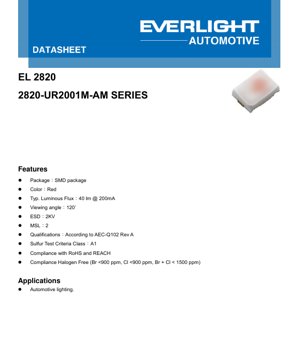
2820-UR2001M-AM श्रृंखला एक उच्च विश्वसनीयता वाली सतह माउंट LED डिवाइस है जिसे कठोर ऑटोमोटिव प्रकाश अनुप्रयोगों के लिए डिज़ाइन किया गया है। यह डिवाइस अपने कॉम्पैक्ट 2820 पैकेज आकार की विशेषता रखती है और 200mA ड्राइव करंट पर 40 लुमेन का विशिष्ट लुमेन आउटपुट प्रदान करती है। इसका प्राथमिक उत्सर्जन रंग लाल है, जिसकी विशिष्ट प्रमुख तरंगदैर्ध्य 618nm है। इस श्रृंखला का एक प्रमुख अंतरकारी लाभ यह है कि यह AEC-Q102 Rev A मानक के अनुरूप है, जो ऑटोमोटिव उद्योग के लिए डिस्क्रीट ऑप्टोइलेक्ट्रॉनिक घटकों का बेंचमार्क विनिर्देश है, जो प्रतिकूल पर्यावरणीय परिस्थितियों में इसके प्रदर्शन और दीर्घायु सुनिश्चित करता है। इसके अतिरिक्त, यह LED सल्फाइड प्रतिरोध (A1 ग्रेड) प्रमाणन भी प्राप्त कर चुकी है, जो उच्च वायु प्रदूषण वाले वातावरण के लिए उपयुक्त है।
1.1 मुख्य लाभ
यह श्रृंखला डिज़ाइन इंजीनियरों को कई महत्वपूर्ण लाभ प्रदान करती है। इसका SMD (सरफेस माउंट डिवाइस) पैकेज स्वचालित असेंबली प्रक्रियाओं की सुविधा प्रदान करता है, जिससे उत्पादन दक्षता और स्थिरता बढ़ती है। 120 डिग्री का चौड़ा व्यूइंग एंगल समान प्रकाश व्यवस्था प्रदान करता है, जो टेल लाइट्स जैसे ऑटोमोटिव सिग्नलिंग कार्यों के लिए महत्वपूर्ण है। डिवाइस की संरचना कठोर पर्यावरणीय मानकों के अनुरूप है, जो RoHS (रेस्ट्रिक्शन ऑफ हैजर्डस सब्सटेंस), REACH विनियमों का पूर्ण अनुपालन करती है और हैलोजन मुक्त है, जो वैश्विक पर्यावरण और सुरक्षा निर्देशों के अनुरूप है। इसके एकीकृत डिज़ाइन ने 2KV (ह्यूमन बॉडी मॉडल) तक की मजबूत ESD (इलेक्ट्रोस्टैटिक डिस्चार्ज) सुरक्षा सुनिश्चित की है, जिससे हैंडलिंग और असेंबली की विश्वसनीयता बढ़ गई है।
1.2 लक्षित बाजार एवं अनुप्रयोग
प्रमुख लक्ष्य बाजार ऑटोमोटिव इलेक्ट्रॉनिक्स क्षेत्र है। विशिष्ट अनुप्रयोगों में शामिल हैं, लेकिन इन्हीं तक सीमित नहीं: बाहरी प्रकाश मॉड्यूल, जैसे रियर कॉम्बिनेशन लैंप (टेल लाइट्स, ब्रेक लाइट्स), सेंटर हाई माउंटेड स्टॉप लैंप (CHMSL), साथ ही इंटीरियर एंबिएंस लाइटिंग। इसकी विश्वसनीयता विनिर्देश इसे किसी भी ऐसे अनुप्रयोग के लिए उपयुक्त बनाते हैं जिसमें व्यापक तापमान सीमा (-40°C से +125°C) में स्थिर प्रदर्शन बनाए रखने की आवश्यकता हो।
2. गहन तकनीकी मापदंड विश्लेषण
यह खंड डेटाशीट में प्रमुख विद्युतीय, प्रकाशीय और तापीय पैरामीटर का विस्तृत, वस्तुनिष्ठ विवेचन प्रदान करता है, और सर्किट डिज़ाइन तथा सिस्टम एकीकरण के लिए उनके महत्व को स्पष्ट करता है।
2.1 फोटोमेट्रिक एवं प्रकाशिकीय विशेषताएँ
मुख्य फोटोमेट्रिक पैरामीटर हैल्यूमिनस फ्लक्स (Iv), जो 200mA के फॉरवर्ड करंट (IF) और 25°C के पैड तापमान पर निर्दिष्ट है, जिसका न्यूनतम मान 33 लुमेन, विशिष्ट मान 40 लुमेन और अधिकतम मान 52 लुमेन है। ±8% की माप सहनशीलता समान परीक्षण स्थितियों के तहत विभिन्न उपकरणों के बीच प्रकाश उत्पादन में अपेक्षित भिन्नता को दर्शाती है।प्रमुख तरंगदैर्ध्य (λd)LED के माने गए रंग को परिभाषित करता है, जो 612nm से 624nm के बीच निर्दिष्ट है, जिसका विशिष्ट मान 618nm (गहरा लाल) है।देखने का कोण120° (सहनशीलता ±5°) है, जिसे उस पूर्ण कोण के रूप में परिभाषित किया गया है जब प्रकाश तीव्रता चरम मान की आधी रह जाती है। यह व्यापक बीम पैटर्न उन अनुप्रयोगों के लिए आदर्श है जिनमें केंद्रित स्पॉट के बजाय बड़े क्षेत्र को प्रकाशित करने की आवश्यकता होती है।
2.2 विद्युतीय गुणधर्म
Theफॉरवर्ड वोल्टेज (VF)ड्राइव डिजाइन का एक महत्वपूर्ण पैरामीटर है। 200mA पर, VF की सीमा 2.00V से 2.75V तक है, जिसका विशिष्ट मान 2.3V है। यह विविधता सुसंगत प्रकाश उत्पादन सुनिश्चित करने और थर्मल रनवे को रोकने के लिए वोल्टेज नियमन के बजाय करंट नियमन वाले बिजली स्रोत के उपयोग की मांग करती है।Absolute Maximum Ratingsकार्य सीमाएं परिभाषित करता है: निरंतर अग्र धारा (IF) 250mA, सर्ज धारा (IFM) ≤10μs पर 1000mA, अधिकतम शक्ति अपव्यय (Pd) 687.5mW। इन रेटिंग्स से अधिक होने पर स्थायी क्षति हो सकती है।
2.3 ऊष्मीय गुणधर्म
LED के प्रदर्शन और जीवनकाल के लिए थर्मल प्रबंधन महत्वपूर्ण है।Thermal Resistanceजंक्शन से सोल्डर पॉइंट तक थर्मल प्रतिरोध दो तरह से निर्दिष्ट है: "वास्तविक" मान (Rth JS real) टाइपिकल 18 K/W / मैक्सिमम 24 K/W, और "विद्युत" मान (Rth JS el) टाइपिकल 12 K/W / मैक्सिमम 16 K/W। विद्युत विधि VF के तापमान गुणांक पर आधारित है और आमतौर पर कम होती है। डिजाइनरों को रूढ़िवादी थर्मल डिजाइन के लिए उच्च "वास्तविक" मान का उपयोग करना चाहिए। अधिकतम अनुमेयJunction Temperature (TJ)150°C है।फॉरवर्ड करंट डेरेटिंग कर्वयह ग्राफिक रूप से दर्शाता है कि जब पैड तापमान (Ts) 25°C से अधिक हो जाता है, तो जंक्शन तापमान को सुरक्षित सीमा के भीतर रखने के लिए अधिकतम अनुमत निरंतर धारा को कैसे कम करना चाहिए।
3. बिनिंग प्रणाली विवरण
निर्माण विविधताओं का प्रबंधन करने के लिए, LED को उनके प्रदर्शन के आधार पर बिन में वर्गीकृत किया जाता है। यह डिजाइनर को विशिष्ट सिस्टम आवश्यकताओं को पूरा करने वाले उपकरणों का चयन करने में सक्षम बनाता है।
3.1 ल्यूमेन आउटपुट बिनिंग
उपकरणों को तीन लुमेन आउटपुट बिन में वर्गीकृत किया गया है: F2 (33-39 लुमेन), F3 (39-45 लुमेन), और F4 (45-52 लुमेन)। यह आवश्यक चमक स्तर के आधार पर चयन की अनुमति देता है, जिससे लागत और प्रदर्शन का अनुकूलन संभव हो सकता है।
3.2 फॉरवर्ड वोल्टेज ग्रेडिंग
वोल्टेज बिन: 2022 (2.00-2.25V), 2225 (2.25-2.50V), और 2527 (2.50-2.75V) हैं। समानांतर कॉन्फ़िगरेशन में, समान वोल्टेज बिन के एलईडी का मिलान करने से अधिक समान करंट वितरण प्राप्त करने में सहायता मिलती है।
3.3 डोमिनेंट वेवलेंथ ग्रेडिंग
रंग चार समूहों में विभाजित हैं: 1215 (612-615nm), 1518 (615-618nm), 1821 (618-621nm), और 2124 (621-624nm)। यह प्रकाश घटक के भीतर रंग स्थिरता सुनिश्चित करता है, जो ऑटोमोटिव अनुप्रयोगों में सौंदर्यशास्त्र और विनियामक आवश्यकताओं के लिए महत्वपूर्ण है।
4. परफॉर्मेंस कर्व विश्लेषण
प्रदान किए गए ग्राफ़ विभिन्न परिचालन स्थितियों के तहत एलईडी के व्यवहार के बारे में महत्वपूर्ण अंतर्दृष्टि प्रदान करते हैं।
4.1 IV कर्व और सापेक्ष ल्यूमिनस फ्लक्स
Theअग्र धारा बनाम अग्र वोल्टेजचित्र एक विशिष्ट डायोड घातांकीय संबंध दर्शाता है।सापेक्ष चमकदार प्रवाह बनाम अग्र धाराचित्र दर्शाता है कि प्रकाश उत्पादन धारा के साथ उप-रैखिक रूप से बढ़ता है, जो उच्च ड्राइव स्तरों पर ताप प्रबंधन के महत्व पर प्रकाश डालता है।
4.2 तापमान निर्भरता
Theसापेक्ष अग्र वोल्टेज बनाम जंक्शन तापमानचित्र दर्शाता है कि VF तापमान बढ़ने के साथ रैखिक रूप से घटता है (ऋणात्मक तापमान गुणांक), जिसका उपयोग जंक्शन तापमान अनुमान के लिए किया जा सकता है।सापेक्ष प्रकाश प्रवाह बनाम जंक्शन तापमानग्राफ दर्शाता है कि तापमान बढ़ने के साथ प्रकाश उत्पादन कम हो जाता है, जो उच्च तापमान वाले वातावरण में चमक बनाए रखने के लिए एक महत्वपूर्ण विचार है।सापेक्ष तरंगदैर्ध्य बनाम जंक्शन तापमानग्राफ दर्शाता है कि मुख्य तरंगदैर्ध्य तापमान बढ़ने के साथ बढ़ता है (लंबी तरंगदैर्ध्य की ओर खिसकता है)।
4.3 स्पेक्ट्रम वितरण और पल्स हैंडलिंग क्षमता
Theसापेक्ष स्पेक्ट्रम वितरणवक्र मोनोक्रोमैटिक लाल प्रकाश उत्पादन की पुष्टि करता है, जिसका शिखर मुख्य तरंगदैर्ध्य के आसपास है।अनुमत पल्स हैंडलिंग क्षमताग्राफ विभिन्न पल्स चौड़ाई (tp) और ड्यूटी साइकिल (D) के लिए अधिकतम अनुमत गैर-दोहराव या पल्स करंट को परिभाषित करता है, जो PWM (पल्स-विड्थ मॉड्यूलेशन) डिमिंग या अल्पकालिक उच्च-धारा पल्स के उपयोग वाले डिज़ाइन के लिए महत्वपूर्ण है।
5. यांत्रिक और पैकेजिंग जानकारी
5.1 भौतिक आयाम
LED 2820 पैकेज में आता है, जिसका नाममात्र आकार लंबाई 2.8 मिमी और चौड़ाई 2.0 मिमी है। विस्तृत यांत्रिक चित्र सभी महत्वपूर्ण आयामों को निर्दिष्ट करते हैं, जिसमें कुल ऊंचाई, लीड पिच और थर्मल पैड का आकार/स्थान शामिल है। जब तक अन्यथा न कहा गया हो, सहनशीलता आमतौर पर ±0.1 मिमी होती है।
5.2 अनुशंसित पैड डिज़ाइन
PCB (मुद्रित सर्किट बोर्ड) डिज़ाइन के लिए पैड पैटर्न (फुटप्रिंट आयाम) प्रदान किए गए हैं। इसमें एनोड/कैथोड पैड और केंद्रीय थर्मल पैड के आयाम शामिल हैं। विश्वसनीय सोल्डर जोड़, थर्मल पैड से PCB तक प्रभावी ऊष्मा स्थानांतरण और रिफ्लो प्रक्रिया के दौरान टॉम्बस्टोनिंग को रोकने के लिए इस अनुशंसा का पालन करना महत्वपूर्ण है।
5.3 ध्रुवीयता पहचान
डेटाशीट में आरेख डिवाइस पर ध्रुवीयता चिह्न दर्शाते हैं। सर्किट के कार्य के लिए सही अभिविन्यास महत्वपूर्ण है। आमतौर पर, कैथोड को एक खांचे, बिंदु या पैकेज पर हरे रंग के निशान द्वारा पहचाना जाता है।
6. सोल्डरिंग एवं असेंबली दिशानिर्देश
6.1 रीफ्लो सोल्डरिंग तापमान प्रोफ़ाइल
यह डिवाइस 30 सेकंड तक 260°C के अधिकतम सोल्डरिंग तापमान का सामना कर सकता है। आमतौर पर एक विस्तृत रीफ्लो तापमान प्रोफाइल आरेख प्रदान किया जाता है, जो प्रीहीट, सोक, रीफ्लो (पीक तापमान और लिक्विडस से ऊपर का समय) और कूलिंग के लिए तापमान बढ़ाने/कम करने की दर निर्धारित करता है। इस प्रोफाइल का पालन करने से थर्मल शॉक को रोका जा सकता है और सोल्डर जोड़ों की अखंडता सुनिश्चित होती है।
6.2 उपयोग के दौरान सावधानियां
सामान्य संचालन सावधानियों में शामिल हैं: LED लेंस पर यांत्रिक तनाव से बचना, ऑप्टिकल सतहों के प्रदूषण को रोकना, और संचालन एवं असेंबली प्रक्रिया के दौरान मानक ESD (इलेक्ट्रोस्टैटिक डिस्चार्ज) सुरक्षा उपायों का पालन करना। यह उपकरण रिवर्स वोल्टेज संचालन के लिए डिज़ाइन नहीं किया गया है।
6.3 भंडारण की शर्तें
निर्दिष्ट भंडारण तापमान सीमा -40°C से +125°C तक है। दीर्घकालिक भंडारण के लिए, उपकरण को मूल नमी-रोधी बैग (MSL 2 ग्रेड यह दर्शाता है कि ≤30°C/60% RH वातावरण में, बैग खोलने के बाद फ्लोर लाइफ 1 वर्ष है) में संरक्षित रखने की सलाह दी जाती है।
7. पैकेजिंग और आर्डर जानकारी
7.1 पैकेजिंग विशिष्टताएं
LED को टेप और रील के रूप में आपूर्ति की जाती है, जो स्वचालित सतह माउंट असेंबली उपकरणों के साथ संगत है। पैकेजिंग जानकारी रील आकार, कैरियर टेप चौड़ाई, पॉकेट पिच और कैरियर टेप पर उपकरण की अभिविन्यास दिशा को विस्तार से बताती है।
7.2 पार्ट नंबर प्रणाली
पार्ट नंबर 2820-UR2001M-AM का डिकोडिंग इस प्रकार है:2820= पैकेज श्रृंखला;UR= रंग (लाल);200= टेस्ट करंट (200mA);1= लीड फ्रेम प्रकार (1=गोल्ड);M= चमक स्तर (मध्यम);AM= ऑटोमोटिव अनुप्रयोग। यह संरचित नामकरण विधि डिवाइस के प्रमुख गुणों की सटीक पहचान कर सकती है।
8. अनुप्रयोग सुझाव
8.1 विशिष्ट अनुप्रयोग सर्किट
निरंतर चमक प्राप्त करने के लिए, एक सीरीज़ रेसिस्टर के साथ कॉन्स्टेंट वोल्टेज पावर सप्लाई का उपयोग करना सबसे सरल ड्राइविंग विधि है, लेकिन यह कम दक्ष है। ऑटोमोटिव अनुप्रयोगों के लिए, समर्पित LED ड्राइवर IC का उपयोग करने की सिफारिश की जाती है। इस ड्राइवर IC को कॉन्स्टेंट करंट आउटपुट प्रदान करना चाहिए, PWM डिमिंग क्षमता होनी चाहिए, और इसमें ओवरवोल्टेज, ओवरकरंट और थर्मल शटडाउन जैसी सुरक्षा सुविधाएं शामिल होनी चाहिए। सर्वोत्तम जीवनकाल प्राप्त करने के लिए, LED को अनुशंसित मान 200mA या उससे कम पर ड्राइव किया जाना चाहिए, और परिवेश के तापमान में वृद्धि होने पर डेरेटिंग कर्व का संदर्भ लेना चाहिए।
8.2 थर्मल डिज़ाइन विचार
प्रभावी ताप अपव्यय महत्वपूर्ण है। PCB को हीट सिंक के रूप में पर्याप्त तांबे की पन्नी क्षेत्र (कई वाया के माध्यम से हीट पैड से जुड़ा हुआ) का उपयोग करना चाहिए। सिस्टम का थर्मल प्रतिरोध (जंक्शन से परिवेश, Rth JA) इतना कम होना चाहिए कि अपेक्षित ऑपरेटिंग करंट और परिवेश के तापमान पर जंक्शन तापमान 150°C से काफी नीचे बना रहे। गणना में अधिकतम थर्मल प्रतिरोध (Rth JS real) का उपयोग करना चाहिए और सबसे खराब पर्यावरणीय परिस्थितियों पर विचार करना चाहिए।
8.3 ऑप्टिकल डिज़ाइन विचार
120° के चौड़े व्यूइंग एंगल के लिए सिग्नल लाइट्स जैसे विशिष्ट अनुप्रयोगों के लिए बीम को आकार देने के लिए सेकेंडरी ऑप्टिकल घटकों (लेंस, लाइट गाइड या रिफ्लेक्टर) की आवश्यकता हो सकती है। इन ऑप्टिकल घटकों की सामग्री LED की तरंग दैर्ध्य के साथ संगत होनी चाहिए और ऑपरेटिंग तापमान को सहन करने में सक्षम होनी चाहिए, और यदि बाहरी उपयोग के लिए है तो यूवी विकिरण को भी सहन करने में सक्षम होनी चाहिए।
9. तकनीकी तुलना एवं विभेदीकरण
मानक वाणिज्यिक-ग्रेड LED की तुलना में, 2820-UR2001M-AM श्रृंखला का विभेदीकरण इसकेAEC-Q102 प्रमाणनइसमें तापमान चक्र, नमी प्रतिरोध, उच्च तापमान परिचालन जीवन और अन्य तनाव परीक्षण शामिल हैं।सल्फाइड प्रतिरोध क्षमता (ए1 ग्रेड)यह एक और महत्वपूर्ण अंतर है, जो प्रदूषित वातावरण में चांदी के प्लेटेड घटकों को संक्षारण से बचाता है - यह ऑटोमोटिव और औद्योगिक वातावरण में एक सामान्य समस्या है। कॉम्पैक्ट एसएमडी पैकेजिंग के साथ इस स्तर की मजबूती का संयोजन, सीमित स्थान वाले उच्च विश्वसनीयता अनुप्रयोगों के लिए एक महत्वपूर्ण लाभ है।
10. सामान्य प्रश्न (FAQ)
10.1 "Typical" और "Maximum" फॉरवर्ड वोल्टेज में क्या अंतर है?
"टाइपिकल" मान 2.3V उत्पादन में औसत या सबसे सामान्य मान का प्रतिनिधित्व करता है। "मैक्सिमम" मान 2.75V वह ऊपरी सीमा है जिसकी गारंटी स्पेसिफिकेशन में दी जाती है। आपके ड्राइव सर्किट को अधिकतम VF को संभालने के लिए डिज़ाइन किया जाना चाहिए, ताकि सभी डिवाइसों (उन डिवाइसों सहित जो वोल्टेज वितरण के उच्च छोर पर हैं) को आवश्यक धारा प्रदान की जा सके।
10.2 क्या मैं इस LED को 3.3V पावर सप्लाई और एक रेसिस्टर से ड्राइव कर सकता हूँ?
हाँ, लेकिन सावधानीपूर्वक गणना की आवश्यकता है। मान लें कि 200mA पर विशिष्ट VF 2.3V है, तो रोकनेवाला को 1.0V (3.3V - 2.3V) वहन करने की आवश्यकता है। ओम के नियम (R = V/I) के अनुसार, R = 1.0V / 0.2A = 5 ओम। रोकनेवाला की निर्धारित शक्ति P = I²R = (0.2)² * 5 = 0.2W होनी चाहिए, इसलिए 0.25W या 0.5W रोकनेवाला का उपयोग करने की सिफारिश की जाती है। हालाँकि, यह विधि अक्षम है (शक्ति रोकनेवाले पर व्यर्थ होती है), और चमक VF में परिवर्तन के साथ बदल जाएगी। निरंतर धारा ड्राइवर प्रदर्शन और दक्षता दोनों में बेहतर हैं।
10.3 लुमेन आउटपुट को पैड तापमान 25°C पर क्यों मापा जाता है?
LED का प्रकाश उत्पादन अर्धचालक जंक्शन के तापमान पर अत्यधिक निर्भर करता है। नियंत्रित पैड तापमान (जंक्शन तापमान के प्रॉक्सी के रूप में) पर मापन, प्रदर्शन की तुलना के लिए एक सुसंगत और पुनरावर्तनीय आधार प्रदान करता है। व्यावहारिक अनुप्रयोगों में, जंक्शन तापमान अधिक होगा और वास्तविक प्रकाश उत्पादन कम होगा, जैसा कि "सापेक्ष प्रकाश प्रवाह बनाम जंक्शन तापमान" ग्राफ में दिखाया गया है।
11. डिज़ाइन एवं उपयोग केस स्टडी
परिदृश्य: एक यात्री वाहन रियर टेल लैंप डिज़ाइन करना।डिज़ाइन आवश्यकता निर्दिष्ट क्षेत्र में एक समान लाल प्रकाश व्यवस्था प्राप्त करना है। 2820 LED का चयन इसकी ऑटोमोटिव-ग्रेड विश्वसनीयता, कॉम्पैक्ट आकार और चौड़े देखने के कोण के कारण किया गया है। आठ LEDs को एक रैखिक सरणी में समूहित किया गया है। उन्हें एक ऑटोमोटिव-ग्रेड बक-मोड निरंतर धारा LED ड्राइवर IC द्वारा संचालित किया जाता है, जिसका आउटपुट 200mA पर सेट है। इस ड्राइवर IC में PWM डिमिंग इनपुट शामिल है, जो एक ही समूह को टेल लैंप (मंद) और ब्रेक लैंप (पूर्ण चमक) दोनों के रूप में कार्य करने की अनुमति देता है। PCB 2-औंस तांबे की मोटाई का उपयोग करता है, और बड़े थर्मल पैड को गर्मी अपव्यय के लिए थर्मल वाया के माध्यम से आंतरिक ग्राउंड लेयर से जोड़ा गया है। LEDs को समान लुमेन (F3) और प्रमुख तरंगदैर्ध्य (1821) बिन से चुना गया है ताकि पूरे असेंबली में सुसंगत चमक और रंग सुनिश्चित हो सके। अंतिम डिज़ाइन को ऑटोमोटिव मानकों के अनुसार तापमान चक्र, आर्द्रता और कंपन परीक्षणों के लिए मान्य किया गया है।
12. कार्य सिद्धांत
LED (लाइट एमिटिंग डायोड) एक सेमीकंडक्टर p-n जंक्शन डिवाइस है। जब फॉरवर्ड वोल्टेज जंक्शन के अंतर्निहित विभव से अधिक लगाया जाता है, तो n-टाइप क्षेत्र से इलेक्ट्रॉन और p-टाइप क्षेत्र से होल सक्रिय परत के भीतर पुनर्संयोजित होते हैं। यह पुनर्संयोजन प्रक्रिया ऊर्जा को फोटॉन (प्रकाश) के रूप में मुक्त करती है। उत्सर्जित प्रकाश की विशिष्ट तरंगदैर्ध्य (रंग) सक्रिय क्षेत्र में उपयोग की जाने वाली सेमीकंडक्टर सामग्री के ऊर्जा बैंड गैप द्वारा निर्धारित होती है। इस डिवाइस में, सामग्री को दृश्यमान स्पेक्ट्रम के लाल भाग (लगभग 618nm) में फोटॉन उत्पन्न करने के लिए डिज़ाइन किया गया है। एपॉक्सी रेजिन लेंस सेमीकंडक्टर चिप को एनकैप्सुलेट करता है, यांत्रिक सुरक्षा प्रदान करता है और आउटगोइंग लाइट पैटर्न को आकार देता है।
13. प्रौद्योगिकी रुझान
ऑटोमोटिव LED प्रौद्योगिकी का समग्र रुझान उच्च दक्षता (प्रति वाट अधिक लुमेन), उच्च शक्ति घनत्व (छोटे पैकेज से अधिक प्रकाश), और अधिक चरम परिस्थितियों में बढ़ी हुई विश्वसनीयता की ओर है। स्मार्ट कार्यों का एकीकरण बढ़ रहा है, जैसे कि LED पैकेजिंग के भीतर सेंसर या ड्राइव इलेक्ट्रॉनिक्स को एम्बेड करना। इसके अलावा, प्रकाश नियंत्रण के लिए मानकीकृत संचार प्रोटोकॉल (जैसे LIN या CAN बस) को बढ़ावा देने का रुझान भी मजबूत हो रहा है। स्थिरता पर ध्यान हानिकारक पदार्थों के उन्मूलन और पर्यावरणीय प्रभाव को कम करने के लिए विनिर्माण प्रक्रियाओं में सुधार को लगातार प्रेरित कर रहा है।
LED विनिर्देशन शब्दावली का विस्तृत विवरण
LED प्रौद्योगिकी शब्दावली पूर्ण व्याख्या
1. प्रकाश-विद्युत प्रदर्शन के मुख्य मापदंड
| शब्दावली | इकाई/प्रतिनिधित्व | सामान्य व्याख्या | यह महत्वपूर्ण क्यों है |
|---|---|---|---|
| दीप्त प्रभावकारिता (Luminous Efficacy) | lm/W (लुमेन प्रति वाट) | प्रति वाट विद्युत ऊर्जा से उत्सर्जित प्रकाश प्रवाह, जितना अधिक होगा उतनी ही अधिक ऊर्जा बचत होगी। | यह सीधे तौर पर प्रकाश उपकरण की ऊर्जा दक्षता श्रेणी और बिजली लागत निर्धारित करता है। |
| प्रकाश प्रवाह (Luminous Flux) | lm (लुमेन) | प्रकाश स्रोत द्वारा उत्सर्जित प्रकाश की कुल मात्रा, जिसे आम बोलचाल में "चमक" कहा जाता है। | यह निर्धारित करता है कि प्रकाश उपकरण पर्याप्त रूप से चमकीला है या नहीं। |
| प्रकाशन कोण (Viewing Angle) | ° (डिग्री), जैसे 120° | वह कोण जिस पर प्रकाश तीव्रता आधी रह जाती है, यह प्रकाश पुंज की चौड़ाई निर्धारित करता है। | प्रकाश के कवरेज क्षेत्र और एकरूपता को प्रभावित करता है। |
| वर्ण तापमान (CCT) | K (केल्विन), जैसे 2700K/6500K | प्रकाश का रंग गर्म या ठंडा, कम मान पीला/गर्म, उच्च मान सफेद/ठंडा। | प्रकाश व्यवस्था के वातावरण और उपयुक्त परिदृश्यों को निर्धारित करता है। |
| कलर रेंडरिंग इंडेक्स (CRI / Ra) | कोई इकाई नहीं, 0–100 | वस्तुओं के वास्तविक रंगों को प्रकाश स्रोत द्वारा प्रदर्शित करने की क्षमता, Ra≥80 उत्तम माना जाता है। | रंगों की वास्तविकता को प्रभावित करता है, मॉल, आर्ट गैलरी जैसे उच्च आवश्यकता वाले स्थानों में उपयोग किया जाता है। |
| Color Tolerance (SDCM) | MacAdam Ellipse Steps, जैसे "5-step" | रंग एकरूपता का मात्रात्मक मापदंड, चरण संख्या जितनी कम होगी रंग उतने ही अधिक सुसंगत होंगे। | एक ही बैच के दीपकों के रंगों में कोई अंतर नहीं होने की गारंटी देता है। |
| Dominant Wavelength | nm (नैनोमीटर), जैसे 620nm (लाल) | रंगीन LED रंगों के संगत तरंगदैर्ध्य मान। | लाल, पीला, हरा आदि एकवर्णी LED के रंगतत्व (ह्यू) को निर्धारित करता है। |
| स्पेक्ट्रम वितरण (Spectral Distribution) | तरंगदैर्ध्य बनाम तीव्रता वक्र | LED द्वारा उत्सर्जित प्रकाश की विभिन्न तरंगदैर्ध्य पर तीव्रता वितरण को दर्शाता है। | रंग प्रस्तुति (कलर रेंडरिंग) और रंग गुणवत्ता को प्रभावित करता है। |
2. विद्युत मापदंड
| शब्दावली | प्रतीक | सामान्य व्याख्या | डिज़ाइन संबंधी विचार |
|---|---|---|---|
| फॉरवर्ड वोल्टेज (Forward Voltage) | Vf | एलईडी को प्रकाशित करने के लिए आवश्यक न्यूनतम वोल्टेज, एक प्रकार का "स्टार्ट-अप थ्रेशोल्ड" जैसा। | ड्राइविंग पावर सप्लाई वोल्टेज ≥ Vf होना चाहिए, कई LED श्रृंखला में जुड़े होने पर वोल्टेज जुड़ जाता है। |
| फॉरवर्ड करंट (Forward Current) | If | LED को सामान्य रूप से चमकने के लिए आवश्यक करंट मान। | आमतौर पर कॉन्स्टेंट करंट ड्राइव का उपयोग किया जाता है, करंट चमक और आयु निर्धारित करता है। |
| अधिकतम पल्स करंट (Pulse Current) | Ifp | डिमिंग या फ्लैश के लिए अल्प अवधि में सहन की जा सकने वाली चरम धारा। | पल्स चौड़ाई और ड्यूटी साइकल को सख्ती से नियंत्रित किया जाना चाहिए, अन्यथा अत्यधिक गर्मी से क्षति हो सकती है। |
| रिवर्स वोल्टेज (Reverse Voltage) | Vr | LED द्वारा सहन की जा सकने वाली अधिकतम रिवर्स वोल्टेज, इससे अधिक होने पर ब्रेकडाउन हो सकता है। | सर्किट में रिवर्स कनेक्शन या वोल्टेज स्पाइक से बचाव आवश्यक है। |
| Thermal Resistance | Rth(°C/W) | चिप से सोल्डर पॉइंट तक ऊष्मा प्रवाह में प्रतिरोध, कम मान बेहतर हीट डिसिपेशन दर्शाता है। | उच्च थर्मल रेजिस्टेंस के लिए मजबूत हीट सिंक डिज़ाइन चाहिए, नहीं तो जंक्शन तापमान बढ़ जाता है। |
| ESD Immunity | V (HBM), जैसे 1000V | इलेक्ट्रोस्टैटिक शॉक प्रतिरोध क्षमता, मान जितना अधिक होगा, इलेक्ट्रोस्टैटिक क्षति से उतना ही कम प्रभावित होगा। | उत्पादन में इलेक्ट्रोस्टैटिक सुरक्षा उपाय करने आवश्यक हैं, विशेष रूप से उच्च संवेदनशीलता वाले LED के लिए। |
तीन, थर्मल प्रबंधन और विश्वसनीयता
| शब्दावली | प्रमुख संकेतक | सामान्य व्याख्या | प्रभाव |
|---|---|---|---|
| जंक्शन तापमान (Junction Temperature) | Tj (°C) | LED चिप के अंदर का वास्तविक कार्य तापमान। | प्रत्येक 10°C कमी पर, जीवनकाल दोगुना हो सकता है; अत्यधिक तापमान से लुमेन ह्रास और रंग विस्थापन होता है। |
| लुमेन ह्रास (Lumen Depreciation) | L70 / L80 (घंटे) | प्रारंभिक चमक के 70% या 80% तक गिरने में लगने वाला समय। | LED के "उपयोगी जीवन" को सीधे परिभाषित करता है। |
| लुमेन रखरखाव (Lumen Maintenance) | % (जैसे 70%) | एक निश्चित अवधि के उपयोग के बाद शेष चमक का प्रतिशत। | दीर्घकालिक उपयोग के बाद चमक बनाए रखने की क्षमता को दर्शाता है। |
| रंग विस्थापन (Color Shift) | Δu′v′ या मैकएडम दीर्घवृत्त | उपयोग के दौरान रंग में परिवर्तन की मात्रा। | प्रकाश व्यवस्था के दृश्य की रंग एकरूपता को प्रभावित करता है। |
| तापीय अवक्षय (Thermal Aging) | सामग्री प्रदर्शन में गिरावट | लंबे समय तक उच्च तापमान के कारण एनकैप्सुलेशन सामग्री का क्षरण। | चमक में कमी, रंग परिवर्तन या ओपन-सर्किट विफलता का कारण बन सकता है। |
चार, पैकेजिंग और सामग्री
| शब्दावली | सामान्य प्रकार | सामान्य व्याख्या | विशेषताएं और अनुप्रयोग |
|---|---|---|---|
| एनकैप्सुलेशन प्रकार | ईएमसी, पीपीए, सिरेमिक | चिप की सुरक्षा करने और प्रकाशिकी, तापीय इंटरफेस प्रदान करने वाली आवरण सामग्री। | ईएमसी ताप प्रतिरोधी अच्छा, लागत कम; सिरेमिक ताप अपव्यय उत्कृष्ट, जीवनकाल लंबा। |
| चिप संरचना | फॉरवर्ड माउंटेड, फ्लिप चिप (Flip Chip) | चिप इलेक्ट्रोड व्यवस्था का तरीका। | फ्लिप-चिप बेहतर ताप अपव्यय और उच्च प्रकाश दक्षता प्रदान करता है, जो उच्च शक्ति के लिए उपयुक्त है। |
| फॉस्फर कोटिंग | YAG, सिलिकेट, नाइट्राइड | नीले प्रकाश चिप पर लगाया जाता है, जो आंशिक रूप से पीले/लाल प्रकाश में परिवर्तित होकर सफेद प्रकाश बनाता है। | विभिन्न फॉस्फर प्रकाश दक्षता, रंग तापमान और रंग प्रतिपादन को प्रभावित करते हैं। |
| लेंस/ऑप्टिकल डिज़ाइन | प्लानर, माइक्रोलेंस, टोटल इंटरनल रिफ्लेक्शन | एनकैप्सुलेशन सतह की प्रकाशीय संरचना, प्रकाश वितरण को नियंत्रित करती है। | उत्सर्जन कोण और प्रकाश वितरण वक्र निर्धारित करता है। |
पाँच, गुणवत्ता नियंत्रण और ग्रेडिंग
| शब्दावली | ग्रेडिंग सामग्री | सामान्य व्याख्या | उद्देश्य |
|---|---|---|---|
| लुमेनस फ्लक्स ग्रेडिंग | कोड जैसे 2G, 2H | चमक के स्तर के अनुसार समूहीकरण, प्रत्येक समूह का न्यूनतम/अधिकतम लुमेन मान होता है। | यह सुनिश्चित करना कि एक ही बैच के उत्पादों की चमक समान हो। |
| वोल्टेज ग्रेडिंग | कोड जैसे 6W, 6X | फॉरवर्ड वोल्टेज रेंज के अनुसार समूहीकृत। | ड्राइविंग पावर स्रोत मिलान में सुविधा, सिस्टम दक्षता में सुधार। |
| रंग विभेदन ग्रेडिंग | 5-step MacAdam ellipse | रंग निर्देशांक के अनुसार समूहीकृत, यह सुनिश्चित करते हुए कि रंग अत्यंत सीमित सीमा के भीतर आता है। | रंग एकरूपता सुनिश्चित करना, एक ही ल्यूमिनेयर के भीतर रंग असमानता से बचना। |
| रंग तापमान श्रेणीकरण | 2700K, 3000K आदि | रंग तापमान के अनुसार समूहीकृत करें, प्रत्येक समूह की संबंधित निर्देशांक सीमा होती है। | विभिन्न परिदृश्यों की रंग तापमान आवश्यकताओं को पूरा करें। |
छह, परीक्षण और प्रमाणन
| शब्दावली | Standard/Test | सामान्य व्याख्या | Significance |
|---|---|---|---|
| LM-80 | Lumen Maintenance Test | Long-term operation under constant temperature conditions, recording data on luminous flux depreciation. | Used to estimate LED lifetime (in conjunction with TM-21). |
| TM-21 | जीवन प्रक्षेपण मानक | LM-80 डेटा के आधार पर वास्तविक उपयोग की स्थितियों में जीवन का अनुमान लगाना। | वैज्ञानिक जीवन पूर्वानुमान प्रदान करना। |
| IESNA मानक | इल्युमिनेटिंग इंजीनियरिंग सोसाइटी मानक | प्रकाशिकी, विद्युत और ऊष्मा परीक्षण विधियों को शामिल करता है। | उद्योग द्वारा स्वीकृत परीक्षण आधार। |
| RoHS / REACH | पर्यावरण प्रमाणन | यह सुनिश्चित करना कि उत्पाद में हानिकारक पदार्थ (जैसे सीसा, पारा) न हों। | अंतरराष्ट्रीय बाजार में प्रवेश की पात्रता शर्तें। |
| ENERGY STAR / DLC | ऊर्जा दक्षता प्रमाणन | प्रकाश उत्पादों के लिए ऊर्जा दक्षता और प्रदर्शन प्रमाणन। | आमतौर पर सरकारी खरीद, सब्सिडी कार्यक्रमों में उपयोग किया जाता है, बाजार प्रतिस्पर्धा बढ़ाने के लिए। |