विषय-सूची
- 1. उत्पाद अवलोकन
- 2. तकनीकी पैरामीटर गहन विश्लेषण
- 2.1 पूर्ण अधिकतम रेटिंग्स
- 2.2 इलेक्ट्रो-ऑप्टिकल विशेषताएँ
- 2.3 Electrical Characteristics
- 3. Communication Protocol & Timing
- 3.1 Data Transfer Timing
- 4. Mechanical & Package Information
- 4.1 पैकेज डाइमेंशन एंड पिनआउट
- 5. Soldering, Assembly & Storage Guidelines
- 5.1 सोल्डरिंग की शर्तें
- 5.2 नमी संवेदनशीलता और भंडारण
- 6. पैकेजिंग और ऑर्डरिंग
- 7. अनुप्रयोग सुझाव और डिजाइन विचार
- 7.1 विशिष्ट अनुप्रयोग
- 7.2 महत्वपूर्ण डिज़ाइन विचार
- 8. तकनीकी तुलना और विभेदन
- 9. अक्सर पूछे जाने वाले प्रश्न (FAQ)
- 9.1 मैं इनमें से कितने LED को डेज़ी-चेन कर सकता हूँ?
- 9.2 बाहरी रेज़िस्टर्स बिल्कुल आवश्यक क्यों हैं?
- 9.3 क्या मैं DIN पिन को नियंत्रित करने के लिए 3.3V माइक्रोकंट्रोलर का उपयोग कर सकता हूँ?
- 9.4 विद्युत विशेषताओं में उल्लिखित SET पिन का उद्देश्य क्या है?
- 10. Operating Principle Introduction
- 11. Development Trends and Context
1. उत्पाद अवलोकन
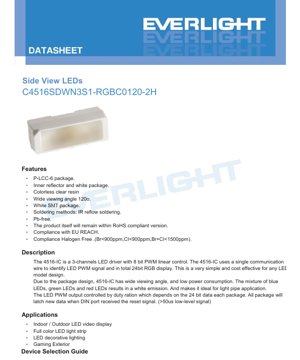
The C4516SDWN3S1-RGBC0120-2H एक एकीकृत स्मार्ट पिक्सेल LED घटक है। यह लाल, हरे और नीले LED चिप्स को एक समर्पित 3-चैनल ड्राइवर एकीकृत सर्किट (IC) के साथ एक ही P-LCC-6 सतह-माउंट डिवाइस (SMD) पैकेज में जोड़ता है। यह एकीकरण प्रत्येक रंग चैनल के लिए बाहरी ड्राइवर घटकों की आवश्यकता को समाप्त करके डिजाइन को सरल बनाता है।
एकीकृत ड्राइवर IC (दस्तावेज़ में 4516-IC के रूप में संदर्भित) का मुख्य कार्य लाल (R), हरे (G) और नीले (B) एलईडी में से प्रत्येक के लिए व्यक्तिगत 8-बिट पल्स विड्थ मॉड्यूलेशन (PWM) रैखिक नियंत्रण प्रदान करना है। यह सटीक तीव्रता मिश्रण के माध्यम से 16.7 मिलियन रंग (2^24) बनाने की अनुमति देता है। नियंत्रण एक सरल, सिंगल-वायर सीरियल कम्युनिकेशन प्रोटोकॉल के माध्यम से प्राप्त किया जाता है, जो इसे विभिन्न प्रकाश डिजाइनों में लागू करने के लिए अत्यधिक लागत-प्रभावी और आसान बनाता है।
पैकेज में एक आंतरिक परावर्तक होता है और यह रंगहीन स्पष्ट रेजिन से ढाला जाता है, जो इसके व्यापक 120-डिग्री दृश्य कोण में योगदान देता है। तीन प्राथमिक रंग एलईडी से प्रकाश का मिश्रण एक सफेद उत्सर्जन का परिणाम देता है, जो इस घटक को बैकलाइटिंग और लाइट पाइप अनुप्रयोगों के लिए विशेष रूप से उपयुक्त बनाता है जहां समान, व्यापक-कोण प्रकाश व्यवस्था की आवश्यकता होती है।
2. तकनीकी पैरामीटर गहन विश्लेषण
2.1 पूर्ण अधिकतम रेटिंग्स
ये रेटिंग उन सीमाओं को परिभाषित करती हैं जिनके बाहर डिवाइस को स्थायी क्षति हो सकती है। इन सीमाओं के बाहर संचालन की गारंटी नहीं है।
- पावर सप्लाई वोल्टेज (VDD): अधिकतम 6.5V। सामान्य संचालन वोल्टेज 5V है, जो एक सुरक्षित मार्जिन प्रदान करता है।
- पावर डिसिपेशन (PD): 400 mW से कम। यह IC और LEDs द्वारा संयुक्त रूप से उत्पन्न कुल ऊष्मा को सीमित करता है।
- LED Output Current (Iout): प्रति चैनल अधिकतम 25 mA। विद्युत विशेषताओं में सामान्य आउटपुट करंट 20 mA निर्दिष्ट है।
- Operating Temperature (Topr): -25°C to +85°C. यह विश्वसनीय संचालन के लिए परिवेश तापमान सीमा को परिभाषित करता है।
- Storage Temperature (Tstg): -40°C से +90°C.
- Electrostatic Discharge (ESD): 2000V सहन करता है, जो हैंडलिंग सुरक्षा का एक बुनियादी स्तर दर्शाता है।
- Soldering Temperature: लीड-मुक्त (Pb-मुक्त) प्रक्रियाओं के साथ संगत: अधिकतम 10 सेकंड के लिए 260°C पर IR रीफ्लो सोल्डरिंग, या अधिकतम 3 सेकंड के लिए 350°C पर हैंड सोल्डरिंग।
2.2 इलेक्ट्रो-ऑप्टिकल विशेषताएँ
Ta=25°C और VDD=5V पर मापे गए, ये पैरामीटर प्रकाश उत्पादन प्रदर्शन को परिभाषित करते हैं।
- ज्योति तीव्रता (Iv):
- लाल (R): 450 mcd (न्यूनतम) से 1120 mcd (अधिकतम)। इस सीमा के भीतर विशिष्ट मान निहित है।
- Green (G): 1120 mcd (Min) से 2800 mcd (Max). Green आमतौर पर सबसे चमकीला चैनल होता है।
- Blue (B): 280 mcd (Min) से 710 mcd (Max).
- Tolerance: ±11% for luminous intensity.
- Viewing Angle (2θ1/2): 100° (Min), 120° (Typical), 140° (Max). The wide 120° typical angle is a key feature.
- प्रमुख तरंगदैर्ध्य (λd):
- लाल: 618 nm से 630 nm.
- हरा: 520 nm से 535 nm.
- नीला: 463 nm से 475 nm.
- Tolerance: ±1 nm.
- Chip Materials: लाल रंग के लिए AlGaInP का उपयोग किया जाता है, जबकि हरे और नीले रंग के लिए InGaN का उपयोग किया जाता है, जो उच्च-दक्षता वाले एलईडी के लिए मानक हैं।
2.3 Electrical Characteristics
एकीकृत ड्राइवर IC के लिए पैरामीटर, Ta=-20 से +70°C और Vdd=4.5 से 5.5V की सीमा में निर्दिष्ट।
- आउटपुट करंट (IOL): 19 mA (न्यूनतम), 20 mA (सामान्य), 21 mA (अधिकतम)। यह प्रत्येक LED को दी जाने वाली स्थिर धारा है।
- इनपुट लॉजिक स्तर (DIN, SET पिनों के लिए):
- VIH (उच्च-स्तरीय इनपुट वोल्टेज): न्यूनतम 2.7V.
- VIL (निम्न-स्तरीय इनपुट वोल्टेज): अधिकतम 0.3 * Vdd (उदाहरण: Vdd=5V पर अधिकतम 1.5V).
- हिस्टेरिसीस वोल्टेज (VH): Typical 0.35V. This provides noise immunity on the input pins.
- Dynamic Current Dissipation (IDD_dyn): Typical 2 mA. यह ड्राइवर IC का स्वयं का ऑपरेटिंग करंट है।
3. Communication Protocol & Timing
डिवाइस 24-बिट डेटा (प्रत्येक R, G, B चैनल के लिए 8 बिट) प्राप्त करने के लिए एक सिंगल-वायर, नॉन-रिटर्न-टू-जीरो (NRZ) कम्युनिकेशन स्कीम का उपयोग करता है।
3.1 Data Transfer Timing
लॉजिक स्तर 1.2 µs के एक निश्चित चक्र समय के भीतर उच्च स्पंद की अवधि द्वारा परिभाषित किए जाते हैं।
- Logic '0': High voltage time (T0H) = 0.30 µs (±0.15µs), Low voltage time (T0L) = 0.90 µs.
- Logic '1': High voltage time (T1H) = 0.90 µs (±0.15µs), Low voltage time (T1L) = 0.30 µs.
- Reset/Latch Signal: DIN पिन पर 50 µs से अधिक (विशेष रूप से, 250 µs से ऊपर दिखाया गया है) के लिए एक निम्न-स्तरीय सिग्नल प्राप्त 24-बिट डेटा को आउटपुट रजिस्टर में लैच करता है, जिससे LED की चमक अपडेट होती है।
डेटा प्रत्येक रंग के लिए MSB (Most Significant Bit) पहले ट्रांसमिट किया जाता है। एकल पिक्सेल के लिए अनुक्रम है: R[7], R[6], ... R[0], G[7], ... G[0], B[7], ... B[0]। DOUT पिन सिग्नल को पुनः प्रसारित करता है, जिससे एकल कंट्रोलर डेटा लाइन से कई डिवाइसों को डेज़ी-चेन किया जा सकता है।
4. Mechanical & Package Information
4.1 पैकेज डाइमेंशन एंड पिनआउट
यह डिवाइस एक P-LCC-6 (Plastic Leaded Chip Carrier) पैकेज में संलग्न है। प्रदान किया गया आयाम चित्र एक विशिष्ट SMD फुटप्रिंट दर्शाता है। पिन विन्यास निम्नानुसार है:
- DI (डेटा इनपुट): नियंत्रण डेटा सिग्नल इनपुट।
- VDD: नियंत्रण सर्किट / IC के लिए बिजली आपूर्ति (आमतौर पर 5V)।
- Anode (Pin 3 & 4): ये आंतरिक रूप से जुड़े हुए हैं। R, G, B LED चिप्स के लिए बिजली आपूर्ति इनपुट। उचित करंट-सीमित रोकनेवाला के माध्यम से वोल्टेज स्रोत से जुड़ा होना चाहिए।
- GND (Ground): IC और एलईडी के लिए सामान्य ग्राउंड।
- DOUT (Data Output): डेज़ी-चेनिंग के लिए अगले डिवाइस के DI पिन को नियंत्रण डेटा सिग्नल आउटपुट।
महत्वपूर्ण डिज़ाइन नोट: डेटाशीट स्पष्ट रूप से चेतावनी देती है कि बाहरी करंट-लिमिटिंग रेसिस्टर्स होना चाहिए एनोड पिनों के साथ श्रृंखला में लगाया जाना चाहिए। इनके बिना, एनोड आपूर्ति वोल्टेज में मामूली वृद्धि भी एलईडी के माध्यम से बड़े, विनाशकारी करंट परिवर्तन का कारण बन सकती है।
5. Soldering, Assembly & Storage Guidelines
5.1 सोल्डरिंग की शर्तें
यह घटक Pb-free है और IR रीफ्लो सोल्डरिंग के साथ संगत है। एक अनुशंसित लीड-फ्री तापमान प्रोफ़ाइल प्रदान की गई है:
- प्री-हीटिंग: 150–200°C पर 60–120 सेकंड के लिए (अधिकतम रैंप 3°C/सेकंड)।
- रीफ्लो: 217°C से ऊपर 60–150 सेकंड के लिए, शिखर तापमान 260°C से अधिक न हो और अधिकतम 10 सेकंड तक रहे।
- कूलिंग: अधिकतम रैंप-डाउन दर 6°C/सेकंड।
- महत्वपूर्ण: रीफ्लो सोल्डरिंग दो बार से अधिक नहीं की जानी चाहिए। तापन के दौरान पैकेज पर कोई तनाव नहीं लगाया जाना चाहिए, और सोल्डरिंग के बाद PCB में कोई वार्पिंग नहीं होनी चाहिए।
5.2 नमी संवेदनशीलता और भंडारण
The device is packaged in moisture-resistant barrier bags with desiccant.
- खोलने से पहले: ≤30°C और ≤90% सापेक्ष आर्द्रता (RH) पर संग्रहित करें। उपयोग के लिए तैयार होने तक बैग न खोलें।
- खोलने के बाद (फ्लोर लाइफ): Components must be soldered within 24 hours of opening the moisture-proof bag.
- बेकिंग: यदि भंडारण समय सीमा से अधिक हो जाता है या नमी अवशोषक नमी के प्रवेश का संकेत देता है, तो उपयोग से पहले 60°C ±5°C पर 24 घंटे के लिए बेकिंग उपचार आवश्यक है।
6. पैकेजिंग और ऑर्डरिंग
उत्पाद को उभरे हुए वाहक टेप पर आपूर्ति की जाती है, जिसे फिर रीलों पर लपेटा जाता है। प्रति रील मानक लोड की मात्रा 2000 टुकड़े है। पैकेजिंग सामग्री और प्रक्रिया को नमी-प्रतिरोधी बनाने के लिए डिज़ाइन किया गया है। रील पर लेबल में मानक पहचानकर्ता शामिल हैं जैसे कि उत्पाद संख्या (P/N), मात्रा (QTY), और लॉट नंबर (LOT No.)। डेटाशीट में चमकदार तीव्रता रैंक (CAT), प्रमुख तरंगदैर्ध्य रैंक (HUE), और फॉरवर्ड वोल्टेज रैंक (REF) के लिए बिन्स का भी उल्लेख है, जो दर्शाता है कि उत्पाद पूर्व-क्रमबद्ध प्रदर्शन ग्रेड में उपलब्ध हो सकता है।
7. अनुप्रयोग सुझाव और डिजाइन विचार
7.1 विशिष्ट अनुप्रयोग
- Indoor/Outdoor LED Video Displays: Ideal for low-to-medium resolution full-color displays, signage, and message boards due to integrated control and daisy-chaining capability.
- Full-Color LED Light Strips: सजावटी, वास्तुशिल्प और मनोरंजन प्रकाश व्यवस्था के लिए एड्रेसेबल आरजीबी एलईडी स्ट्रिप्स को सक्षम बनाता है।
- एलईडी सजावटी प्रकाश व्यवस्था: रंग बदलने वाले प्रकाश जुड़नार, एक्सेंट लाइटिंग और इंटरएक्टिव इंस्टालेशन के लिए उपयुक्त।
- गेमिंग एक्सटीरियर लाइटिंग: इसका उपयोग पीसी केस लाइटिंग, कीबोर्ड बैकलाइटिंग, या अन्य गेमिंग परिधियों में किया जा सकता है।
- लाइट पाइप/बैकलाइटिंग: चौड़ा देखने का कोण और सफेद उत्सर्जन मिश्रण इसे एज-लिट या डायरेक्ट-लिट लाइट गाइड अनुप्रयोगों के लिए एक उपयुक्त उम्मीदवार बनाते हैं।
7.2 महत्वपूर्ण डिज़ाइन विचार
- Current Limiting Resistors: यह सबसे महत्वपूर्ण बाह्य घटक है। एनोड आपूर्ति के साथ श्रृंखला में प्रत्येक रंग चैनल के लिए प्रतिरोधक लगाए जाने चाहिए (या एक सामान्य प्रतिरोधक यदि सभी रंगों के लिए एकल आपूर्ति वोल्टेज का उपयोग कर रहे हैं) ताकि अधिकतम धारा निर्धारित की जा सके और एलईडी की सुरक्षा हो सके। इसका मान एनोड आपूर्ति वोल्टेज (V_anode), एलईडी अग्र वोल्टेज (Vf, विशिष्ट वक्रों से अनुमानित) और वांछित धारा (I, आमतौर पर 20mA) के आधार पर गणना की जानी चाहिए। R = (V_anode - Vf) / I.
- पावर सप्लाई डिकपलिंग: आईसी की बिजली आपूर्ति को स्थिर करने और शोर को फ़िल्टर करने के लिए VDD पिन के निकट एक बाईपास कैपेसिटर (जैसे, 0.1µF) लगाया जाना चाहिए।
- डेटा लाइन अखंडता: लंबी डेज़ी-चेन या विद्युत रूप से शोर वाले वातावरण में, साफ़ सिग्नल किनारों को सुनिश्चित करने के लिए नियंत्रक आउटपुट पर एक छोटा श्रृंखला रोकनेवाला (जैसे, 100Ω) और/या डेटा लाइन पर एक पुल-अप रोकनेवाला जोड़ने पर विचार करें।
- थर्मल प्रबंधन: हालांकि पैकेज कम-शक्ति वाला है, उच्च परिवेश तापमान या तीनों एलईडी को एक साथ अधिकतम चमक पर चलाने से शक्ति अपव्यय सीमा के निकट पहुंच सकता है। उच्च-घनत्व सरणियों में उपयोग करने पर पर्याप्त पीसीबी तांबा या हीटसिंकिंग सुनिश्चित करें।
- समय अनुपालन: डेटा सिग्नल उत्पन्न करने वाले माइक्रोकंट्रोलर या ड्राइवर को विश्वसनीय संचार सुनिश्चित करने के लिए T0H, T1H और रीसेट समय विनिर्देशों का कड़ाई से पालन करना चाहिए।
8. तकनीकी तुलना और विभेदन
C4516SDWN3S1 ड्राइवर और एलईडी को एकीकृत करता है, जो इसे असतत समाधानों (अलग एलईडी + बाहरी ड्राइवर IC) से अलग करता है। प्रमुख लाभों में शामिल हैं:
- सरलीकृत डिज़ाइन: घटकों की संख्या, PCB फुटप्रिंट और असेंबली जटिलता को कम करता है।
- Single-Wire Control: अलग घड़ी और डेटा लाइनों (जैसे, SPI) की आवश्यकता वाले समाधानों की तुलना में, विशेष रूप से मल्टी-पिक्सेल ऐरे में, वायरिंग को कम करता है।
- Integrated Form Factor: P-LCC-6 एक सामान्य, आसानी से असेंबल होने वाला SMD पैकेज है।
- विस्तृत दृश्य कोण: 120° का कोण संकीर्ण बीम वाले कई एलईडी की तुलना में बेहतर है, जो विसरित प्रकाश अनुप्रयोगों के लिए लाभकारी है।
- संभावित सीमाएँ: एकीकरण का अर्थ है कि एलईडी प्रदर्शन (तरंगदैर्ध्य, तीव्रता) चुने गए बिन्स के लिए निश्चित हो जाता है। प्रति चैनल अधिकतम आउटपुट करंट (25mA) संकेतक और सजावटी उद्देश्यों के लिए उपयुक्त है, लेकिन उच्च-शक्ति वाले अलग-अलग एलईडी की तुलना में कम हो सकता है।
9. अक्सर पूछे जाने वाले प्रश्न (FAQ)
9.1 मैं इनमें से कितने LED को डेज़ी-चेन कर सकता हूँ?
Theoretically, a very large number, limited primarily by the data refresh rate. Each pixel requires 24 bits of data. The data rate is determined by the 1.2 µs per bit time. To update a chain of N pixels, you need (24 * N) bits plus a final reset pulse (>50 µs). For a 30 Hz refresh rate, you could chain hundreds of pixels. The practical limit is set by signal integrity and power distribution over long chains.
9.2 बाहरी रेज़िस्टर्स बिल्कुल आवश्यक क्यों हैं?
एकीकृत ड्राइवर IC एक स्थिर धारा प्रदान करता है सिंक प्रत्येक LED के कैथोड साइड पर (आंतरिक रूप से जुड़ा हुआ)। हालांकि, धारा मान एनोड पिन (बाहरी रूप से आपूर्ति) और IC के आंतरिक संदर्भ के बीच वोल्टेज अंतर द्वारा निर्धारित किया जाता है। एक श्रृंखला रोकनेवाला के बिना, एनोड वोल्टेज सीधे धारा निर्धारित करता है। LED अग्र वोल्टेज (Vf) में एक नकारात्मक तापमान गुणांक होता है (यह LED के गर्म होने पर घटता है)। आपूर्ति वोल्टेज में मामूली वृद्धि या गर्म होने के कारण Vf में कमी से धारा में अनियंत्रित वृद्धि हो सकती है, जिससे त्वरित विफलता हो सकती है। रोकनेवाला नकारात्मक प्रतिक्रिया प्रदान करता है, धारा को स्थिर करता है।
9.3 क्या मैं DIN पिन को नियंत्रित करने के लिए 3.3V माइक्रोकंट्रोलर का उपयोग कर सकता हूँ?
संभावित रूप से, लेकिन सावधानी के साथ। VIH न्यूनतम 2.7V है। एक 3.3V लॉजिक हाई (~3.3V) इस स्पेसिफिकेशन को पूरा करता है। हालांकि, नॉइज़ मार्जिन कम हो जाते हैं। स्वच्छ सिग्नल सुनिश्चित करना महत्वपूर्ण है। यदि संभव हो, तो मजबूत संचालन के लिए 5V माइक्रोकंट्रोलर या लेवल शिफ्टर का उपयोग करने की सिफारिश की जाती है।
9.4 विद्युत विशेषताओं में उल्लिखित SET पिन का उद्देश्य क्या है?
जबकि प्राथमिक डेटा पिन DIN है, इनपुट वोल्टेज विशिष्टताओं में SET पिन का उल्लेख यह सुझाव देता है कि कॉन्फ़िगरेशन के लिए एक अतिरिक्त पिन हो सकता है (जैसे, वैश्विक चमक या मोड सेट करना)। मुख्य पिन विवरण केवल DI, VDD, Anode, GND, DOUT सूचीबद्ध करता है। यदि किसी विशिष्ट वेरिएंट पर SET पिन मौजूद है, तो पिन की कार्यक्षमता के स्पष्टीकरण के लिए डिजाइनरों को ड्राइवर IC डेटाशीट के सबसे विस्तृत संस्करण से परामर्श लेना चाहिए।
10. Operating Principle Introduction
यह डिवाइस स्थिर करंट सिंक के साथ संयुक्त एक साधारण सीरियल-इन, पैरेलल-आउट शिफ्ट रजिस्टर सिद्धांत पर कार्य करता है। 24-बिट सीरियल डेटा स्ट्रीम DI पिन पर टाइमिंग के माध्यम से एक आंतरिक शिफ्ट रजिस्टर में क्लॉक की जाती है। प्रत्येक बिट एक रंग चैनल के लिए PWM चक्र के भीतर एक विशिष्ट उप-अवधि के लिए वांछित चालू/बंद स्थिति से मेल खाती है। एक बार पूरा 24-बिट फ्रेम प्राप्त हो जाने पर, एक लंबी निम्न सिग्नल (रीसेट) इस डेटा को रजिस्टरों के दूसरे सेट में लैच कर देती है जो सीधे आउटपुट करंट सिंक को नियंत्रित करते हैं। ये करंट सिंक तब प्रत्येक रंग के 8-बिट मान के अनुपात में प्रत्येक PWM अवधि के एक अंश के लिए चालू होते हैं, जिससे अनुभूत चमक और रंग उत्पन्न होता है। DOUT पिन आंतरिक रजिस्टर से शिफ्ट-आउट डेटा प्रदान करता है, जिससे कैस्केडिंग सक्षम होती है।
11. Development Trends and Context
C4516SDWN3S1 जैसे उपकरण एड्रेसेबल LED बाजार के एक परिपक्व और लागत-अनुकूलित खंड का प्रतिनिधित्व करते हैं। इस क्षेत्र में प्रौद्योगिकी प्रवृत्तियों में शामिल हैं:
- उच्च एकीकरण: ऐसे ड्राइवरों की ओर बढ़ना जो अधिक चैनलों (जैसे, 4-चैनल RGBW) को नियंत्रित करते हैं या IC में गामा सुधार और त्रुटि प्रसार जैसे अतिरिक्त कार्य शामिल करते हैं।
- बेहतर संचार प्रोटोकॉल: हालांकि सिंगल-वायर सरल है, नए प्रोटोकॉल उच्च डेटा दर (जैसे WS2812B की 800kHz) या बेहतर नॉइज़ इम्युनिटी (डिफरेंशियल सिग्नलिंग, जैसे पेशेवर LED पैनलों में) प्रदान करते हैं।
- उच्च बिट गहराई: पेशेवर प्रकाश व्यवस्था में चिकने रंग ग्रेडिएंट और उच्च डायनेमिक रेंज के लिए प्रति चैनल 8-बिट (256 स्तर) से 10-बिट, 12-बिट या यहाँ तक कि 16-बिट PWM तक की प्रगति।
- उन्नत थर्मल और इलेक्ट्रिकल प्रदर्शन: कम वोल्टेज ड्रॉप, उच्च दक्षता और बेहतर थर्मल पथ वाले डिज़ाइन जो उच्च सतत चमक की अनुमति देते हैं।
- मानकीकरण: बड़े पैमाने की स्थापनाओं के लिए इन पिक्सेल ड्राइवरों के साथ इंटरफेस करने वाले उद्योग-मानक डिजिटल प्रोटोकॉल (जैसे, DMX, Art-Net) का विकास।
यह घटक कम लागत, डिजिटल रूप से एड्रेस करने योग्य RGB एलईडी की मुख्यधारा में दृढ़ता से स्थित है, जो प्रदर्शन, सरलता और लागत को प्रभावी ढंग से संतुलित करता है, जिससे यह उपभोक्ता और वाणिज्यिक अनुप्रयोगों की एक विस्तृत श्रृंखला के लिए उपयुक्त है।
LED Specification Terminology
एलईडी तकनीकी शब्दों की पूर्ण व्याख्या
प्रकाशविद्युत प्रदर्शन
| शब्द | इकाई/प्रतिनिधित्व | सरल व्याख्या | महत्वपूर्ण क्यों है |
|---|---|---|---|
| दीप्त प्रभावकारिता | lm/W (लुमेन प्रति वाट) | प्रति वाट बिजली से प्रकाश उत्पादन, उच्च का अर्थ है अधिक ऊर्जा कुशल। | सीधे ऊर्जा दक्षता ग्रेड और बिजली लागत निर्धारित करता है। |
| Luminous Flux | lm (लुमेन) | स्रोत द्वारा उत्सर्जित कुल प्रकाश, जिसे आमतौर पर "चमक" कहा जाता है। | प्रकाश पर्याप्त चमकदार है या नहीं, यह निर्धारित करता है। |
| Viewing Angle | ° (degrees), e.g., 120° | वह कोण जहाँ प्रकाश की तीव्रता आधी रह जाती है, यह बीम की चौड़ाई निर्धारित करता है। | प्रकाशन सीमा और एकरूपता को प्रभावित करता है। |
| CCT (रंग तापमान) | K (केल्विन), उदाहरणार्थ, 2700K/6500K | प्रकाश की गर्माहट/ठंडक, कम मान पीलेपन/गर्माहट, अधिक मान सफेदी/ठंडक दर्शाते हैं। | प्रकाश व्यवस्था का वातावरण और उपयुक्त परिदृश्य निर्धारित करता है। |
| CRI / Ra | इकाईहीन, 0–100 | वस्तुओं के रंगों को सटीकता से प्रस्तुत करने की क्षमता, Ra≥80 अच्छा माना जाता है। | रंग की प्रामाणिकता को प्रभावित करता है, मॉल, संग्रहालय जैसे उच्च मांग वाले स्थानों में प्रयुक्त। |
| SDCM | मैकएडम दीर्घवृत्त चरण, उदाहरण के लिए, "5-चरण" | रंग स्थिरता मापदंड, छोटे चरण अधिक सुसंगत रंग का संकेत देते हैं। | एलईडी के समान बैच में एकसमान रंग सुनिश्चित करता है। |
| Dominant Wavelength | nm (नैनोमीटर), उदाहरणार्थ, 620nm (लाल) | रंगीन एलईडी के रंग के अनुरूप तरंगदैर्ध्य। | लाल, पीले, हरे मोनोक्रोम LED के रंग का स्वर निर्धारित करता है। |
| Spectral Distribution | Wavelength vs intensity curve | Shows intensity distribution across wavelengths. | Affects color rendering and quality. |
विद्युत मापदंड
| शब्द | प्रतीक | सरल व्याख्या | डिज़ाइन संबंधी विचार |
|---|---|---|---|
| अग्र वोल्टेज | Vf | एलईडी चालू करने के लिए न्यूनतम वोल्टेज, जैसे "प्रारंभिक सीमा"। | ड्राइवर वोल्टेज ≥Vf होना चाहिए, श्रृंखला में जुड़े एलईडी के लिए वोल्टेज जुड़ते हैं। |
| Forward Current | If | Current value for normal LED operation. | Usually constant current drive, current determines brightness & lifespan. |
| अधिकतम पल्स धारा | Ifp | अल्प अवधि के लिए सहनीय शिखर धारा, जो मंदन या चमक के लिए प्रयुक्त होती है। | Pulse width & duty cycle होना चाहिए be strictly controlled to avoid damage. |
| Reverse Voltage | Vr | Max reverse voltage LED can withstand, beyond may cause breakdown. | सर्किट को रिवर्स कनेक्शन या वोल्टेज स्पाइक्स को रोकना चाहिए। |
| Thermal Resistance | Rth (°C/W) | चिप से सोल्डर तक ऊष्मा स्थानांतरण के लिए प्रतिरोध, कम होना बेहतर है। | उच्च तापीय प्रतिरोध के लिए मजबूत ऊष्मा अपव्यय की आवश्यकता होती है। |
| ESD Immunity | V (HBM), e.g., 1000V | इलेक्ट्रोस्टैटिक डिस्चार्ज को सहन करने की क्षमता, उच्च मान का अर्थ है कम संवेदनशीलता। | उत्पादन में एंटी-स्टैटिक उपायों की आवश्यकता, विशेष रूप से संवेदनशील एलईडी के लिए। |
Thermal Management & Reliability
| शब्द | प्रमुख मापदंड | सरल व्याख्या | प्रभाव |
|---|---|---|---|
| जंक्शन तापमान | Tj (°C) | एलईडी चिप के अंदर का वास्तविक कार्यशील तापमान। | हर 10°C कमी जीवनकाल को दोगुना कर सकती है; बहुत अधिक तापमान प्रकाश क्षय, रंग परिवर्तन का कारण बनता है। |
| Lumen Depreciation | L70 / L80 (घंटे) | प्रारंभिक चमक के 70% या 80% तक गिरने में लगा समय। | सीधे तौर पर LED की "सेवा जीवन" को परिभाषित करता है। |
| लुमेन रखरखाव | % (उदाहरण के लिए, 70%) | समय के बाद बची हुई चमक का प्रतिशत। | दीर्घकालिक उपयोग में चमक की स्थिरता को दर्शाता है। |
| Color Shift | Δu′v′ या मैकएडम दीर्घवृत्त | उपयोग के दौरान रंग परिवर्तन की डिग्री। | प्रकाश दृश्यों में रंग स्थिरता को प्रभावित करता है। |
| Thermal Aging | सामग्री अवक्रमण | दीर्घकालिक उच्च तापमान के कारण ह्रास। | इससे चमक में कमी, रंग परिवर्तन, या ओपन-सर्किट विफलता हो सकती है। |
Packaging & Materials
| शब्द | सामान्य प्रकार | सरल व्याख्या | Features & Applications |
|---|---|---|---|
| पैकेज प्रकार | EMC, PPA, Ceramic | हाउसिंग सामग्री चिप की सुरक्षा करती है, ऑप्टिकल/थर्मल इंटरफेस प्रदान करती है। | EMC: अच्छी हीट रेजिस्टेंस, कम लागत; Ceramic: बेहतर हीट डिसिपेशन, लंबी लाइफ। |
| Chip Structure | फ्रंट, फ्लिप चिप | चिप इलेक्ट्रोड व्यवस्था। | फ्लिप चिप: बेहतर ताप अपव्यय, उच्च प्रभावकारिता, उच्च-शक्ति के लिए। |
| फॉस्फर कोटिंग | YAG, Silicate, Nitride | नीले चिप को कवर करता है, कुछ को पीले/लाल में परिवर्तित करता है, सफेद में मिलाता है। | विभिन्न फॉस्फर प्रभावकारिता, CCT, और CRI को प्रभावित करते हैं। |
| लेंस/ऑप्टिक्स | फ्लैट, माइक्रोलेंस, TIR | सतह पर प्रकाश वितरण को नियंत्रित करने वाली प्रकाशीय संरचना। | दृश्य कोण और प्रकाश वितरण वक्र निर्धारित करता है। |
Quality Control & Binning
| शब्द | बिनिंग कंटेंट | सरल व्याख्या | उद्देश्य |
|---|---|---|---|
| Luminous Flux Bin | कोड उदाहरण के लिए, 2G, 2H | चमक के आधार पर समूहीकृत, प्रत्येक समूह में न्यूनतम/अधिकतम लुमेन मान होते हैं। | एक ही बैच में समान चमक सुनिश्चित करता है। |
| Voltage Bin | Code e.g., 6W, 6X | Forward voltage range ke anusaar vargikrit. | Driver matching ko sahaj banata hai, system efficiency ko sudhaarta hai. |
| Color Bin | 5-step MacAdam ellipse | रंग निर्देशांकों के अनुसार समूहीकृत, सुनिश्चित करता है कि सीमा सघन हो। | रंग स्थिरता की गारंटी देता है, फिक्स्चर के भीतर असमान रंग से बचाता है। |
| CCT Bin | 2700K, 3000K आदि। | CCT के अनुसार समूहीकृत, प्रत्येक की अपनी संबंधित निर्देशांक सीमा है। | विभिन्न दृश्य CCT आवश्यकताओं को पूरा करता है। |
Testing & Certification
| शब्द | Standard/Test | सरल व्याख्या | महत्त्व |
|---|---|---|---|
| LM-80 | लुमेन रखरखाव परीक्षण | Constant temperature par long-term lighting, brightness decay record kiya jata hai. | LED life estimate karne ke liye istemal hota hai (with TM-21). |
| TM-21 | जीवन अनुमान मानक | LM-80 डेटा के आधार पर वास्तविक परिस्थितियों में जीवन का अनुमान लगाता है। | वैज्ञानिक जीवन पूर्वानुमान प्रदान करता है। |
| IESNA | Illuminating Engineering Society | प्रकाशिक, विद्युत, तापीय परीक्षण विधियों को शामिल करता है। | उद्योग-मान्यता प्राप्त परीक्षण आधार। |
| RoHS / REACH | पर्यावरण प्रमाणन | हानिकारक पदार्थों (सीसा, पारा) की अनुपस्थिति सुनिश्चित करता है। | अंतरराष्ट्रीय स्तर पर बाजार पहुंच की आवश्यकता। |
| ENERGY STAR / DLC | ऊर्जा दक्षता प्रमाणन | प्रकाश व्यवस्था के लिए ऊर्जा दक्षता और प्रदर्शन प्रमाणन। | सरकारी खरीद, सब्सिडी कार्यक्रमों में प्रयुक्त, प्रतिस्पर्धात्मकता बढ़ाता है। |