Table of Contents
- 1. उत्पाद अवलोकन
- 2. तकनीकी विशिष्टताओं का गहन विश्लेषण
- 2.1 इलेक्ट्रो-ऑप्टिकल विशेषताएँ
- 2.2 विद्युत पैरामीटर
- 2.3 थर्मल और पूर्ण अधिकतम रेटिंग्स
- 3. बिनिंग सिस्टम स्पष्टीकरण
- 3.1 ल्यूमिनस इंटेंसिटी बिनिंग
- 3.2 डॉमिनेंट वेवलेंथ बिनिंग
- 3.3 फॉरवर्ड वोल्टेज बिनिंग
- 4. परफॉर्मेंस कर्व विश्लेषण
- 5. यांत्रिक और पैकेज सूचना
- 6. सोल्डरिंग और असेंबली दिशानिर्देश
- 6.1 रीफ्लो सोल्डरिंग पैरामीटर्स
- 6.2 भंडारण और नमी संवेदनशीलता
- 6.3 हैंड सोल्डरिंग और रीवर्क
- 7. पैकेजिंग और ऑर्डरिंग जानकारी
- 8. एप्लिकेशन अनुशंसाएँ
- 8.1 विशिष्ट अनुप्रयोग परिदृश्य
- 8.2 महत्वपूर्ण डिज़ाइन विचार
- 9. अनुपालन और पर्यावरणीय मानक
- 10. अनुप्रयोग प्रतिबंध और विश्वसनीयता नोट
- 11. तकनीकी सिद्धांत परिचय
- 12. तकनीकी मापदंडों पर आधारित सामान्य प्रश्न
- LED Specification Terminology
- Photoelectric Performance
- विद्युत मापदंड
- Thermal Management & Reliability
- Packaging & Materials
- Quality Control & Binning
- Testing & Certification
1. उत्पाद अवलोकन
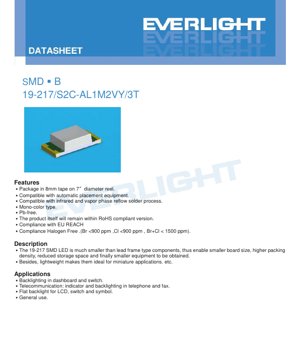
19-217/S2C-AL1M2VY/3T एक सरफेस-माउंट डिवाइस (एसएमडी) एलईडी है जिसे आधुनिक इलेक्ट्रॉनिक अनुप्रयोगों के लिए डिज़ाइन किया गया है जिन्हें विश्वसनीय, कॉम्पैक्ट और कुशल संकेतक प्रकाश व्यवस्था की आवश्यकता होती है। यह घटक एक शानदार नारंगी प्रकाश उत्पादन के लिए AlGaInP (एल्युमिनियम गैलियम इंडियम फॉस्फाइड) अर्धचालक तकनीक का उपयोग करता है। इसके प्राथमिक डिजाइन लक्ष्य लघुरूपण, स्वचालित असेंबली प्रक्रियाओं के साथ संगतता, और कठोर पर्यावरणीय एवं सुरक्षा मानकों का पालन करना हैं।
इस एलईडी के मुख्य लाभ इसके एसएमडी पैकेज से उत्पन्न होते हैं। यह पारंपरिक लीड-फ्रेम प्रकार के एलईडी की तुलना में काफी छोटा है, जो मुद्रित सर्किट बोर्ड (पीसीबी) पर उच्च घटक पैकिंग घनत्व को सक्षम बनाता है। इससे समग्र बोर्ड आकार कम होता है, भंडारण स्थान की आवश्यकताएं न्यूनतम होती हैं, और अंततः छोटे और हल्के अंतिम-उपयोगकर्ता उपकरणों के विकास में योगदान मिलता है। पैकेज की हल्की प्रकृति इसे लघु और पोर्टेबल अनुप्रयोगों के लिए विशेष रूप से उपयुक्त बनाती है जहां स्थान और वजन महत्वपूर्ण बाधाएं हैं।
इस उत्पाद का लक्षित बाजार व्यापक है, जिसमें सामान्य इलेक्ट्रॉनिक्स, उपभोक्ता उपकरण और औद्योगिक उपकरण शामिल हैं। इसे उन डिजाइनरों की जरूरतों को पूरा करने के लिए इंजीनियर किया गया है जो एक विश्वसनीय, RoHS-अनुपालन, और हैलोजन-मुक्त नारंगी संकेतक समाधान की तलाश में हैं जिसे मानक सरफेस-माउंट टेक्नोलॉजी (एसएमटी) लाइनों का उपयोग करके एकीकृत किया जा सकता है।
2. तकनीकी विशिष्टताओं का गहन विश्लेषण
2.1 इलेक्ट्रो-ऑप्टिकल विशेषताएँ
विद्युत-प्रकाशीय प्रदर्शन को 25°C के परिवेश तापमान (Ta) और 5mA की अग्र धारा (IF) की एक मानक परीक्षण स्थिति पर निर्दिष्ट किया गया है। मुख्य पैरामीटर प्रकाश उत्पादन और रंग गुणवत्ता को परिभाषित करते हैं।
- दीप्त तीव्रता (Iv): मानव आँख की संवेदनशीलता के लिए समायोजित विकिरण शक्ति। विशिष्ट मान एक एकल संख्या के रूप में निर्दिष्ट नहीं है; इसके बजाय, उत्पाद को बिन (L1, L2, M1, M2) में वर्गीकृत किया जाता है जिसमें न्यूनतम मान 11.5 mcd से 22.5 mcd तक होते हैं। उच्चतम बिन (M2) के लिए अधिकतम 28.5 mcd है। दीप्त तीव्रता के लिए ±11% की सहनशीलता लागू होती है।
- दृश्य कोण (2θ1/2): यह वह कोण है जिस पर दीप्त तीव्रता, 0 डिग्री (अक्ष-पर) की तीव्रता की आधी होती है। इस एलईडी में 120 डिग्री का बहुत चौड़ा दृश्य कोण है, जो इसे उन अनुप्रयोगों के लिए उपयुक्त बनाता है जहाँ प्रकाश को विस्तृत दृष्टिकोणों से दिखाई देना आवश्यक है।
- शिखर तरंगदैर्ध्य (λp): वह तरंगदैर्ध्य जिस पर वर्णक्रमीय उत्सर्जन अधिकतम होता है। विशिष्ट मान 611 नैनोमीटर (nm) है, जो इसे दृश्य स्पेक्ट्रम के नारंगी क्षेत्र में स्थापित करता है।
- प्रमुख तरंगदैर्ध्य (λd): यह वह एकल तरंगदैर्ध्य है जिसे मानव आँख प्रकाश के रंग के रूप में अनुभव करती है। यह 600.5 nm से 612.5 nm के बीच होती है, जिसमें ±1 nm की सख्त सहनशीलता है। प्रमुख तरंगदैर्ध्य को बिन (D8 से D11) में भी वर्गीकृत किया गया है।
- वर्णक्रमीय बैंडविड्थ (Δλ): अर्ध-अधिकतम शक्ति पर उत्सर्जित स्पेक्ट्रम की चौड़ाई। विशिष्ट मान 17 nm है, जो AlGaInP प्रौद्योगिकी की अपेक्षाकृत शुद्ध रंग उत्सर्जन विशेषता को दर्शाता है।
2.2 विद्युत पैरामीटर
विद्युत विशेषताएँ विश्वसनीय प्रदर्शन के लिए संचालन सीमाएँ और शर्तें परिभाषित करती हैं।
- फॉरवर्ड वोल्टेज (VF): निर्दिष्ट धारा पर संचालित होने पर LED के पार वोल्टेज ड्रॉप। IF=5mA पर, यह न्यूनतम 1.70V से अधिकतम 2.20V तक होता है, जिसकी सहनशीलता ±0.05V है। यह कम फॉरवर्ड वोल्टेज कम-शक्ति और बैटरी-चालित उपकरणों के लिए लाभप्रद है। वोल्टेज को बिन भी किया गया है (कोड 19 से 23)।
- रिवर्स वोल्टेज (VR): उपकरण को क्षति पहुँचाए बिना रिवर्स दिशा में लगाया जा सकने वाला अधिकतम वोल्टेज। पूर्ण अधिकतम रेटिंग 5V है।
- रिवर्स करंट (IR): अधिकतम रिवर्स वोल्टेज (5V) लगाए जाने पर रिसाव धारा। इसका अधिकतम मान 10 µA है।
- फॉरवर्ड करंट (IF): अनुशंसित निरंतर ऑपरेटिंग करंट 25 mA है।
- पीक फॉरवर्ड करंट (IFP): पल्स्ड ऑपरेशन (ड्यूटी साइकिल 1/10, 1 kHz पर) के लिए, LED 60 mA तक का पीक करंट संभाल सकती है।
2.3 थर्मल और पूर्ण अधिकतम रेटिंग्स
ये रेटिंग्स पर्यावरणीय और तनाव सीमाओं को परिभाषित करती हैं, जिनके परे स्थायी क्षति हो सकती है।
- पावर डिसिपेशन (Pd): अधिकतम अनुमेय पावर डिसिपेशन 60 mW है।
- ऑपरेटिंग तापमान (Topr): विश्वसनीय संचालन के लिए परिवेश का तापमान सीमा -40°C से +85°C तक है।
- भंडारण तापमान (Tstg): गैर-संचालनात्मक भंडारण के लिए तापमान सीमा -40°C से +90°C तक है।
- इलेक्ट्रोस्टैटिक डिस्चार्ज (ESD): डिवाइस ह्यूमन बॉडी मॉडल (HBM) का उपयोग करके 2000V का सामना कर सकता है, जो एक ESD-नियंत्रित वातावरण में हैंडलिंग के लिए सुरक्षा का एक मानक स्तर है।
- सोल्डरिंग तापमान: पैकेज रीफ्लो और हैंड सोल्डरिंग दोनों के साथ संगत है।
- रीफ्लो सोल्डरिंग: अधिकतम 10 सेकंड के लिए 260°C का अधिकतम शिखर तापमान।
- हैंड सोल्डरिंग: प्रति टर्मिनल अधिकतम 3 सेकंड के लिए आयरन टिप का तापमान 350°C तक।
3. बिनिंग सिस्टम स्पष्टीकरण
उत्पादन में रंग और चमक की एकरूपता सुनिश्चित करने के लिए, एलईडी को मुख्य मापदंडों के आधार पर बिन में वर्गीकृत किया जाता है। इससे डिजाइनर विशिष्ट अनुप्रयोग आवश्यकताओं को पूरा करने वाले भागों का चयन कर सकते हैं।
3.1 ल्यूमिनस इंटेंसिटी बिनिंग
एलईडी को 5mA पर मापी गई उनकी ल्यूमिनस इंटेंसिटी के आधार पर चार बिन (L1, L2, M1, M2) में वर्गीकृत किया जाता है। इससे भविष्यवाणी योग्य प्रदर्शन बनाए रखते हुए विभिन्न चमक स्तरों की आवश्यकता वाले अनुप्रयोगों के लिए चयन करना संभव होता है।
3.2 डॉमिनेंट वेवलेंथ बिनिंग
रंग (ह्यू) को चार तरंगदैर्ध्य बिन (D8, D9, D10, D11) के माध्यम से सख्ती से नियंत्रित किया जाता है, प्रत्येक 600.5nm से 612.5nm तक 3nm की सीमा को कवर करता है। यह एक असेंबली में कई इकाइयों में दृश्य रंग स्थिरता सुनिश्चित करता है।
3.3 फॉरवर्ड वोल्टेज बिनिंग
फॉरवर्ड वोल्टेज को पांच बिन (19 से 23) में वर्गीकृत किया गया है, प्रत्येक 1.70V से 2.20V तक 0.1V की सीमा को कवर करता है। यह विशेष रूप से उन डिजाइनरों के लिए उपयोगी है जिन्हें बिजली आपूर्ति डिजाइन और करंट-लिमिटिंग रेसिस्टर गणनाओं को सटीक रूप से प्रबंधित करने की आवश्यकता है, खासकर बड़े ऐरे में जहां वोल्टेज ड्रॉप एक चिंता का विषय हो सकता है।
4. परफॉर्मेंस कर्व विश्लेषण
हालांकि डेटाशीट में विशिष्ट ग्राफिकल वक्रों का उल्लेख किया गया है, उनके निहितार्थ को मानक LED व्यवहार और प्रदान किए गए पैरामीटर के आधार पर वर्णित किया जा सकता है।
The करंट बनाम वोल्टेज (I-V) वक्र डायोड के विशिष्ट घातांकीय संबंध को दर्शाएगा। निर्दिष्ट अग्र वोल्टेज सीमा (5mA पर 1.7-2.2V) इस वक्र के "घुटने" को इंगित करती है। 5mA से काफी अधिक पर संचालन के लिए अधिक अग्र वोल्टेज की आवश्यकता होगी, जो घातांकीय ढलान पर ऊपर की ओर बढ़ने के बराबर है। यह एक करंट-सीमित रोकनेवाला या स्थिर-धारा चालक के उपयोग के महत्व को रेखांकित करता है, क्योंकि वोल्टेज में थोड़ी सी वृद्धि से धारा में बड़ी, संभावित रूप से विनाशकारी वृद्धि हो सकती है।
The दीप्त तीव्रता बनाम अग्र धारा (L-I) वक्र आम तौर पर एक सीमा में रैखिक होता है। अधिकतम निरंतर धारा (25mA) पर संचालन से परीक्षण धारा 5mA की तुलना में काइयों अधिक प्रकाश उत्पादन होगा, लेकिन इससे शक्ति क्षय और जंक्शन तापमान भी बढ़ेगा, जिसे उचित PCB तापीय डिजाइन के माध्यम से प्रबंधित किया जाना चाहिए।
The तापमान निर्भरता विशेषताएँ महत्वपूर्ण हैं। AlGaInP एलईडी के लिए, दीप्त तीव्रता आमतौर पर जंक्शन तापमान बढ़ने के साथ घटती है। हालांकि सटीक डीरेटिंग वक्र प्रदान नहीं किया गया है, लेकिन संचालन तापमान की विस्तृत श्रृंखला (-40°C से +85°C) डिवाइस की मजबूती की पुष्टि करती है। डिजाइनरों को उच्च-तापमान वातावरण में तीव्रता गिरावट को ध्यान में रखना चाहिए। अग्र वोल्टेज का एक ऋणात्मक तापमान गुणांक भी होता है, जिसका अर्थ है कि यह तापमान बढ़ने पर थोड़ा कम हो जाता है।
The स्पेक्ट्रम वितरण वक्र 611 एनएम (विशिष्ट) के आसपास केंद्रित एक एकल, अपेक्षाकृत संकीर्ण शिखर दिखाएगा, जिसकी चौड़ाई 17 एनएम बैंडविड्थ द्वारा परिभाषित होती है। यह आउटपुट की एकवर्णी प्रकृति की पुष्टि करता है, जो एक विशिष्ट, संतृप्त नारंगी रंग की आवश्यकता वाले अनुप्रयोगों के लिए उपयुक्त है।
5. यांत्रिक और पैकेज सूचना
19-217 एलईडी एक मानक एसएमडी पैकेज में आती है। सटीक आयाम डेटाशीट के भीतर एक विस्तृत चित्र में प्रदान किए गए हैं, जब तक अन्यथा नोट न किया गया हो, मानक सहनशीलता ±0.1 मिमी है। प्रमुख यांत्रिक विशेषताओं में शामिल हैं:
- पैकेज आउटलाइन: चित्र एलईडी बॉडी की लंबाई, चौड़ाई और ऊंचाई, साथ ही सोल्डर करने योग्य टर्मिनलों (पैड) के आयाम और अंतराल निर्दिष्ट करता है।
- पैड डिज़ाइन: पीसीबी पर फुटप्रिंट अनुशंसित पैड लेआउट से मेल खाना चाहिए ताकि उचित सोल्डरिंग, यांत्रिक स्थिरता और संभावित रूप से कुछ ऊष्मा अपव्यय सुनिश्चित हो सके।
- ध्रुवीयता पहचान: डेटाशीट ड्राइंग एनोड और कैथोड टर्मिनलों को स्पष्ट रूप से दर्शाती है। डिवाइस के संचालन के लिए सही ध्रुवीयता आवश्यक है। आमतौर पर, कैथोड को इंगित करने के लिए एक पैड को अलग तरह से चिह्नित या आकार दिया जा सकता है (उदाहरण के लिए, एलईडी पैकेज पर ही एक खांचा या बेवल कोना)।
- सामग्री: लेंस (राल) का रंग "वॉटर क्लियर" के रूप में निर्दिष्ट है, जिसका अर्थ है कि नारंगी प्रकाश एक पारदर्शी एनकैप्सुलेंट के माध्यम से उत्सर्जित होता है, जो 120-डिग्री के व्यापक व्यूइंग एंगल में योगदान देता है।
6. सोल्डरिंग और असेंबली दिशानिर्देश
विश्वसनीयता के लिए उचित हैंडलिंग और सोल्डरिंग महत्वपूर्ण है। एलईडी को नमी-प्रतिरोधी पैकेजिंग (टेप ऑन रील) में आपूर्ति की जाती है जो स्वचालित पिक-एंड-प्लेस उपकरणों के साथ संगत है।
6.1 रीफ्लो सोल्डरिंग पैरामीटर्स
एक लीड-मुक्त (Pb-free) रीफ्लो सोल्डरिंग प्रोफाइल की सिफारिश की जाती है। प्रोफाइल में शामिल हैं:
- प्री-हीटिंग: 60-120 सेकंड में परिवेशी तापमान से 150-200°C तक रैंप करें।
- सोक/रीफ्लो: लिक्विडस (217°C) से ऊपर का समय 60-150 सेकंड होना चाहिए। शीर्ष तापमान 260°C से अधिक नहीं होना चाहिए, और 255°C या उससे ऊपर का समय अधिकतम 30 सेकंड तक सीमित होना चाहिए।
- कूलिंग: अधिकतम कूलिंग दर 6°C प्रति सेकंड होनी चाहिए।
महत्वपूर्ण नोट: थर्मल स्ट्रेस क्षति से बचने के लिए एक ही LED असेंबली पर दो बार से अधिक रीफ्लो सोल्डरिंग नहीं की जानी चाहिए।
6.2 भंडारण और नमी संवेदनशीलता
घटकों को एक नमी-रोधी थैले में सिलिका जेल के साथ पैक किया गया है।
- खोलने से पहले: ≤30°C और ≤90% सापेक्ष आर्द्रता (RH) पर भंडारित करें।
- खोलने के बाद: "फ्लोर लाइफ" (समय जब घटक कारखाने के परिवेशी वायु के संपर्क में रह सकते हैं) ≤30°C और ≤60% RH पर 1 वर्ष है। अप्रयुक्त भागों को नमी-रोधी पैकेजिंग में पुनः सील कर देना चाहिए।
- बेकिंग: यदि सिलिका जेल संतृप्ति दर्शाता है या भंडारण समय सीमा समाप्त हो गई है, तो सोल्डरिंग के दौरान "पॉपकॉर्न" क्रैकिंग को रोकने के लिए रीफ्लो से पहले 60±5°C पर 24 घंटे के लिए बेकिंग आवश्यक है।
6.3 हैंड सोल्डरिंग और रीवर्क
यदि हैंड सोल्डरिंग आवश्यक है:
- ≤350°C टिप तापमान वाले सोल्डरिंग आयरन का उपयोग करें।
- प्रति टर्मिनल संपर्क समय ≤3 सेकंड तक सीमित रखें।
- ≤25W पावर रेटिंग वाले आयरन का उपयोग करें।
- प्रत्येक टर्मिनल को सोल्डर करने के बीच कम से कम 2-सेकंड का अंतराल दें।
रीवर्क की सख्ती से अनुशंसा नहीं की जाती है। यदि यह बिल्कुल अपरिहार्य हो, तो बिना किसी यांत्रिक दबाव के घटक को हटाने के लिए दोनों टर्मिनलों को एक साथ गर्म करने हेतु एक विशेष डबल-हेड सोल्डरिंग आयरन का उपयोग किया जाना चाहिए। किसी भी पुनर्कार्य के बाद LED विशेषताओं पर प्रभाव को सत्यापित किया जाना चाहिए।
7. पैकेजिंग और ऑर्डरिंग जानकारी
मानक शिपिंग पैकेज 7 इंच व्यास के रील पर लपेटी गई 8 मिमी चौड़ी कैरियर टेप है। प्रत्येक रील में 3000 टुकड़े होते हैं।
रील और कैरियर टेप के विशिष्ट आयाम डाटाशीट चित्रों में दिए गए हैं ताकि स्वचालित असेंबली उपकरणों के साथ संगतता सुनिश्चित की जा सके।
पैकेजिंग लेबल में ट्रेसबिलिटी और सही अनुप्रयोग के लिए महत्वपूर्ण जानकारी होती है:
- CPN: ग्राहक का उत्पाद संख्या (यदि निर्दिष्ट)।
- P/N: निर्माता का पार्ट नंबर (19-217/S2C-AL1M2VY/3T).
- मात्रा: पैकिंग मात्रा (3000 पीस/रील).
- श्रेणी: ल्यूमिनस इंटेंसिटी बिन कोड (जैसे, L1, M2).
- रंग: डॉमिनेंट वेवलेंथ बिन कोड (जैसे, D9, D11).
- संदर्भ: फॉरवर्ड वोल्टेज बिन कोड (उदाहरणार्थ, 20, 22).
- LOT No: पता लगाने की क्षमता के लिए निर्माण लॉट संख्या.
8. एप्लिकेशन अनुशंसाएँ
8.1 विशिष्ट अनुप्रयोग परिदृश्य
- बैकलाइटिंग: डैशबोर्ड आइकन, मेंब्रेन स्विच और कंट्रोल पैनल की बैकलाइटिंग के लिए आदर्श, जहां एक विस्तृत व्यूइंग एंगल फायदेमंद हो.
- Telecommunication Equipment: टेलीफोन, फैक्स मशीन और नेटवर्किंग हार्डवेयर में स्थिति संकेतक, संदेश प्रतीक्षा रोशनी, या कीपैड बैकलाइट के रूप में कार्य करता है।
- एलसीडी पैनल बैकलाइटिंग: छोटे मोनोक्रोम एलसीडी डिस्प्ले में समतल, एज-लिट बैकलाइटिंग या विशिष्ट प्रतीकों को प्रकाशित करने के लिए उपयोग किया जा सकता है।
- सामान्य संकेतक उपयोग: उपभोक्ता और औद्योगिक इलेक्ट्रॉनिक उत्पादों की एक विस्तृत श्रृंखला में पावर-ऑन संकेतक, मोड चयनकर्ता, अलार्म संकेत और स्थिति रोशनी।
8.2 महत्वपूर्ण डिज़ाइन विचार
- करंट लिमिटिंग अनिवार्य है: LED के साथ हमेशा एक बाहरी करंट-लिमिटिंग रेसिस्टर श्रृंखला में उपयोग किया जाना चाहिए। फॉरवर्ड वोल्टेज में सहनशीलता और एक नकारात्मक तापमान गुणांक होता है। आपूर्ति वोल्टेज में मामूली वृद्धि या गर्म होने के कारण VF में कमी, यदि ठीक से सीमित नहीं किया गया तो एक बड़ी, विनाशकारी करंट सर्ज का कारण बन सकती है। रेसिस्टर मान (R) की गणना R = (V_supply - VF_LED) / I_desired के रूप में की जाती है।
- थर्मल प्रबंधन: हालांकि पैकेज छोटा है, 60mW की अधिकतम पावर डिसिपेशन का सम्मान किया जाना चाहिए। उच्च धाराओं (जैसे, 25mA) पर संचालन से ऊष्मा उत्पन्न होती है। पीसीबी लेआउट को, विशेष रूप से उच्च परिवेश तापमान वाले वातावरण में या जब कई एलईडी एक साथ हों, तो हीट सिंक के रूप में कार्य करने के लिए एलईडी पैड के आसपास पर्याप्त तांबे का क्षेत्र प्रदान करना चाहिए।
- ESD सावधानियाँ: हालांकि यह 2000V HBM के लिए रेटेड है, अव्यक्त क्षति को रोकने के लिए असेंबली और हैंडलिंग के दौरान मानक ESD हैंडलिंग प्रक्रियाओं का पालन किया जाना चाहिए।
- ऑप्टिकल डिज़ाइन: 120-डिग्री व्यूइंग एंगल एक बहुत ही चौड़ा, विसरित उत्सर्जन पैटर्न प्रदान करता है। ऐसे अनुप्रयोगों के लिए जिनमें अधिक केंद्रित बीम की आवश्यकता होती है, एक बाहरी लेंस या लाइट गाइड आवश्यक हो सकता है।
- पल्स्ड ऑपरेशन के लिए वेवफॉर्म: यदि पल्स मोड में शिखर अग्र धारा (60mA) का उपयोग कर रहे हैं, तो सुनिश्चित करें कि ड्यूटी साइकिल 10% से अधिक न हो और आवृत्ति निर्दिष्ट अनुसार 1kHz हो। औसत धारा अभी भी 25mA की निरंतर रेटिंग के भीतर होनी चाहिए।
9. अनुपालन और पर्यावरणीय मानक
यह उत्पाद प्रमुख वैश्विक पर्यावरणीय और सुरक्षा नियमों को पूरा करने के लिए डिज़ाइन किया गया है, जो बाजार पहुंच के लिए एक महत्वपूर्ण लाभ है।
- RoHS अनुपालन: यह उत्पाद EU प्रतिबंधित खतरनाक पदार्थ निर्देश के अनुसार प्रतिबंधित खतरनाक पदार्थों से मुक्त है।
- Pb-Free: सोल्डरिंग फिनिश और सामग्री में सीसा नहीं होता है।
- EU REACH अनुपालन: रसायनों के पंजीकरण, मूल्यांकन, प्राधिकरण और प्रतिबंध विनियमन का पालन करता है।
- हैलोजन-मुक्त: Meets strict limits on bromine (Br) and chlorine (Cl) content: Br < 900 ppm, Cl < 900 ppm, and Br+Cl < 1500 ppm. This is important for reducing toxic emissions in case of fire.
10. अनुप्रयोग प्रतिबंध और विश्वसनीयता नोट
यह स्पष्ट रूप से कहा गया है कि इस डेटाशीट में निर्दिष्ट यह उत्पाद, पूर्व परामर्श के बिना, उच्च-विश्वसनीयता या सुरक्षा-महत्वपूर्ण अनुप्रयोगों के लिए अभिप्रेत नहीं है। इसमें शामिल हैं:
- सैन्य और एयरोस्पेस प्रणालियाँ।
- ऑटोमोटिव सुरक्षा या सुरक्षा प्रणालियाँ (जैसे, एयरबैग नियंत्रण, ब्रेक लाइट्स)।
- चिकित्सा जीवन-समर्थन या महत्वपूर्ण नैदानिक उपकरण।
ऐसे अनुप्रयोगों के लिए, अधिक व्यापक परीक्षण, व्यापक तापमान सीमा और लंबी जीवनकाल गारंटी वाले विभिन्न उत्पाद ग्रेड की आवश्यकता हो सकती है। यह विशिष्टता परिभाषित परीक्षण स्थितियों के तहत एक व्यक्तिगत घटक के रूप में एलईडी की गुणवत्ता और प्रदर्शन की गारंटी देती है। इन निर्दिष्ट सीमाओं के बाहर उत्पाद का उपयोग इस गारंटी को रद्द कर देता है।
11. तकनीकी सिद्धांत परिचय
19-217 एलईडी एक सब्सट्रेट पर उगाए गए AlGaInP (एल्यूमीनियम गैलियम इंडियम फॉस्फाइड) अर्धचालक सामग्री पर आधारित है। जब एक अग्र वोल्टेज लगाया जाता है, तो इलेक्ट्रॉन और होल अर्धचालक जंक्शन के सक्रिय क्षेत्र में इंजेक्ट होते हैं। उनके पुनर्संयोजन से फोटॉन (प्रकाश) के रूप में ऊर्जा मुक्त होती है। AlGaInP मिश्र धातु की विशिष्ट संरचना बैंडगैप ऊर्जा निर्धारित करती है, जो सीधे उत्सर्जित प्रकाश की तरंगदैर्ध्य (रंग) से संबंधित होती है। इस मामले में, संरचना को नारंगी स्पेक्ट्रम (~611 nm) में फोटॉन उत्पन्न करने के लिए ट्यून किया गया है। "वाटर क्लियर" एपॉक्सी राल एनकैप्सुलेंट अर्धचालक डाई की रक्षा करता है, प्रकाश उत्पादन को आकार देने के लिए एक लेंस के रूप में कार्य करता है (120-डिग्री पैटर्न प्राप्त करना), और यांत्रिक और पर्यावरणीय सुरक्षा प्रदान करता है। सरफेस-माउंट पैकेज में दो धातु टर्मिनल (एनोड और कैथोड) होते हैं जो सीधे पीसीबी पर मिलाप किए जाते हैं, जिससे थ्रू-होल और तारों की आवश्यकता समाप्त हो जाती है।
12. तकनीकी मापदंडों पर आधारित सामान्य प्रश्न
- प्र: 5V आपूर्ति के लिए मुझे किस रोकनेवाला की आवश्यकता है? उ: सबसे खराब स्थिति में अधिकतम VF 2.2V और 5mA की वांछित धारा का उपयोग करते हुए: R = (5V - 2.2V) / 0.005A = 560 ओम। एक मानक 560Ω रोकनेवाला का उपयोग करने पर, वास्तविक धारा लगभग 5mA (यदि VF=2.2V) से लगभग 5.9mA (यदि VF=1.7V) तक होगी। एक 470Ω रोकनेवाला भी आम है, जो थोड़ी अधिक चमक प्रदान करता है लेकिन न्यूनतम VF के साथ भी धारा को 25mA से नीचे रखने की गारंटी देता है।
- प्र: क्या मैं इसे सीधे माइक्रोकंट्रोलर पिन से चला सकता हूं? A: संभवतः, लेकिन सावधानी के साथ। एक सामान्य MCU पिन 20-25mA का स्रोत/सिंक कर सकता है, जो LED की पूर्ण अधिकतम सीमा पर है। इससे कोई मार्जिन नहीं बचता और MCU और LED दोनों पर दबाव पड़ता है। MCU पिन का उपयोग एक ट्रांजिस्टर (जैसे, MOSFET) को चलाने के लिए करना हमेशा बेहतर होता है, जो फिर LED करंट को नियंत्रित करता है।
- Q: देखने का कोण इतना चौड़ा क्यों है? A: "वाटर क्लियर" गुंबद के आकार का एनकैप्सुलेंट एक लेंस की तरह काम करता है जो छोटे सेमीकंडक्टर चिप से प्रकाश को बहुत व्यापक क्षेत्र में अपवर्तित करता है। यह संकेतक अनुप्रयोगों के लिए आदर्श है जहां LED को कई कोणों से देखा जाना आवश्यक है।
- Q: बिन कोड "S2C-AL1M2VY/3T" का क्या अर्थ है? A: यह निर्माता का आंतरिक उत्पाद कोड है। यह संभवतः विशिष्ट विशेषताओं जैसे पैकेज प्रकार (SMD), चिप तकनीक (AlGaInP), रंग (Orange/Yellow), चमक बिन और अन्य निर्माण वेरिएंट को एनकोड करता है। सटीक डिकोडिंग प्रोप्राइटरी है, लेकिन मुख्य प्रदर्शन पैरामीटर डेटाशीट तालिकाओं में पूरी तरह से परिभाषित हैं।
- Q: LED कितने समय तक चलेगी? A: हालांकि इस डेटाशीट में एक विशिष्ट L70/L50 जीवनकाल (प्रारंभिक चमक के 70% या 50% तक के घंटे) प्रदान नहीं किया गया है, AlGaInP LEDs अपने निर्दिष्ट विद्युत और तापीय सीमाओं के भीतर संचालित होने पर बहुत लंबे परिचालन जीवनकाल (अक्सर हजारों घंटे) के लिए जानी जाती हैं। प्राथमिक जीवनकाल क्षरण तंत्र उच्च तापमान और करंट के तनाव के तहत सेमीकंडक्टर सामग्री और पैकेजिंग में दोषों के कारण चमकदार आउटपुट में क्रमिक कमी है।
LED Specification Terminology
एलईडी तकनीकी शब्दों की पूर्ण व्याख्या
Photoelectric Performance
| शब्द | इकाई/प्रतिनिधित्व | सरल व्याख्या | महत्वपूर्ण क्यों है |
|---|---|---|---|
| प्रकाशीय प्रभावकारिता | lm/W (लुमेन प्रति वाट) | विद्युत के प्रति वाट प्रकाश उत्पादन, उच्च मान का अर्थ है अधिक ऊर्जा कुशल। | सीधे ऊर्जा दक्षता ग्रेड और बिजली लागत निर्धारित करता है। |
| प्रकाशीय फ्लक्स | lm (लुमेन) | स्रोत द्वारा उत्सर्जित कुल प्रकाश, जिसे आमतौर पर "चमक" कहा जाता है। | यह निर्धारित करता है कि प्रकाश पर्याप्त चमकीला है या नहीं। |
| दृश्य कोण | ° (डिग्री), उदाहरण के लिए, 120° | वह कोण जहां प्रकाश की तीव्रता आधी रह जाती है, यह बीम की चौड़ाई निर्धारित करता है। | यह प्रकाशन सीमा और एकरूपता को प्रभावित करता है। |
| CCT (रंग तापमान) | K (केल्विन), उदा., 2700K/6500K | प्रकाश की गरमाहट/ठंडक, कम मान पीलेपन/गर्म, अधिक मान सफेदी/ठंडक देते हैं। | प्रकाश व्यवस्था का वातावरण और उपयुक्त परिदृश्य निर्धारित करता है। |
| CRI / Ra | इकाईहीन, 0–100 | वस्तुओं के रंगों को सटीक रूप से प्रस्तुत करने की क्षमता, Ra≥80 अच्छा है। | रंग की प्रामाणिकता को प्रभावित करता है, मॉल, संग्रहालय जैसे उच्च मांग वाले स्थानों में उपयोग किया जाता है। |
| SDCM | मैकएडम दीर्घवृत्त चरण, उदाहरण के लिए, "5-चरण" | रंग स्थिरता माप, छोटे चरणों का मतलब अधिक सुसंगत रंग है। | एलईडी के एक ही बैच में एकसमान रंग सुनिश्चित करता है। |
| प्रमुख तरंगदैर्ध्य | nm (नैनोमीटर), उदाहरणार्थ, 620nm (लाल) | रंगीन एलईडी के रंग के अनुरूप तरंगदैर्ध्य। | लाल, पीले, हरे मोनोक्रोम एलईडी के रंग का स्वर निर्धारित करता है। |
| स्पेक्ट्रम वितरण | तरंगदैर्ध्य बनाम तीव्रता वक्र | तरंगदैर्ध्य के पार तीव्रता वितरण दिखाता है। | रंग प्रतिपादन और गुणवत्ता को प्रभावित करता है। |
विद्युत मापदंड
| शब्द | Symbol | सरल व्याख्या | Design Considerations |
|---|---|---|---|
| Forward Voltage | Vf | एलईडी चालू करने के लिए न्यूनतम वोल्टेज, जैसे "प्रारंभिक सीमा"। | ड्राइवर वोल्टेज ≥Vf होना चाहिए, श्रृंखला में जुड़े एलईडी के लिए वोल्टेज जुड़ते हैं। |
| फॉरवर्ड करंट | If | सामान्य एलईडी संचालन के लिए करंट मान। | Usually constant current drive, current determines brightness & lifespan. |
| अधिकतम स्पंद धारा | Ifp | कम अवधि के लिए सहनीय शिखर धारा, मंद या चमकती रोशनी के लिए उपयोग की जाती है। | Pulse width & duty cycle must be strictly controlled to avoid damage. |
| रिवर्स वोल्टेज | Vr | अधिकतम रिवर्स वोल्टेज जिसे LED सहन कर सकता है, इससे अधिक होने पर ब्रेकडाउन हो सकता है। | सर्किट को रिवर्स कनेक्शन या वोल्टेज स्पाइक्स को रोकना चाहिए। |
| थर्मल रेजिस्टेंस | Rth (°C/W) | चिप से सोल्डर तक ऊष्मा स्थानांतरण के प्रति प्रतिरोध, जितना कम उतना बेहतर। | उच्च तापीय प्रतिरोध के लिए अधिक मजबूत ऊष्मा अपव्यय की आवश्यकता होती है। |
| ESD Immunity | V (HBM), e.g., 1000V | इलेक्ट्रोस्टैटिक डिस्चार्ज को सहन करने की क्षमता, उच्च मान का अर्थ है कम संवेदनशीलता। | उत्पादन में एंटी-स्टैटिक उपायों की आवश्यकता होती है, विशेष रूप से संवेदनशील एलईडी के लिए। |
Thermal Management & Reliability
| शब्द | मुख्य मापदंड | सरल व्याख्या | प्रभाव |
|---|---|---|---|
| जंक्शन तापमान | Tj (°C) | LED चिप के अंदर का वास्तविक संचालन तापमान। | प्रत्येक 10°C कमी जीवनकाल को दोगुना कर सकती है; बहुत अधिक तापमान प्रकाश क्षय, रंग परिवर्तन का कारण बनता है। |
| ल्यूमेन मूल्यह्रास | L70 / L80 (घंटे) | चमक के प्रारंभिक स्तर के 70% या 80% तक गिरने में लगने वाला समय। | सीधे तौर पर LED की "सेवा जीवन" को परिभाषित करता है। |
| ल्यूमेन रखरखाव | % (उदाहरण के लिए, 70%) | समय के बाद बची हुई चमक का प्रतिशत। | दीर्घकालिक उपयोग में चमक की निरंतरता को दर्शाता है। |
| Color Shift | Δu′v′ or MacAdam ellipse | उपयोग के दौरान रंग परिवर्तन की मात्रा। | प्रकाश व्यवस्था के दृश्यों में रंग स्थिरता को प्रभावित करता है। |
| थर्मल एजिंग | सामग्री क्षरण | दीर्घकालिक उच्च तापमान के कारण ह्रास। | इससे चमक में कमी, रंग परिवर्तन, या ओपन-सर्किट विफलता हो सकती है। |
Packaging & Materials
| शब्द | सामान्य प्रकार | सरल व्याख्या | Features & Applications |
|---|---|---|---|
| पैकेज प्रकार | EMC, PPA, Ceramic | आवास सामग्री चिप की सुरक्षा करती है, प्रकाशीय/तापीय इंटरफेस प्रदान करती है। | EMC: अच्छी ऊष्मा प्रतिरोधकता, कम लागत; Ceramic: बेहतर ऊष्मा अपव्यय, लंबा जीवनकाल। |
| चिप संरचना | फ्रंट, फ्लिप चिप | चिप इलेक्ट्रोड व्यवस्था। | फ्लिप चिप: बेहतर ताप अपव्यय, उच्च प्रभावकारिता, उच्च-शक्ति के लिए। |
| फॉस्फर कोटिंग | YAG, सिलिकेट, नाइट्राइड | नीले चिप को ढकता है, कुछ को पीले/लाल में परिवर्तित करता है, सफेद रंग में मिलाता है। | विभिन्न फॉस्फर प्रभावकारिता, CCT, और CRI को प्रभावित करते हैं। |
| लेंस/ऑप्टिक्स | फ्लैट, माइक्रोलेंस, TIR | प्रकाश वितरण को नियंत्रित करने वाली सतह पर प्रकाशीय संरचना। | दृश्य कोण और प्रकाश वितरण वक्र निर्धारित करता है। |
Quality Control & Binning
| शब्द | बिनिंग सामग्री | सरल व्याख्या | उद्देश्य |
|---|---|---|---|
| ल्यूमिनस फ्लक्स बिन | कोड उदा., 2G, 2H | चमक के आधार पर समूहीकृत, प्रत्येक समूह के न्यूनतम/अधिकतम लुमेन मान होते हैं। | एक ही बैच में एकसमान चमक सुनिश्चित करता है। |
| वोल्टेज बिन | कोड उदाहरणार्थ, 6W, 6X | फॉरवर्ड वोल्टेज रेंज के आधार पर समूहीकृत। | ड्राइवर मिलान सुविधाजनक बनाता है, सिस्टम दक्षता में सुधार करता है। |
| कलर बिन | 5-स्टेप MacAdam ellipse | रंग निर्देशांकों के अनुसार समूहीकृत, सुनिश्चित करता है कि सीमा सघन हो। | रंग स्थिरता की गारंटी देता है, फिक्स्चर के भीतर असमान रंग से बचाता है। |
| CCT Bin | 2700K, 3000K इत्यादि। | CCT के अनुसार समूहीकृत, प्रत्येक की संबंधित निर्देशांक सीमा होती है। | विभिन्न दृश्य CCT आवश्यकताओं को पूरा करता है। |
Testing & Certification
| शब्द | मानक/परीक्षण | सरल व्याख्या | महत्व |
|---|---|---|---|
| LM-80 | लुमेन रखरखाव परीक्षण | निरंतर तापमान पर दीर्घकालिक प्रकाश व्यवस्था, चमक क्षय का रिकॉर्डिंग। | एलईडी जीवन का अनुमान लगाने के लिए उपयोग किया जाता है (TM-21 के साथ)। |
| TM-21 | जीवन अनुमान मानक | LM-80 डेटा के आधार पर वास्तविक परिस्थितियों में जीवन का अनुमान लगाता है। | वैज्ञानिक जीवन पूर्वानुमान प्रदान करता है। |
| IESNA | इल्युमिनेटिंग इंजीनियरिंग सोसाइटी | ऑप्टिकल, इलेक्ट्रिकल, थर्मल परीक्षण विधियों को शामिल करता है। | उद्योग-मान्यता प्राप्त परीक्षण आधार। |
| RoHS / REACH | पर्यावरण प्रमाणन | हानिकारक पदार्थों (सीसा, पारा) की अनुपस्थिति सुनिश्चित करता है। | अंतरराष्ट्रीय स्तर पर बाजार पहुंच आवश्यकता। |
| ENERGY STAR / DLC | ऊर्जा दक्षता प्रमाणन | प्रकाश व्यवस्था के लिए ऊर्जा दक्षता और प्रदर्शन प्रमाणन। | सरकारी खरीद, सब्सिडी कार्यक्रमों में उपयोग, प्रतिस्पर्धात्मकता बढ़ाता है। |