सामग्री
- 1. उत्पाद अवलोकन
- 1.1 मुख्य लाभ एवं लक्षित बाजार
- 2. तकनीकी मापदंडों का गहन विश्लेषण
- 2.1 पूर्ण अधिकतम रेटिंग
- 2.2 प्रकाश-विद्युत विशेषताएँ (Ta=25°C)
- 3. ग्रेडिंग प्रणाली विवरण
- 3.1 दीप्ति तीव्रता ग्रेडिंग
- 3.2 अग्र वोल्टेज ग्रेडिंग
- 3.3 वर्णिकता निर्देशांक ग्रेडिंग
- 4. परफॉर्मेंस कर्व विश्लेषण
- 4.1 ल्यूमिनस इंटेंसिटी और परिवेशी तापमान संबंध
- 4.2 फॉरवर्ड करंट डेरेटिंग कर्व
- 4.3 फॉरवर्ड करंट और फॉरवर्ड वोल्टेज संबंध (I-V कर्व)
- 。
- प्रकाश उत्पादन कम करंट रेंज में लगभग रैखिक रूप से बढ़ता है, लेकिन उच्च करंट (लगभग 30-40mA) पर संतृप्ति या दक्षता में कमी के संकेत दिखा सकता है। 20mA पर कार्य करना चमक और दक्षता/विश्वसनीयता के बीच एक अच्छा संतुलन दर्शाता है।
- स्पेक्ट्रल कर्व फॉस्फर-कन्वर्टेड व्हाइट LED की विशिष्ट पीक वेवलेंथ दिखाती है, जो नीले क्षेत्र (लगभग 450-460nm) में हो सकती है, और पीले स्पेक्ट्रम में एक व्यापक फॉस्फर उत्सर्जन होता है, जिसके संयोजन से सफेद प्रकाश उत्पन्न होता है। रेडिएशन पैटर्न डायग्राम इसके व्यापक, लैम्बर्टियन-जैसे उत्सर्जन प्रोफाइल और 120° के व्यूइंग एंगल की पुष्टि करता है।
- 5. मैकेनिकल और पैकेजिंग जानकारी
- LED, P-LCC-4 पैकेज में है। महत्वपूर्ण आयाम (इकाई: mm) में समग्र आयाम, लीड पिच और कैथोड पहचान (आमतौर पर पैकेज पर एक नॉच या हरा निशान) की स्थिति शामिल है। अनुशंसित PCB पैड पैटर्न (फुटप्रिंट) भी प्रदान किया गया है, जो सही सोल्डरिंग और संरेखण सुनिश्चित करने के लिए पैड आकार और पिच दिखाता है।
- सही ध्रुवता अत्यंत महत्वपूर्ण है। डेटाशीट कैथोड (नकारात्मक) पिन निर्दिष्ट करती है। पैकेज पर, यह आमतौर पर एक हरे बिंदु, बॉडी के एक तरफ एक खांचे या कटे हुए कोने द्वारा चिह्नित होता है। PCB फुटप्रिंट में इस विशेषता से मेल खाने वाला एक ध्रुवता चिह्न शामिल होना चाहिए।
- 6. सोल्डरिंग और असेंबली दिशानिर्देश
- थर्मल शॉक, सोल्डर जोड़ दोष या LED एपॉक्सी को नुकसान से बचाने के लिए इस तापमान प्रोफ़ाइल का पालन करना महत्वपूर्ण है।
- रीफ्लो सोल्डरिंग दो बार से अधिक नहीं की जानी चाहिए।
- मरम्मत के लिए, यांत्रिक तनाव से बचने के लिए दोनों पिनों को एक साथ गर्म करने के लिए ड्यूल-टिप सोल्डरिंग आयरन के उपयोग की सिफारिश की जाती है। LED को नुकसान पहुंचाए बिना मरम्मत की व्यवहार्यता को पहले से सत्यापित किया जाना चाहिए।
- 7. पैकेजिंग और ऑर्डर जानकारी
- स्वचालित प्लेसमेंट उपकरणों के साथ संगतता सुनिश्चित करने के लिए कैरियर टेप (पॉकेट आकार, पिच), कवर टेप और रील (व्यास, कोर आकार, चौड़ाई) के विस्तृत आयाम प्रदान किए गए हैं।
- ट्रेस करने योग्य बैच नंबर।
- 8. एप्लिकेशन डिज़ाइन विचार
- गणना करें ताकि यह सुनिश्चित हो सके कि बिजली आपूर्ति वोल्टेज में सहनशीलता होने पर भी करंट कभी भी पूर्ण अधिकतम रेटेड मान से अधिक न हो।
- अंतिम एप्लिकेशन में अच्छे वायु प्रवाह को सुनिश्चित करें।
- प्रत्येक डिवाइस से समान करंट प्रवाहित होने को सुनिश्चित करने के लिए, श्रृंखला में जुड़े LED स्ट्रिंग को चलाने हेतु कॉन्स्टेंट करंट ड्राइवर के उपयोग पर विचार करें।
- इसमें ईएसडी सुरक्षा और लीड-फ्री रीफ्लो सोल्डरिंग विनिर्देश शामिल हैं, जो इसे आधुनिक स्वचालित असेंबली प्रक्रियाओं के लिए उपयुक्त बनाता है।
- 10. अक्सर पूछे जाने वाले प्रश्न (एफएक्यू)
- = 20mA की स्थिति में परीक्षण किया गया, यह चमक, दक्षता और आयु के संतुलन के लिए अनुशंसित विशिष्ट कार्य बिंदु है। निरपेक्ष अधिकतम निरंतर धारा 30mA है।
- * R)।
- Rated value 30mA.
- Wide viewing angle ensures light is emitted within a broad cone angle. When coupled to the edge of a light guide (a transparent plastic light guide bar), this wide angle of incidence promotes total internal reflection and effectively distributes light along the length of the guide, achieving uniform backlighting and minimizing hotspots.
- 11. Practical Design and Usage Examples
- In smartphones, several such side-emitting LEDs can be placed along the edge of the main PCB, directly coupled into a thin and complex-shaped light guide plate, thereby uniformly illuminating capacitive touch keys or navigation icons. Low current consumption helps extend battery life.
- इंस्ट्रूमेंट क्लस्टर या सेंटर कंसोल डिस्प्ले छोटे आकार के एलसीडी पैनल के एक या दोनों किनारों पर इस प्रकार के एलईडी की एकल पंक्ति का उपयोग कर सकते हैं। लाइट गाइड पाइप सफेद प्रकाश को पूरे डिस्प्ले क्षेत्र में समान रूप से वितरित करता है। इसकी व्यापक ऑपरेटिंग तापमान सीमा (-40°C से +85°C) इसे ऑटोमोटिव वातावरण के लिए उपयुक्त बनाती है।
- इस एलईडी का उपयोग औद्योगिक नियंत्रण पैनल पर उच्च चमक, चौड़े देखने के कोण वाले स्टेटस इंडिकेटर (जैसे, पावर ऑन, अलार्म) के रूप में किया जा सकता है। इसकी विश्वसनीयता और स्वचालित एसएमडी असेंबली के साथ संगतता निर्माण प्रक्रिया को सरल बनाती है।
- यह एक फॉस्फर-कन्वर्टेड व्हाइट एलईडी है। इसका मूल इंडियम गैलियम नाइट्राइड (InGaN) से बना एक सेमीकंडक्टर चिप है, जो करंट प्रवाहित होने पर (इलेक्ट्रोलुमिनेसेंस) नीला प्रकाश उत्सर्जित करता है। इस नीले प्रकाश का एक हिस्सा पैकेज के अंदर जमी पीले फॉस्फर की कोटिंग द्वारा अवशोषित कर लिया जाता है। फॉस्फर पीले प्रकाश की एक विस्तृत श्रृंखला को पुनः उत्सर्जित करता है। शेष नीला प्रकाश और रूपांतरित पीला प्रकाश मिलकर मानव आँख को सफेद प्रकाश के रूप में प्रतीत होते हैं। पारदर्शी रेजिन एनकैप्सुलेंट चिप और फॉस्फर की सुरक्षा करता है और साथ ही कुशल प्रकाश निष्कर्षण की अनुमति देता है। चिप के चारों ओर आंतरिक परावर्तक संरचना अधिक उत्सर्जित प्रकाश को पैकेज के किनारे की ओर निर्देशित करने में मदद करती है, जिससे एक चौड़ा देखने का कोण बनता है।
- एलईडी विनिर्देश शब्दावली का विस्तृत विवरण
- 1. प्रकाशविद्युत प्रदर्शन के मुख्य मापदंड
- 2. विद्युत मापदंड
- 3. ताप प्रबंधन एवं विश्वसनीयता
- 4. पैकेजिंग एवं सामग्री
- पाँच, गुणवत्ता नियंत्रण और ग्रेडिंग
- छह, परीक्षण और प्रमाणन
1. उत्पाद अवलोकन
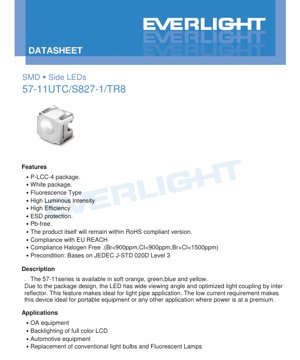
57-11UTC/S827-1/TR8 एक उच्च-प्रदर्शन व्हाइट लाइट एमिटिंग डायोड (LED) है जो कॉम्पैक्ट P-LCC-4 सरफेस माउंट डिवाइस (SMD) पैकेज में आता है। यह साइड-एमिटिंग LED विभिन्न आधुनिक इलेक्ट्रॉनिक अनुप्रयोगों के लिए कुशल और विश्वसनीय प्रकाश प्रदान करने के लिए डिज़ाइन किया गया है, जहाँ स्थान और बिजली की खपत सीमित है।
यह उपकरण सफेद पैकेजिंग और पारदर्शी रेजिन का उपयोग करता है, जो InGaN चिप तकनीक का उपयोग करके सफेद प्रकाश उत्पन्न करता है। इसकी प्रमुख डिजाइन विशेषता पैकेज के भीतर अनुकूलित आंतरिक परावर्तक डिजाइन के माध्यम से व्यापक देखने के कोण को प्राप्त करना है। इस डिजाइन ने प्रकाश युग्मन दक्षता को बढ़ाया है, जिससे यह एलईडी प्रकाश गाइड ट्यूब अनुप्रयोगों के लिए विशेष रूप से उपयुक्त हो गया है जिन्हें समान पार्श्व प्रकाश व्यवस्था की आवश्यकता होती है। इसकी कम धारा आवश्यकता इसे बैटरी से चलने वाले पोर्टेबल उपकरणों और अन्य अनुप्रयोगों के लिए एक आदर्श विकल्प बनाती है जहां ऊर्जा दक्षता अत्यधिक महत्वपूर्ण है।
本产品符合严格的环境和质量标准,采用无铅工艺,符合欧盟RoHS和REACH法规,并满足无卤要求(Br<900ppm, Cl<900ppm, Br+Cl<1500ppm)。同时,已根据JEDEC J-STD-020D Level 3标准进行了湿度敏感度预处理。
1.1 मुख्य लाभ एवं लक्षित बाजार
मुख्य लाभ:
- उच्च चमकदार तीव्रता और उच्च दक्षता:बिजली की खपत को अनुकूलित करते हुए चमकदार आउटपुट प्रदान करता है।
- विस्तृत दृश्य कोण (लगभग 120°):आंतरिक रिफ्लेक्टर के साथ साइड-एमिटिंग डिज़ाइन एक विस्तृत और समान प्रकाश वितरण सुनिश्चित करता है, जो एज लाइटिंग के लिए आदर्श विकल्प है।
- कॉम्पैक्ट P-LCC-4 पैकेज:छोटा फॉर्म फैक्टर मूल्यवान PCB स्थान बचाता है।
- मजबूत निर्माण:ESD सुरक्षा (2000V HBM) शामिल है, और विश्वसनीय रिफ्लो सोल्डरिंग प्रक्रियाओं के लिए डिज़ाइन किया गया है।
- पर्यावरण अनुपालन:आधुनिक हानिकारक पदार्थ विनियमों की आवश्यकताओं को पूरा करता है।
लक्षित अनुप्रयोग:
- उपभोक्ता इलेक्ट्रॉनिक्स, औद्योगिक पैनल और ऑटोमोटिव डिस्प्ले में पूर्ण-रंगीन LCD के लिए बैकलाइट।
- ऑफिस ऑटोमेशन (OA) उपकरणों (जैसे प्रिंटर, स्कैनर और मल्टीफ़ंक्शन डिवाइस) में स्थिति संकेतक और बैकलाइट।
- ऑटोमोटिव आंतरिक प्रकाश व्यवस्था, इंस्ट्रूमेंट क्लस्टर प्रकाश और स्विच बैकलाइट।
- संकेतक अनुप्रयोगों में पारंपरिक मिनिएचर बल्ब और फ्लोरोसेंट लैंप के लिए एक सार्वभौमिक प्रतिस्थापन।
2. तकनीकी मापदंडों का गहन विश्लेषण
यह खंड डेटाशीट में सूचीबद्ध प्रमुख विद्युत, प्रकाशिक और ऊष्मीय मापदंडों का विस्तृत और वस्तुनिष्ठ विश्लेषण प्रस्तुत करता है।
2.1 पूर्ण अधिकतम रेटिंग
ये रेटिंग्स उन सीमाओं को परिभाषित करती हैं जो डिवाइस को स्थायी क्षति पहुंचा सकती हैं। इन स्थितियों में संचालन के लिए प्रदर्शन की गारंटी नहीं है।
- रिवर्स वोल्टेज (VR):5V। रिवर्स बायस में इस वोल्टेज से अधिक होने पर जंक्शन ब्रेकडाउन हो सकता है।
- निरंतर फॉरवर्ड करंट (IF):30mA। दीर्घकालिक विश्वसनीय संचालन सुनिश्चित करने वाली अधिकतम DC धारा।
- पीक फॉरवर्ड करंट (IFP):100mA (ड्यूटी साइकिल 1/10, फ्रीक्वेंसी 1kHz)। संक्षिप्त उच्च-करंट पल्स की अनुमति है, मल्टीप्लेक्सिंग या PWM डिमिंग स्कीम के लिए उपयुक्त।
- पावर डिसिपेशन (Pd):110mW। पैकेज द्वारा डिसिपेट की जा सकने वाली अधिकतम शक्ति, गणना सूत्र VF* IFहै। यह सीमा थर्मल मैनेजमेंट के लिए महत्वपूर्ण है।
- ऑपरेटिंग एंड स्टोरेज टेम्परेचर:-40°C से +85°C (ऑपरेटिंग), -40°C से +90°C (स्टोरेज)। डिवाइस की कार्यक्षमता और नॉन-ऑपरेटिंग स्टोरेज के लिए पूर्ण पर्यावरणीय सीमा निर्धारित करता है।
- ESD सहनशीलता (HBM):2000V. यह संचालन प्रक्रियाओं के लिए उपयुक्त, इलेक्ट्रोस्टैटिक डिस्चार्ज सुरक्षा का एक स्तर प्रदान करता है।
- सोल्डरिंग तापमान:रीफ्लो सोल्डरिंग: 260°C शिखर तापमान, अधिकतम 10 सेकंड। हैंड सोल्डरिंग: प्रति पिन 350°C तक, अधिकतम 3 सेकंड। असेंबली प्रक्रिया नियंत्रण के लिए महत्वपूर्ण।
2.2 प्रकाश-विद्युत विशेषताएँ (Ta=25°C)
ये मानक परीक्षण स्थितियों के तहत मापे गए विशिष्ट प्रदर्शन पैरामीटर हैं।
- ल्यूमिनस तीव्रता (Iv):900mcd (न्यूनतम), 1800mcd (अधिकतम), परीक्षण स्थिति IF=20mA. यह प्रकाश उत्पादन का प्राथमिक माप है। विस्तृत श्रेणी एक बिनिंग प्रणाली (धारा 3 देखें) के उपयोग को इंगित करती है। कोई विशिष्ट मान नहीं दिया गया है, जिसका अर्थ है कि चयन विशिष्ट बिन कोड के आधार पर किया जाना चाहिए।
- दृष्टिकोण (2θ)1/2):120° (टिपिकल)। पीक तीव्रता के आधे पर पूर्ण कोण के रूप में परिभाषित। यह इसके व्यापक, विसरित उत्सर्जन पैटर्न की पुष्टि करता है।
- फॉरवर्ड वोल्टेज (VF):2.75V (न्यूनतम), 3.95V (अधिकतम), I पर परीक्षण स्थितिF=20mA। LED के संचालन के दौरान टर्मिनलों पर वोल्टेज ड्रॉप। यह पैरामीटर भी बिनिंग के अधीन है। इसका विचलन अर्धचालक प्रक्रिया में निहित सहनशीलता से उत्पन्न होता है।
- सहनशीलता:डेटाशीट निर्दिष्ट करती है कि दिए गए बिन के भीतर, ल्यूमिनस तीव्रता की सहनशीलता ±11% और फॉरवर्ड वोल्टेज की सहनशीलता ±0.1V है, जिसे सटीक डिजाइन में ध्यान में रखा जाना चाहिए।
3. ग्रेडिंग प्रणाली विवरण
बड़े पैमाने पर उत्पादन की एकरूपता सुनिश्चित करने के लिए, LED को प्रदर्शन के आधार पर समूहों या "बिन" में वर्गीकृत किया जाता है। इससे डिजाइनर विशिष्ट चमक और विद्युतीय आवश्यकताओं को पूरा करने वाले उपकरणों का चयन कर सकते हैं।
3.1 दीप्ति तीव्रता ग्रेडिंग
20mA पर मापी गई ल्यूमिनस इंटेंसिटी के आधार पर, LED को तीन बिन में विभाजित किया गया है:
- बिन V2:900 mcd से 1120 mcd
- बिन W1:1120 mcd से 1420 mcd
- बिन W2:1420 mcd से 1800 mcd
यह बिनिंग सुनिश्चित करती है कि एक ही उत्पादन बैच में चमक भिन्नता नियंत्रित रहे। ऐसे अनुप्रयोगों के लिए जहाँ कई एलईडी की एकसमान चमक आवश्यक है, एक एकल, संकीर्ण बिन (जैसे W1) निर्दिष्ट करना महत्वपूर्ण है।
3.2 अग्र वोल्टेज ग्रेडिंग
एलईडी को उनके फॉरवर्ड वोल्टेज ड्रॉप के आधार पर भी चार समूहों में वर्गीकृत किया गया है:
- समूह M5:2.75V से 3.05V
- समूह 6:3.05V से 3.35V
- समूह 7:3.35V से 3.65V
- समूह 8:3.65V से 3.95V
वोल्टेज बिनिंग करंट-लिमिटिंग रेसिस्टर नेटवर्क डिजाइन के लिए महत्वपूर्ण है, खासकर जब कई श्रृंखला-जुड़े LED को चलाना हो। एक ही वोल्टेज बिन से LED का उपयोग करने से समानांतर शाखाओं में करंट असंतुलन को कम से कम किया जा सकता है।
3.3 वर्णिकता निर्देशांक ग्रेडिंग
सफेद प्रकाश का रंग बिंदु CIE 1931 क्रोमैटिसिटी आरेख पर उसके निर्देशांक द्वारा परिभाषित किया जाता है। विनिर्देश पत्र चार मुख्य बिन परिभाषित करता है:
- 6K, 6L, 7K, 7L:प्रत्येक बिन का x, y क्रोमैटिसिटी आरेख पर एक परिभाषित चतुर्भुज क्षेत्र होता है। उदाहरण के लिए, बिन 6K, x में 0.3130 से 0.3300 और y में 0.2840 से 0.3300 तक को कवर करता है।
- सहनशीलता:क्रोमैटिसिटी कोऑर्डिनेट सहिष्णुता ±0.01 है, जो नाममात्र बिन कोने के बिंदुओं के सापेक्ष अनुमेय विचलन को परिभाषित करती है।
यह बिनिंग उच्च रंग एकरूपता आवश्यकताओं वाले अनुप्रयोगों (जैसे LCD बैकलाइट या बहु-LED संकेतक) के लिए LED का चयन करने की अनुमति देती है।
4. परफॉर्मेंस कर्व विश्लेषण
प्रदान की गई विशेषता वक्र गैर-मानक परिस्थितियों में LED के व्यवहार को समझने के लिए मूल्यवान जानकारी प्रदान करते हैं।
4.1 ल्यूमिनस इंटेंसिटी और परिवेशी तापमान संबंध
वक्र दर्शाता है कि -40°C से लगभग 25°C तक, दीप्त तीव्रता अपेक्षाकृत स्थिर रहती है, जो कमरे के तापमान मान के 100% के करीब बनी रहती है। जब तापमान 25°C से अधिक होकर और बढ़ता है, तो तीव्रता धीरे-धीरे कम होने लगती है। 85°C के अधिकतम कार्य तापमान पर, आउटपुट इसके 25°C मान का लगभग 80-85% हो सकता है। यह थर्मल क्वेंचिंग प्रभाव LED की एक विशिष्ट विशेषता है, जिसे उच्च तापमान वाले वातावरण में डिजाइन करते समय अवश्य ध्यान में रखा जाना चाहिए।
4.2 फॉरवर्ड करंट डेरेटिंग कर्व
यह ग्राफ परिवेश के तापमान के एक फलन के रूप में अधिकतम अनुमत निरंतर फॉरवर्ड करंट को निर्दिष्ट करता है। 25°C पर, पूर्ण 30mA की अनुमति है। परिवेश के तापमान में वृद्धि के साथ, 110mW की बिजली अपव्यय सीमा से अधिक होने और जंक्शन तापमान को प्रबंधित करने से रोकने के लिए अधिकतम अनुमत करंट को रैखिक रूप से कम करना होगा। यह विश्वसनीयता सुनिश्चित करने के लिए एक महत्वपूर्ण डिजाइन नियम है।
4.3 फॉरवर्ड करंट और फॉरवर्ड वोल्टेज संबंध (I-V कर्व)
यह वक्र डायोड के शास्त्रीय घातीय संबंध को प्रदर्शित करता है। फॉरवर्ड वोल्टेज करंट में वृद्धि के साथ बढ़ता है। 20mA की विशिष्ट कार्यकारी धारा पर, VFलगभग 3.2V से 3.4V (गियर पर निर्भर करता है)। जब एक निरंतर वोल्टेज स्रोत का उपयोग किया जाता है, तो उपयुक्त करंट-लिमिटिंग रेसिस्टर मान चुनने के लिए यह वक्र महत्वपूर्ण है: R = (Vपावर स्रोत- VF) / IF.
。
4.4 ल्यूमिनस इंटेंसिटी बनाम फॉरवर्ड करंट
प्रकाश उत्पादन कम करंट रेंज में लगभग रैखिक रूप से बढ़ता है, लेकिन उच्च करंट (लगभग 30-40mA) पर संतृप्ति या दक्षता में कमी के संकेत दिखा सकता है। 20mA पर कार्य करना चमक और दक्षता/विश्वसनीयता के बीच एक अच्छा संतुलन दर्शाता है।
4.5 स्पेक्ट्रल वितरण और विकिरण पैटर्न
स्पेक्ट्रल कर्व फॉस्फर-कन्वर्टेड व्हाइट LED की विशिष्ट पीक वेवलेंथ दिखाती है, जो नीले क्षेत्र (लगभग 450-460nm) में हो सकती है, और पीले स्पेक्ट्रम में एक व्यापक फॉस्फर उत्सर्जन होता है, जिसके संयोजन से सफेद प्रकाश उत्पन्न होता है। रेडिएशन पैटर्न डायग्राम इसके व्यापक, लैम्बर्टियन-जैसे उत्सर्जन प्रोफाइल और 120° के व्यूइंग एंगल की पुष्टि करता है।
5. मैकेनिकल और पैकेजिंग जानकारी
5.1 पैकेज आयाम
LED, P-LCC-4 पैकेज में है। महत्वपूर्ण आयाम (इकाई: mm) में समग्र आयाम, लीड पिच और कैथोड पहचान (आमतौर पर पैकेज पर एक नॉच या हरा निशान) की स्थिति शामिल है। अनुशंसित PCB पैड पैटर्न (फुटप्रिंट) भी प्रदान किया गया है, जो सही सोल्डरिंग और संरेखण सुनिश्चित करने के लिए पैड आकार और पिच दिखाता है।
5.2 ध्रुवीयता पहचान
सही ध्रुवता अत्यंत महत्वपूर्ण है। डेटाशीट कैथोड (नकारात्मक) पिन निर्दिष्ट करती है। पैकेज पर, यह आमतौर पर एक हरे बिंदु, बॉडी के एक तरफ एक खांचे या कटे हुए कोने द्वारा चिह्नित होता है। PCB फुटप्रिंट में इस विशेषता से मेल खाने वाला एक ध्रुवता चिह्न शामिल होना चाहिए।
6. सोल्डरिंग और असेंबली दिशानिर्देश
6.1 रीफ्लो वेल्डिंग तापमान प्रोफ़ाइल
- विस्तृत लीड-फ्री रीफ्लो वेल्डिंग तापमान प्रोफ़ाइल प्रदान की गई है:प्रीहीट:
- 150-200°C, 60-120 सेकंड तक (अधिकतम ताप वृद्धि दर 3°C/सेकंड)।रीफ्लो:
- 217°C से अधिक तापमान का समय: 60-150 सेकंड। शिखर तापमान: अधिकतम 260°C, अधिकतम 10 सेकंड।कूलिंग:
255°C से ऊपर से शुरू करते हुए, अधिकतम शीतलन दर 6°C/सेकंड है।
थर्मल शॉक, सोल्डर जोड़ दोष या LED एपॉक्सी को नुकसान से बचाने के लिए इस तापमान प्रोफ़ाइल का पालन करना महत्वपूर्ण है।
- 6.2 भंडारण एवं हैंडलिंग
- यह घटक नमी के प्रति संवेदनशील है (MSL रेटिंग निहित)। उपयोग से पहले नमी-रोधी बैग (MBB) को सील रखना चाहिए।
- 推荐的拆封环境为<30°C / 60% RH。
- यदि आर्द्रता संकेतक कार्ड अत्यधिक नमी दर्शाता है, तो सोल्डरिंग से पहले 60°C ±5°C पर 24 घंटे तक बेकिंग की आवश्यकता होती है।
रीफ्लो सोल्डरिंग दो बार से अधिक नहीं की जानी चाहिए।
6.3 मैनुअल सोल्डरिंग एवं रिपेयर
- यदि मैनुअल सोल्डरिंग करना अनिवार्य हो:
- 使用烙铁头温度<350°C的烙铁。प्रत्येक पिन के साथ संपर्क का समय 3 सेकंड तक सीमित रखें।
- 25W या उससे कम रेटेड पावर वाले सोल्डरिंग आयरन का उपयोग करें।
- प्रत्येक पिन को सोल्डर करने के बीच कम से कम 2 सेकंड का कूलिंग अंतराल दें।
मरम्मत के लिए, यांत्रिक तनाव से बचने के लिए दोनों पिनों को एक साथ गर्म करने के लिए ड्यूल-टिप सोल्डरिंग आयरन के उपयोग की सिफारिश की जाती है। LED को नुकसान पहुंचाए बिना मरम्मत की व्यवहार्यता को पहले से सत्यापित किया जाना चाहिए।
7. पैकेजिंग और ऑर्डर जानकारी
7.1 टेपिंग एवं रील विनिर्देश
- LED को नमी-रोधी पैकेजिंग में सप्लाई किया जाता है, जिसमें इसे एम्बॉस्ड कैरियर टेप पर रखकर रील पर लपेटा जाता है।पैकेज मात्रा:
- प्रति रील 500 पीस।
स्वचालित प्लेसमेंट उपकरणों के साथ संगतता सुनिश्चित करने के लिए कैरियर टेप (पॉकेट आकार, पिच), कवर टेप और रील (व्यास, कोर आकार, चौड़ाई) के विस्तृत आयाम प्रदान किए गए हैं।
7.2 लेबल विवरण
- रील लेबल में महत्वपूर्ण जानकारी शामिल होती है:CPN:
- ग्राहक पार्ट नंबर (वैकल्पिक)।P/N:
- निर्माता पार्ट नंबर (57-11UTC/S827-1/TR8)।QTY:
- रील पर मात्रा।CAT:
- ल्यूमिनस इंटेंसिटी ग्रेड (उदाहरणार्थ, W1, V2)।HUE:
- डोमिनेंट वेवलेंथ/क्रोमैटिसिटी ग्रेड (उदाहरणार्थ, 7K)।REF:
- फॉरवर्ड वोल्टेज ग्रेड (उदाहरणार्थ, 6, 7)।LOT No:
ट्रेस करने योग्य बैच नंबर।
8. एप्लिकेशन डिज़ाइन विचार
8.1 करंट लिमिटिंग अनिवार्य हैFडेटाशीट स्पष्ट रूप से चेतावनी देती है: "ग्राहक को सुरक्षा के लिए एक रेसिस्टर का उपयोग करना चाहिए, अन्यथा वोल्टेज में मामूली विचलन से करंट में भारी बदलाव हो सकता है (जिससे डिवाइस जल सकता है)।" LED करंट-चालित डिवाइस हैं। वोल्टेज स्रोत से संचालित करते समय, एक कॉन्स्टेंट करंट स्रोत या, अधिक सामान्यतः, एक श्रृंखला करंट-लिमिटिंग रेसिस्टर बिल्कुल आवश्यक है। रेसिस्टर मान की गणना चयनित बिन के अधिकतम V
गणना करें ताकि यह सुनिश्चित हो सके कि बिजली आपूर्ति वोल्टेज में सहनशीलता होने पर भी करंट कभी भी पूर्ण अधिकतम रेटेड मान से अधिक न हो।
8.2 थर्मल प्रबंधन
- यद्यपि पैकेज आकार में छोटा है, बिजली की खपत (110mW तक) ऊष्मा उत्पन्न करेगी। उच्च करंट या उच्च तापमान वातावरण में निरंतर संचालन के लिए, निम्नलिखित पर विचार करें:
- फॉरवर्ड करंट डेरेटिंग कर्व का पालन करें।
- एलईडी पैड के नीचे और आसपास हीट सिंक के रूप में पर्याप्त कॉपर फॉयल क्षेत्र प्रदान करें।
अंतिम एप्लिकेशन में अच्छे वायु प्रवाह को सुनिश्चित करें।
8.3 मल्टी-एलईडी ऐरे की समरूपता प्राप्त करना
- बैकलाइट या इंडिकेटर ऐरे के लिए जहां चमक और रंग एकरूपता महत्वपूर्ण है:vल्यूमिनस इंटेंसिटी (I
- ) और क्रोमैटिसिटी (x, y) के लिए संकीर्ण बिन निर्दिष्ट करें।Fसमानांतर में जुड़े एलईडी के लिए, समान फॉरवर्ड वोल्टेज (V
- ) गियर के एलईडी, और/या करंट को संतुलित करने के लिए प्रत्येक एलईडी के लिए अलग-अलग श्रृंखला प्रतिरोधक का उपयोग करें।
प्रत्येक डिवाइस से समान करंट प्रवाहित होने को सुनिश्चित करने के लिए, श्रृंखला में जुड़े LED स्ट्रिंग को चलाने हेतु कॉन्स्टेंट करंट ड्राइवर के उपयोग पर विचार करें।
9. तकनीकी तुलना और विभेदीकरण
- सामान्य एसएमडी एलईडी की तुलना में, 57-11UTC/S827-1/TR8 श्रृंखला के विशिष्ट लाभ हैं:साइड-एमिटिंग बनाम टॉप-एमिटिंग:
- सामान्य टॉप-एमिटिंग एलईडी के विपरीत, यह साइड-एमिटिंग पैकेज पीसीबी तल के समानांतर प्रकाश उत्सर्जित करने के लिए डिज़ाइन किया गया है, जो लाइट गाइड प्लेट और एज लाइटिंग अनुप्रयोगों के लिए महत्वपूर्ण है।अनुकूलित ऑप्टिकल डिज़ाइन:
- एकीकृत आंतरिक परावर्तक इसे मूल साइड-एमिटिंग एलईडी से अलग करता है, जो व्यापक और अधिक समान दृश्य कोण प्रदान करता है।व्यापक बिनिंग:
- विस्तृत त्रि-आयामी बिनिंग (तीव्रता, वोल्टेज, वर्णिकता) ढीली बिनिंग या बिन-बिनिंग वाले उपकरणों की तुलना में प्रदर्शन स्थिरता और चयन लचीलेपन का एक उच्च स्तर प्रदान करती है।मजबूती:
इसमें ईएसडी सुरक्षा और लीड-फ्री रीफ्लो सोल्डरिंग विनिर्देश शामिल हैं, जो इसे आधुनिक स्वचालित असेंबली प्रक्रियाओं के लिए उपयुक्त बनाता है।
10. अक्सर पूछे जाने वाले प्रश्न (एफएक्यू)
10.1 विशिष्ट ऑपरेटिंग करंट क्या है?Fऑप्टोइलेक्ट्रॉनिक विशेषताएं I
= 20mA की स्थिति में परीक्षण किया गया, यह चमक, दक्षता और आयु के संतुलन के लिए अनुशंसित विशिष्ट कार्य बिंदु है। निरपेक्ष अधिकतम निरंतर धारा 30mA है।
10.2 उचित करंट-सीमित रोकनेवाला कैसे चुनें?सूत्र का उपयोग करें: R = (Vपावर स्रोतF- VF) / IF। अपने चुने हुए वोल्टेज रेंज के अधिकतम VF(उदाहरण के लिए, रेंज 8 के लिए 3.95V) और अपनी वांछित I2(उदाहरण के लिए, 20mA) का उपयोग करें। 5V बिजली आपूर्ति के लिए: R = (5V - 3.95V) / 0.02A = 52.5Ω। अगला उच्च मानक मान चुनें (उदाहरण के लिए, 56Ω), और सुनिश्चित करें कि रोकनेवाला की पावर रेटिंग पर्याप्त है (P = I
* R)।
10.3 क्या मैं डिमिंग के लिए PWM का उपयोग कर सकता हूँ?FPहाँ, PWM (पल्स-विड्थ मॉड्यूलेशन) LED डिमिंग के लिए एक उत्कृष्ट विधि है। पल्स में शिखर धारा IFरेटेड मान 100mA (ड्यूटी साइकिल 1/10) से अधिक नहीं होनी चाहिए। सुनिश्चित करें कि लंबे समय तक औसत धारा निरंतर I
Rated value 30mA.
10.4 लाइट गाइड एप्लिकेशन के लिए व्यू एंगल इतना महत्वपूर्ण क्यों है?
Wide viewing angle ensures light is emitted within a broad cone angle. When coupled to the edge of a light guide (a transparent plastic light guide bar), this wide angle of incidence promotes total internal reflection and effectively distributes light along the length of the guide, achieving uniform backlighting and minimizing hotspots.
11. Practical Design and Usage Examples
11.1 मोबाइल डिवाइस की बटन बैकलाइट
In smartphones, several such side-emitting LEDs can be placed along the edge of the main PCB, directly coupled into a thin and complex-shaped light guide plate, thereby uniformly illuminating capacitive touch keys or navigation icons. Low current consumption helps extend battery life.
11.2 ऑटोमोटिव एयर कंडीशनिंग कंट्रोल डिस्प्ले
इंस्ट्रूमेंट क्लस्टर या सेंटर कंसोल डिस्प्ले छोटे आकार के एलसीडी पैनल के एक या दोनों किनारों पर इस प्रकार के एलईडी की एकल पंक्ति का उपयोग कर सकते हैं। लाइट गाइड पाइप सफेद प्रकाश को पूरे डिस्प्ले क्षेत्र में समान रूप से वितरित करता है। इसकी व्यापक ऑपरेटिंग तापमान सीमा (-40°C से +85°C) इसे ऑटोमोटिव वातावरण के लिए उपयुक्त बनाती है।
11.3 इंडस्ट्रियल पैनल मीटर इंडिकेटर लाइट
इस एलईडी का उपयोग औद्योगिक नियंत्रण पैनल पर उच्च चमक, चौड़े देखने के कोण वाले स्टेटस इंडिकेटर (जैसे, पावर ऑन, अलार्म) के रूप में किया जा सकता है। इसकी विश्वसनीयता और स्वचालित एसएमडी असेंबली के साथ संगतता निर्माण प्रक्रिया को सरल बनाती है।
12. कार्य सिद्धांत परिचय
यह एक फॉस्फर-कन्वर्टेड व्हाइट एलईडी है। इसका मूल इंडियम गैलियम नाइट्राइड (InGaN) से बना एक सेमीकंडक्टर चिप है, जो करंट प्रवाहित होने पर (इलेक्ट्रोलुमिनेसेंस) नीला प्रकाश उत्सर्जित करता है। इस नीले प्रकाश का एक हिस्सा पैकेज के अंदर जमी पीले फॉस्फर की कोटिंग द्वारा अवशोषित कर लिया जाता है। फॉस्फर पीले प्रकाश की एक विस्तृत श्रृंखला को पुनः उत्सर्जित करता है। शेष नीला प्रकाश और रूपांतरित पीला प्रकाश मिलकर मानव आँख को सफेद प्रकाश के रूप में प्रतीत होते हैं। पारदर्शी रेजिन एनकैप्सुलेंट चिप और फॉस्फर की सुरक्षा करता है और साथ ही कुशल प्रकाश निष्कर्षण की अनुमति देता है। चिप के चारों ओर आंतरिक परावर्तक संरचना अधिक उत्सर्जित प्रकाश को पैकेज के किनारे की ओर निर्देशित करने में मदद करती है, जिससे एक चौड़ा देखने का कोण बनता है।
13. तकनीकी रुझान और पृष्ठभूमि
- 57-11 श्रृंखला जैसे साइड-एमिटिंग एलईडी इलेक्ट्रॉनिक डिज़ाइन में विशिष्ट स्थानिक बाधाओं के लिए एक परिपक्व और अनुकूलित समाधान का प्रतिनिधित्व करते हैं। इस क्षेत्र में विकास के रुझान लगातार निम्नलिखित पर केंद्रित हैं:दक्षता बढ़ाना (lm/W):
- प्रति विद्युत इनपुट प्रकाश आउटपुट में वृद्धि, जिससे कम बिजली की खपत या उच्च चमक प्राप्त होती है।उच्चतर कलर रेंडरिंग इंडेक्स (CRI):
- डिस्प्ले बैकलाइटिंग के लिए, रंगों को अधिक सटीक रूप से पुनरुत्पादित करने के लिए व्यापक और अधिक निरंतर स्पेक्ट्रम वाले एलईडी विकसित किए जा रहे हैं।लघुकरण:
- पतले अंतिम उत्पादों का समर्थन करने के लिए, ऑप्टिकल प्रदर्शन को बनाए रखते या सुधारते हुए छोटे पैकेज आकार को प्राप्त करना।विश्वसनीयता और जीवनकाल में वृद्धि:
- उच्च कार्य तापमान और लंबे कार्य समय का सामना करने के लिए सामग्री (एपॉक्सी, फॉस्फर) और चिप प्रौद्योगिकी में निरंतर सुधार।एकीकरण:
एकीकृत LED मॉड्यूल का उद्भव, जो LED, ड्राइवर IC और निष्क्रिय घटकों को एकल पैकेज में जोड़ता है, अंतिम उपयोगकर्ता के लिए डिजाइन को सरल बनाता है।
एलईडी विनिर्देश शब्दावली का विस्तृत विवरण
LED तकनीकी शब्दावली की पूर्ण व्याख्या
1. प्रकाशविद्युत प्रदर्शन के मुख्य मापदंड
| शब्दावली | इकाई/प्रतिनिधित्व | सामान्य व्याख्या | यह महत्वपूर्ण क्यों है |
|---|---|---|---|
| दीप्त प्रभावकारिता (Luminous Efficacy) | lm/W (लुमेन प्रति वाट) | प्रति वाट विद्युत ऊर्जा से उत्सर्जित प्रकाश प्रवाह, जितना अधिक होगा उतनी ही अधिक ऊर्जा बचत। | सीधे तौर पर प्रकाश साधन की ऊर्जा दक्षता श्रेणी और बिजली लागत निर्धारित करता है। |
| प्रकाश प्रवाह (Luminous Flux) | lm (लुमेन) | प्रकाश स्रोत द्वारा उत्सर्जित कुल प्रकाश मात्रा, जिसे आम बोलचाल में "चमक" कहा जाता है। | यह निर्धारित करता है कि प्रकाश जुड़नार पर्याप्त चमकदार है या नहीं। |
| उत्सर्जन कोण (Viewing Angle) | ° (डिग्री), जैसे 120° | वह कोण जिस पर प्रकाश तीव्रता आधी रह जाती है, यह प्रकाश पुंज की चौड़ाई निर्धारित करता है। | यह प्रकाश के कवरेज क्षेत्र और एकरूपता को प्रभावित करता है। |
| वर्ण तापमान (CCT) | K (केल्विन), जैसे 2700K/6500K | प्रकाश का रंग गर्म या ठंडा, कम मान पीला/गर्म, उच्च मान सफेद/ठंडा। | प्रकाश व्यवस्था का वातावरण और उपयुक्त परिदृश्य तय करता है। |
| रंग प्रतिपादन सूचकांक (CRI / Ra) | कोई इकाई नहीं, 0–100 | वस्तुओं के वास्तविक रंग को प्रकाश स्रोत द्वारा दिखाने की क्षमता, Ra≥80 बेहतर। | रंग सत्यता को प्रभावित करता है, शॉपिंग मॉल, आर्ट गैलरी जैसे उच्च आवश्यकता वाले स्थानों के लिए उपयोग किया जाता है। |
| क्रोमैटिसिटी टॉलरेंस (SDCM) | मैकएडम एलिप्स स्टेप्स, जैसे "5-step" | रंग एकरूपता का मात्रात्मक सूचक, स्टेप्स जितने कम होंगे रंग उतने ही अधिक सुसंगत होंगे। | यह सुनिश्चित करता है कि एक ही बैच के लैंपों के रंगों में कोई अंतर न हो। |
| प्रमुख तरंगदैर्ध्य (Dominant Wavelength) | nm (नैनोमीटर), उदाहरणार्थ 620nm (लाल) | रंगीन LED रंगों के संगत तरंगदैर्ध्य मान। | लाल, पीला, हरा आदि एकवर्णी LED के रंगतत्व (ह्यू) को निर्धारित करता है। |
| स्पेक्ट्रम वितरण (Spectral Distribution) | तरंगदैर्ध्य बनाम तीव्रता वक्र | LED द्वारा उत्सर्जित प्रकाश की विभिन्न तरंगदैर्ध्य पर तीव्रता वितरण को प्रदर्शित करता है। | रंग प्रतिपादन और रंग गुणवत्ता को प्रभावित करता है। |
2. विद्युत मापदंड
| शब्दावली | प्रतीक | सामान्य व्याख्या | डिज़ाइन विचार |
|---|---|---|---|
| फॉरवर्ड वोल्टेज (Forward Voltage) | Vf | LED को प्रकाशित करने के लिए आवश्यक न्यूनतम वोल्टेज, "स्टार्ट-अप थ्रेशोल्ड" के समान। | ड्राइविंग पावर सप्लाई वोल्टेज ≥ Vf होना चाहिए, कई LEDs को श्रृंखला में जोड़ने पर वोल्टेज जुड़ जाता है। |
| फॉरवर्ड करंट (Forward Current) | If | LED को सामान्य रूप से चमकने के लिए आवश्यक करंट मान। | आमतौर पर कॉन्स्टेंट करंट ड्राइव का उपयोग किया जाता है, करंट चमक और आयु निर्धारित करता है। |
| अधिकतम स्पंद धारा (Pulse Current) | Ifp | अल्प अवधि में सहन योग्य शिखर धारा, डिमिंग या फ्लैश के लिए उपयोग की जाती है। | स्पंद चौड़ाई और ड्यूटी साइकिल को सख्ती से नियंत्रित किया जाना चाहिए, अन्यथा अधिक गर्मी से क्षति होगी। |
| विपरीत वोल्टेज (Reverse Voltage) | Vr | LED सहन कर सकने वाला अधिकतम रिवर्स वोल्टेज, इससे अधिक होने पर ब्रेकडाउन हो सकता है। | सर्किट में रिवर्स कनेक्शन या वोल्टेज स्पाइक से बचाव आवश्यक है। |
| Thermal Resistance | Rth (°C/W) | चिप से सोल्डर पॉइंट तक गर्मी के प्रवाह में प्रतिरोध, मान जितना कम होगा, हीट डिसिपेशन उतना बेहतर होगा। | उच्च थर्मल रेजिस्टेंस के लिए मजबूत हीट सिंक डिज़ाइन की आवश्यकता होती है, अन्यथा जंक्शन तापमान बढ़ जाएगा। |
| इलेक्ट्रोस्टैटिक डिस्चार्ज इम्यूनिटी (ESD Immunity) | V (HBM), जैसे 1000V | इलेक्ट्रोस्टैटिक शॉक प्रतिरोध क्षमता, मान जितना अधिक होगा, स्टैटिक बिजली से क्षतिग्रस्त होने की संभावना उतनी ही कम होगी। | उत्पादन में इलेक्ट्रोस्टैटिक सुरक्षा उपाय करने आवश्यक हैं, विशेष रूप से उच्च संवेदनशीलता वाले LED के लिए। |
3. ताप प्रबंधन एवं विश्वसनीयता
| शब्दावली | प्रमुख संकेतक | सामान्य व्याख्या | प्रभाव |
|---|---|---|---|
| जंक्शन तापमान (Junction Temperature) | Tj (°C) | LED चिप का आंतरिक वास्तविक कार्य तापमान। | प्रत्येक 10°C कमी पर, जीवनकाल दोगुना हो सकता है; अत्यधिक तापमान से लुमेन ह्रास और रंग विस्थापन होता है। |
| लुमेन ह्रास (Lumen Depreciation) | L70 / L80 (घंटे) | वह समय जब चमक प्रारंभिक मान के 70% या 80% तक गिर जाती है। | LED के "उपयोगी जीवन" को सीधे परिभाषित करता है। |
| लुमेन रखरखाव दर (Lumen Maintenance) | % (जैसे 70%) | उपयोग के एक निश्चित अवधि के बाद शेष चमक का प्रतिशत। | दीर्घकालिक उपयोग के बाद चमक बनाए रखने की क्षमता को दर्शाता है। |
| रंग परिवर्तन (Color Shift) | Δu′v′ या मैकएडम दीर्घवृत्त | उपयोग के दौरान रंग में परिवर्तन की मात्रा। | प्रकाश व्यवस्था के दृश्य की रंग एकरूपता को प्रभावित करता है। |
| तापीय वृद्धि (Thermal Aging) | सामग्री प्रदर्शन में गिरावट | दीर्घकालिक उच्च तापमान के कारण एनकैप्सुलेशन सामग्री का क्षरण। | चमक में कमी, रंग परिवर्तन या ओपन-सर्किट विफलता का कारण बन सकता है। |
4. पैकेजिंग एवं सामग्री
| शब्दावली | सामान्य प्रकार | सामान्य व्याख्या | विशेषताएँ और अनुप्रयोग |
|---|---|---|---|
| एनकैप्सुलेशन प्रकार | EMC, PPA, सिरेमिक | चिप की सुरक्षा करने और प्रकाशिकी एवं ऊष्मीय इंटरफेस प्रदान करने वाली आवरण सामग्री। | EMC उच्च ताप सहनशील और कम लागत वाला; सिरेमिक बेहतर ताप अपव्यय और लंबी आयु वाला। |
| चिप संरचना | फ़ॉरवर्ड-माउंटेड, फ़्लिप चिप | चिप इलेक्ट्रोड व्यवस्था का तरीका। | फ्लिप चिप में बेहतर हीट डिसिपेशन और उच्च प्रकाश दक्षता होती है, जो उच्च शक्ति के लिए उपयुक्त है। |
| फॉस्फर कोटिंग | YAG, सिलिकेट, नाइट्राइड | नीले प्रकाश चिप पर लगाया जाता है, जो आंशिक रूप से पीले/लाल प्रकाश में परिवर्तित होकर सफेद प्रकाश बनाता है। | विभिन्न फॉस्फर प्रकाश दक्षता, रंग तापमान और रंग प्रतिपादन को प्रभावित करते हैं। |
| लेंस/ऑप्टिकल डिज़ाइन | समतल, माइक्रोलेंस, कुल आंतरिक परावर्तन | पैकेजिंग सतह की प्रकाशिक संरचना, प्रकाश वितरण को नियंत्रित करती है। | उत्सर्जन कोण और प्रकाश वितरण वक्र निर्धारित करता है। |
पाँच, गुणवत्ता नियंत्रण और ग्रेडिंग
| शब्दावली | ग्रेडिंग विषयवस्तु | सामान्य व्याख्या | उद्देश्य |
|---|---|---|---|
| ल्यूमिनस फ्लक्स बिनिंग | कोड जैसे 2G, 2H | चमक के स्तर के अनुसार समूहीकरण, प्रत्येक समूह का न्यूनतम/अधिकतम लुमेन मान होता है। | यह सुनिश्चित करना कि एक ही बैच के उत्पादों की चमक समान हो। |
| वोल्टेज बिनिंग | कोड जैसे 6W, 6X | फॉरवर्ड वोल्टेज रेंज के अनुसार समूहीकरण। | ड्राइव पावर मिलान की सुविधा, सिस्टम दक्षता में सुधार। |
| रंग ग्रेडिंग | 5-step MacAdam ellipse | रंग निर्देशांक के अनुसार समूहीकरण, यह सुनिश्चित करते हुए कि रंग बहुत छोटी सीमा में आता है। | रंग एकरूपता सुनिश्चित करें, एक ही लैंप के भीतर रंग असमानता से बचें। |
| रंग तापमान ग्रेडिंग | 2700K, 3000K, आदि | रंग तापमान के अनुसार समूहीकरण करें, प्रत्येक समूह की अपनी संबंधित निर्देशांक सीमा होती है। | विभिन्न परिदृश्यों की रंग तापमान आवश्यकताओं को पूरा करें। |
छह, परीक्षण और प्रमाणन
| शब्दावली | मानक/परीक्षण | सामान्य व्याख्या | महत्व |
|---|---|---|---|
| LM-80 | लुमेन रखरखाव परीक्षण | निरंतर तापमान की स्थिति में लंबे समय तक जलाकर, चमक क्षय डेटा रिकॉर्ड करना। | LED जीवनकाल का अनुमान लगाने के लिए (TM-21 के साथ संयोजन में)। |
| TM-21 | जीवनकाल प्रक्षेपण मानक | LM-80 डेटा के आधार पर वास्तविक उपयोग की स्थितियों में जीवनकाल का अनुमान लगाना। | वैज्ञानिक जीवनकाल पूर्वानुमान प्रदान करना। |
| IESNA मानक | इल्युमिनेटिंग इंजीनियरिंग सोसाइटी मानक | ऑप्टिकल, इलेक्ट्रिकल और थर्मल परीक्षण विधियों को शामिल करता है। | उद्योग द्वारा स्वीकृत परीक्षण आधार। |
| RoHS / REACH | पर्यावरण प्रमाणन | यह सुनिश्चित करता है कि उत्पाद में हानिकारक पदार्थ (जैसे सीसा, पारा) न हों। | अंतरराष्ट्रीय बाजार में प्रवेश के लिए पात्रता शर्तें। |
| ENERGY STAR / DLC | ऊर्जा दक्षता प्रमाणन | प्रकाश उत्पादों के लिए ऊर्जा दक्षता और प्रदर्शन प्रमाणन। | आमतौर पर सरकारी खरीद, सब्सिडी कार्यक्रमों में उपयोग किया जाता है, बाजार प्रतिस्पर्धा बढ़ाने के लिए। |