목차
- 1. 제품 개요
- 1.1 핵심 장점 및 제품 포지셔닝
- 1.2 주요 특징
- 2. 기술 사양 심층 분석
- 2.1 Absolute Maximum Ratings
- 2.2 전기-광학 특성
- 3. Binning System 설명
- 3.1 광도 Binning (코드: L2, M1, M2, N1)
- 3.2 주 파장 Binning (코드: X, Y)
- 3.3 순방향 전압 빈닝 (코드: 27, 28, 29, 30)
- 4. 성능 곡선 분석
- 4.1 상대 발광 강도 대 순방향 전류
- 4.2 상대 발광 강도 대 주변 온도
- 4.3 순방향 전류 디레이팅 곡선
- 4.4 스펙트럼 분포
- 4.5 방사 패턴
- 5. 기계적 및 패키징 정보
- 5.1 패키지 치수
- 5.2 극성 식별
- 6. 솔더링 및 조립 지침
- 6.1 리플로우 솔더링 프로파일 (무연)
- 6.2 저장 및 습기 민감도
- 6.3 핸드 솔더링 및 재작업
- 7. 포장 및 주문 정보
- 7.1 릴 및 테이프 사양
- 7.2 라벨 설명
- 8. 응용 제안 및 설계 고려사항
- 8.1 대표적인 응용 시나리오
- 8.2 핵심 설계 고려사항
- 9. 기술적 비교 및 차별화
- 10. 자주 묻는 질문 (기술적 파라미터 기준)
- 11. 실용적 설계 및 사용 사례 연구
- 12. 작동 원리 소개
- 13. 기술 동향과 맥락
- LED 사양 용어
- 광전 성능
- 전기적 파라미터
- Thermal Management & Reliability
- Packaging & Materials
- Quality Control & Binning
- Testing & Certification
1. 제품 개요
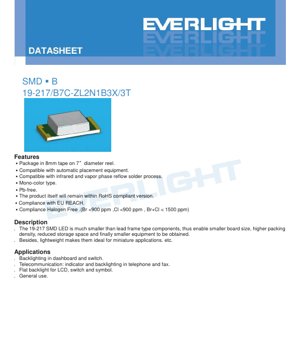
19-217/B7C-ZL2N1B3X/3T는 높은 신뢰성과 효율적인 조립이 요구되는 현대 전자 응용 분야를 위해 설계된 소형 표면 실장형 청색 LED입니다. 이 부품은 기존 리드 프레임 LED 대비 획기적인 발전을 이루어, 최종 제품의 상당한 소형화와 성능 향상을 가능하게 합니다.
1.1 핵심 장점 및 제품 포지셔닝
이 LED의 주요 장점은 미니어처 풋프린트입니다. SMD 패키지는 인쇄 회로 기판(PCB) 설계를 획기적으로 작게 할 수 있어, 부품 실장 밀도를 높입니다. 이는 직접적으로 장비 크기의 감소와 부품 및 완제품의 저장 공간 요구량 절감으로 이어집니다. 더욱이, SMD 패키지의 경량 특성은 무게가 중요한 요소인 휴대용 및 소형 응용 분야에 이상적입니다. 본 제품은 주요 환경 및 안전 규정을 준수하는 신뢰할 수 있는 산업 표준 청색 표시등 및 백라이트 소스로 포지셔닝됩니다.
1.2 주요 특징
- 포장: 8mm 테이프에 실장되어 직경 7인치 릴에 공급되며, 고속 자동 피크 앤 플레이스 장비와 완벽 호환됩니다.
- 솔더링 호환성: 표준 적외선(IR) 및 기상 재플로우 솔더링 공정 사용을 위해 설계되었습니다.
- 환경 규정 준수: 본 제품은 무연(Pb-free)이며, EU RoHS 지침을 준수하고 EU REACH 규정을 준수합니다. 또한 할로겐 프리로 분류되며, 브롬(Br)과 염소(Cl) 함량이 각각 900 ppm 미만이고 그 합이 1500 ppm 미만입니다.
- 유형: 워터클리어 수지 렌즈의 단색(블루) LED.
2. 기술 사양 심층 분석
이 섹션은 견고한 회로 설계에 중요한 LED의 전기적, 광학적 및 열적 파라미터에 대한 상세하고 객관적인 분석을 제공합니다.
2.1 Absolute Maximum Ratings
이 정격들은 장치에 영구적인 손상이 발생할 수 있는 한계치를 정의합니다. 이 한계치 이하 또는 해당 수준에서의 동작은 보장되지 않습니다.
- 역방향 전압 (VR): 5V. 역바이어스 상태에서 이 전압을 초과하면 접합이 즉시 항복될 수 있습니다.
- 연속 순방향 전류 (IF): 10 mA. 연속적으로 인가할 수 있는 직류 전류.
- 피크 순방향 전류 (IFP): 40 mA. 이는 과도 서지를 처리하기 위해 펄스 조건(1 kHz에서 듀티 사이클 1/10)에서만 허용됩니다.
- 전력 소산 (Pd): 40 mW. 주변 온도 25°C에서 패키지가 소산할 수 있는 최대 전력으로, VF * IF.
- 정전기 방전 (ESD): 150V (Human Body Model). 조립 과정에서 적절한 ESD 처리 절차가 필수적입니다.
- Operating & Storage Temperature: -40°C ~ +85°C (동작), -40°C ~ +90°C (보관).
- 솔더링 온도: 리플로우: 최대 10초간 피크 온도 260°C. 핸드 솔더링: 단자당 최대 3초간 350°C.
2.2 전기-광학 특성
별도로 명시하지 않는 한, 주변 온도 25°C, 순방향 전류 2mA에서 측정한 일반적인 성능 파라미터입니다.
- 발광 세기 (Iv): 14.5 mcd (최소) ~ 36.0 mcd (최대) 범위이며, 일반적인 허용 오차는 ±11%입니다. 이는 LED의 인지되는 밝기를 정의합니다.
- 시야각 (2θ1/2): 120도 (일반값). 이는 광도가 최대 광도의 절반이 되는 전체 각도로, 넓은 시야각을 나타냅니다.
- 피크 파장 (λp): 468 nm (일반값). 스펙트럼 파워 분포가 최대가 되는 파장입니다.
- 주 파장 (λd): 465.0 nm ~ 475.0 nm. 이는 빛의 지각되는 색상을 정의하며, ±1 nm의 엄격한 허용 오차를 가집니다.
- 스펙트럼 대역폭 (Δλ): 25 nm (일반값). 최대 파워의 절반에서 측정된 방출 스펙트럼의 폭입니다.
- 순방향 전압 (VF): IF=2mA, 허용 오차 ±0.05V. 이는 전류 제한 저항 계산에 매우 중요합니다.
- 역전류 (IR): VR=5V에서 최대 50 μA. 본 장치는 역바이어스 동작을 위해 설계되지 않았습니다.
3. Binning System 설명
LED는 생산 후 핵심 파라미터에 따라 일관성을 보장하기 위해 분류(빈닝)됩니다. 부품 번호 19-217/B7C-ZL2N1B3X/3T는 이 빈 정보를 인코딩합니다.
3.1 광도 Binning (코드: L2, M1, M2, N1)
LED는 I=2mA에서 4개의 광도 등급으로 분류됩니다:F=2mA:
- L2: 14.5 - 18.0 mcd
- M1: 18.0 - 22.5 mcd
- M2: 22.5 - 28.5 mcd
- N1: 28.5 - 36.0 mcd
3.2 주 파장 Binning (코드: X, Y)
LED는 IF=2mA:
- X: 465.0 - 470.0 nm
- Y: 470.0 - 475.0 nm
3.3 순방향 전압 빈닝 (코드: 27, 28, 29, 30)
LED는 I에서 네 개의 순방향 전압 빈으로 그룹화됩니다.F=2mA:
- 27: 2.50 - 2.60 V
- 28: 2.60 - 2.70 V
- 29: 2.70 - 2.80 V
- 30: 2.80 - 2.90 V
4. 성능 곡선 분석
데이터시트는 다양한 동작 조건에서 LED의 동작을 이해하는 데 필수적인 여러 특성 곡선을 제공합니다.
4.1 상대 발광 강도 대 순방향 전류
이 곡선은 발광 강도가 순방향 전류에 따라 증가하지만 비선형적인 방식으로 증가함을 보여줍니다. 이는 LED를 전압이 아닌 안정적이고 지정된 전류(예: 정격 출력을 위한 2mA)로 구동하는 것의 중요성을 강조합니다. 작은 전압 변화가 큰 전류 및 밝기 변화를 초래할 수 있기 때문입니다.
4.2 상대 발광 강도 대 주변 온도
LED의 출력은 접합 온도가 상승함에 따라 감소합니다. 이 곡선은 일반적으로 낮은 온도에서 최대 작동 온도(+85°C)까지 강도가 점진적으로 감소하는 것을 보여줍니다. 설계자는 높은 주변 온도 또는 열 싱킹이 불량할 것으로 예상되는 애플리케이션에서 이러한 열적 디레이팅을 고려해야 합니다.
4.3 순방향 전류 디레이팅 곡선
이것은 중요한 설계 도구입니다. 이 곡선은 주변 온도의 함수로서 허용 가능한 최대 연속 순방향 전류를 규정합니다. 온도가 증가함에 따라, 40mW 전력 소산 한도를 초과하고 열 폭주를 일으키는 것을 방지하기 위해 최대 안전 전류는 감소합니다.
4.4 스펙트럼 분포
스펙트럼 플롯은 468 nm(청색)을 중심으로 하는 좁은 발광 대역을 확인하며, 일반적인 대역폭은 25 nm입니다. 이 순수한 스펙트럼은 InGaN 반도체 물질의 특징입니다.
4.5 방사 패턴
극좌표도는 120° 시야각을 보여주며, 빛의 강도가 공간적으로 어떻게 분포되는지 나타냅니다. 이 패턴은 일반적으로 람베르트 또는 준-람베르트 특성을 가져 넓은 영역에 걸쳐 균일한 조명을 제공합니다.
5. 기계적 및 패키징 정보
5.1 패키지 치수
이 LED는 매우 컴팩트한 크기를 가집니다. 주요 치수(mm, 달리 명시되지 않는 한 공차 ±0.1mm)는 전체 길이, 너비, 높이 및 솔더 패드 레이아웃과 권장 PCB 랜드 패턴을 포함합니다. 정확한 치수는 적절한 솔더링 및 정렬을 보장하기 위해 PCB 레이아웃 및 솔더 페이스트 스텐실 설계에 매우 중요합니다.
5.2 극성 식별
캐소드는 일반적으로 패키지의 해당 측면에 녹색 음영이나 몰딩의 노치로 표시됩니다. 올바른 동작을 보장하려면 실장 시 정확한 극성을 준수해야 합니다.
6. 솔더링 및 조립 지침
장기적인 신뢰성을 위해서는 이러한 지침을 준수하는 것이 가장 중요합니다.
6.1 리플로우 솔더링 프로파일 (무연)
상세한 온도 프로파일이 제공됩니다:
- 예열: 150-200°C에서 60-120초 동안 서서히 온도를 상승시켜 플럭스를 활성화합니다.
- 액상선 이상 시간 (TAL): 217°C 이상에서 60-150초.
- 최고 온도: 최대 260°C, 10초 이내로 유지.
- 가열/냉각 속도: 열충격을 최소화하기 위해 가열 최대 6°C/초, 냉각 최대 3°C/초.
6.2 저장 및 습기 민감도
LED는 건조제와 함께 습기 방지 배리어 백에 포장되어 있습니다.
- 사용 준비가 될 때까지 백을 개봉하지 마십시오.
- 개봉 후, ≤30°C 및 ≤60% RH 조건에서 저장 시 168시간(7일) 이내에 사용하십시오.
- 노출 시간을 초과하거나 건조제가 포화 상태인 경우, 리플로우 전에 60±5°C에서 24시간 동안 베이크아웃을 실시하여 "팝코닝"(수분 증발로 인한 패키지 균열)을 방지해야 합니다.
6.3 핸드 솔더링 및 재작업
핸드 솔더링이 필요한 경우:
- 인두기 팁 온도를 ≤350°C로 사용하십시오.
- 단자당 접촉 시간을 ≤3초로 제한하십시오.
- 저전력 인두기(≤25W)를 사용하십시오.
- 단자 사이에 ≥2초의 냉각 간격을 두십시오.
- 초기 납땜 후 재작업을 피하십시오. 불가피한 경우, 듀얼 팁 인두기를 사용하여 양쪽 단자를 동시에 가열하고 솔더 조인트에 무리를 주지 않으면서 부품을 들어 올리십시오.
7. 포장 및 주문 정보
7.1 릴 및 테이프 사양
LED는 7인치 릴에 엠보싱 캐리어 테이프로 공급됩니다. 테이프 폭은 8mm입니다. 각 릴에는 3000개가 들어 있습니다. 자동화 피더와의 호환성을 보장하기 위해 캐리어 테이프 포켓 및 릴 허브/플랜지의 상세 치수가 제공됩니다.
7.2 라벨 설명
릴 라벨에는 몇 가지 주요 식별자가 포함되어 있습니다:
- P/N: 완전한 제품 번호.
- QTY: 릴 상의 수량.
- CAT/HUE/REF: 각각 광도, 주파장, 순방향 전압 빈에 대응하는 코드.
- LOT No: 추적 가능 로트 번호.
8. 응용 제안 및 설계 고려사항
8.1 대표적인 응용 시나리오
- 백라이트: 작은 크기와 균일한 빛 분포로 인해 계기판 표시등, 멤브레인 스위치 및 심볼 조명에 이상적입니다.
- 통신 장비: 전화기, 팩스기 및 네트워킹 하드웨어의 상태 표시등 및 키패드 백라이트.
- LCD 평판 백라이트: 가장자리 조명 또는 직접 조명 방식의 소형 LCD 패널용 배열로 사용할 수 있습니다.
- 일반 표시: 소비자 및 산업용 전자제품의 전원 상태, 모드 표시등 및 장식용 조명.
8.2 핵심 설계 고려사항
- 전류 제한: 외부 전류 제한 저항은 반드시 필수적입니다. LED의 지수적 I-V 특성은 전압의 작은 증가가 전류의 큰 증가를 유발하여 빠른 고장을 초래함을 의미합니다. 저항 값은 R = (V공급 - VF) / I 공식을 사용하여 계산됩니다.F.
- 열 관리: 전력 소산은 낮지만, 최대 전류 근처 또는 높은 주변 온도에서 동작할 경우, 디레이팅 곡선에 따라 적절한 PCB 구리 면적 또는 써멀 비아를 확보하십시오.
- ESD 보호: LED가 사용자가 접근 가능한 경우 입력 라인에 ESD 보호를 구현하고, 취급 시 적절한 ESD 프로토콜을 따르십시오.
- 광학 설계: 120° 시야각은 넓은 커버리지를 제공합니다. 집중된 빛이 필요한 경우, 외부 렌즈나 도광판이 필요할 수 있습니다.
9. 기술적 비교 및 차별화
기존의 스루홀 블루 LED나 더 큰 SMD 패키지와 비교하여, 19-217은 뚜렷한 장점을 제공합니다:
- 크기: 초소형 2.0mm x 1.25mm의 점유 면적으로 전례 없는 설계 밀도를 실현합니다.
- 성능 일관성: 광도, 파장, 전압에 대한 엄격한 빈닝(binning)으로 다중 LED 적용 시 균일한 외관과 성능을 보장합니다.
- 제조 용이성: 자동화된 SMT 조립 라인과의 완벽한 호환성으로 수작업 삽입 대비 생산 비용을 크게 절감하고 신뢰성을 높입니다.
- 규정 준수: RoHS, REACH 및 무할로겐(Halogen-Free) 표준을 충족하여 엄격한 환경 규제가 있는 글로벌 시장에서 설계의 미래 대응성을 확보합니다.
10. 자주 묻는 질문 (기술적 파라미터 기준)
Q1: 순방향 전압이 명시되어 있는데, 왜 전류 제한 저항이 필요한가요?
A1: 순방향 전압은 특정 전류(2mA)에서의 특성값입니다. 공급 전압은 다양하며, LED의 VF 자체에도 공차가 있고 온도에 따라 변합니다. 저항은 전류를 설정하는 선형적이고 안정적인 방법을 제공하여 LED를 과전류 상태로부터 보호합니다.
Q2: 이 LED를 10mA로 연속 구동할 수 있나요?
A2: 예, 10mA는 25°C에서의 절대 최대 연속 정격입니다. 그러나 순방향 전류 디레이팅 곡선을 확인해야 합니다. 주변 온도가 더 높으면 허용 최대 전류는 더 낮아집니다. 장기간 안정적으로 작동시키려면 5mA와 같이 더 낮은 전류로 구동하는 것이 권장됩니다.
Q3: 부품 번호의 "B3X"는 제 설계에 어떤 의미인가요?
A3: 이는 특정 성능 Bin을 나타냅니다. "B3X"는 광도와 주 파장에 대한 특정 Bin을 가리킵니다. 여러 유닛이나 생산 라인에 걸쳐 색상과 밝기의 일관성이 필요한 설계의 경우, Bin 코드를 포함한 완전한 부품 번호를 명시하고 준수하는 것이 필수적입니다.
Q4: 120° 시야각은 어떻게 해석해야 하나요?
A4: 이는 LED가 넓은 원뿔 형태로 빛을 방출한다는 의미입니다. 정면(0°)에서 볼 때 밝기가 최대입니다. 중심에서 ±60°(총 120°) 떨어진 지점에서는 밝기가 최대값의 절반으로 감소합니다. 이는 LED를 다양한 각도에서 확인해야 하는 응용 분야에 적합합니다.
11. 실용적 설계 및 사용 사례 연구
시나리오: 네 개의 파란색 상태 표시등이 있는 컴팩트 제어판 설계.
구현:
- 회로 설계: 5V 시스템 전원 사용. 목표 IF 좋은 밝기와 수명을 위해 = 5mA. 일반적인 VF 가 2.7V라고 가정하면, R = (5V - 2.7V) / 0.005A = 460Ω을 계산합니다. 가장 가까운 표준값인 470Ω을 사용하세요.
- PCB 레이아웃: 네 개의 LED를 정렬하여 배치하세요. 데이터시트의 권장 랜드 패턴을 정확히 따르세요. 약간의 열 완화를 위해 캐소드 패드에 연결된 작은 Copper Pour를 포함하세요.
- 조립: 생산 라인이 준비될 때까지 릴을 밀봉된 상태로 보관하세요. 정확한 리플로우 프로파일을 따르세요. 솔더링 후 시각 검사를 수행하세요.
- 결과: 일관된 파란색 색상과 밝기, 신뢰할 수 있는 동작, 전문적이고 소형화된 외관을 가진 네 개의 표시기.
12. 작동 원리 소개
이 LED는 인듐 갈륨 나이트라이드(InGaN) 반도체 칩을 기반으로 합니다. 접합의 내장 전위를 초과하는 순방향 전압이 인가되면, 전자와 정공이 활성 영역으로 주입되어 재결합합니다. 이 재결합 과정에서 광자(빛) 형태로 에너지가 방출됩니다. InGaN 합금의 특정 구성은 밴드갭 에너지를 결정하며, 이는 방출되는 빛의 파장(이 경우 약 468nm(청색))과 직접적으로 대응됩니다. 투명 에폭시 수지 봉지재는 칩을 보호하고, 광 출력을 형성하는 렌즈 역할을 하며, 높은 광학적 선명도와 장기적 안정성을 위해 제조되었습니다.
13. 기술 동향과 맥락
19-217 LED는 광전자 분야의 주요 동향을 보여줍니다: 끊임없는 소형화, SMT 호환성을 통한 제조성 향상, 환경 규정의 엄격한 준수. 청색 발광을 위한 InGaN 기술의 사용은 이제 성숙하고 매우 신뢰할 수 있습니다. 이러한 부품의 미래 발전은 더 높은 효율(단위 mA당 더 많은 광 출력), 고급 애플리케이션을 위한 더 엄격한 파라메트릭 제어, 온보드 드라이버 또는 제어 회로와의 통합에 초점을 맞출 수 있습니다. 이러한 소형, 신뢰할 수 있고 규정을 준수하는 지시등 및 백라이트에 대한 수요는 자동차, 산업, 소비자 및 IoT 기기 시장 전반에 걸쳐 계속 성장하고 있습니다.
LED 사양 용어
LED 기술 용어 완전 해설
광전 성능
| 용어 | 단위/표기 | 간단한 설명 | 중요성 |
|---|---|---|---|
| 광효율 | lm/W (루멘 매 와트) | 전력 당 광 출력, 수치가 높을수록 에너지 효율이 높음을 의미합니다. | 에너지 효율 등급과 전기 요금을 직접 결정합니다. |
| 광속 | lm (루멘) | 광원이 방출하는 총 빛의 양으로, 일반적으로 "밝기"라고 부릅니다. | 빛이 충분히 밝은지를 결정합니다. |
| 시야각 | ° (도), 예: 120° | 광도가 절반으로 떨어지는 각도로, 빔의 폭을 결정합니다. | 조명 범위와 균일도에 영향을 미칩니다. |
| CCT (색온도) | K (켈빈), 예: 2700K/6500K | 빛의 따뜻함/차가움, 값이 낮을수록 노란빛/따뜻함, 높을수록 흰빛/차가움. | 조명 분위기와 적합한 시나리오를 결정합니다. |
| CRI / Ra | 단위 없음, 0–100 | 물체 색상을 정확하게 재현하는 능력, Ra≥80이면 양호함. | 색상의 정확성에 영향을 미치며, 백화점, 박물관 등 요구도가 높은 장소에 사용됨. |
| SDCM | MacAdam 타원 단계, 예: "5-step" | 색상 일관성 지표, 단계가 작을수록 색상이 더 일관됩니다. | 동일한 배치의 LED 간 색상 균일성을 보장합니다. |
| Dominant Wavelength | nm (나노미터), 예: 620nm (빨간색) | 컬러 LED의 색상에 해당하는 파장. | 적색, 황색, 녹색 단색 LED의 색조를 결정합니다. |
| Spectral Distribution | 파장 대 강도 곡선 | 파장에 따른 강도 분포를 보여줍니다. | 색 재현성과 품질에 영향을 미칩니다. |
전기적 파라미터
| 용어 | Symbol | 간단한 설명 | Design Considerations |
|---|---|---|---|
| Forward Voltage | Vf | LED를 켜는 데 필요한 최소 전압, 예를 들어 "시동 문턱값"과 같습니다. | 구동기 전압은 ≥Vf 이상이어야 하며, 직렬 LED의 경우 전압이 합산됨. |
| 순방향 전류 | If | LED 정상 동작을 위한 전류값. | Usually constant current drive, current determines brightness & lifespan. |
| 최대 펄스 전류 | Ifp | 짧은 시간 동안 허용되는 피크 전류로, 디밍(dimming)이나 플래싱(flashing)에 사용됩니다. | Pulse width & duty cycle must be strictly controlled to avoid damage. |
| 역전압 | Vr | LED가 견딜 수 있는 최대 역전압으로, 이를 초과하면 항복(breakdown)이 발생할 수 있습니다. | 회로는 역접속이나 전압 스파이크를 방지해야 함. |
| 열저항 | Rth (°C/W) | 칩에서 솔더로의 열전달에 대한 저항으로, 값이 낮을수록 좋음. | 열저항이 높을수록 더 강력한 방열이 필요함. |
| ESD Immunity | V (HBM), 예: 1000V | 정전기 방전을 견딜 수 있는 능력, 수치가 높을수록 취약성이 낮음. | 생산 과정에서, 특히 민감한 LED의 경우 정전기 방지 대책이 필요함. |
Thermal Management & Reliability
| 용어 | 핵심 지표 | 간단한 설명 | 영향 |
|---|---|---|---|
| 접합 온도 | Tj (°C) | LED 칩 내부의 실제 작동 온도. | 10°C 감소할 때마다 수명이 두 배로 늘어날 수 있음; 너무 높으면 광속 유지율 저하 및 색변화 발생. |
| 광속 유지율 | L70 / L80 (hours) | 초기 밝기의 70% 또는 80%로 떨어지는 데 걸리는 시간. | LED의 "수명"을 직접 정의합니다. |
| Lumen Maintenance | % (예: 70%) | 일정 시간 후 유지되는 밝기의 백분율. | 장기간 사용 시 밝기 유지율을 나타냅니다. |
| 색 편차 | Δu′v′ 또는 MacAdam 타원 | 사용 중 색상 변화 정도. | 조명 장면의 색상 일관성에 영향을 미칩니다. |
| 열화 노화 | 재료 열화 | 장기간 고온에 의한 열화. | 휘도 저하, 색상 변화 또는 개방 회로 고장을 유발할 수 있습니다. |
Packaging & Materials
| 용어 | 일반적인 유형 | 간단한 설명 | Features & Applications |
|---|---|---|---|
| Package Type | EMC, PPA, 세라믹 | 칩을 보호하고 광학/열적 인터페이스를 제공하는 하우징 재료. | EMC: 내열성 우수, 저비용; 세라믹: 방열성 우수, 수명 길다. |
| 칩 구조 | Front, Flip Chip | 칩 전극 배열. | 플립 칩: 더 나은 방열, 더 높은 효율, 고출력용. |
| 형광체 코팅 | YAG, 실리케이트, 나이트라이드 | 청색 칩을 덮어 일부를 황색/적색으로 변환, 혼합하여 백색광 생성. | 서로 다른 형광체는 효율, CCT, CRI에 영향을 미칩니다. |
| 렌즈/광학계 | 평면, 마이크로렌즈, TIR | 표면의 광학 구조가 빛의 분포를 제어합니다. | 시야각과 광분포 곡선을 결정합니다. |
Quality Control & Binning
| 용어 | 비닝 내용 | 간단한 설명 | 목적 |
|---|---|---|---|
| 광속 빈 | 코드 예: 2G, 2H | 밝기에 따라 그룹화되며, 각 그룹은 최소/최대 루멘 값을 가집니다. | 동일 배치 내 밝기 균일성을 보장합니다. |
| 전압 빈 | 코드 예: 6W, 6X | 순방향 전압 범위별로 그룹화됨. | 구동기 매칭을 용이하게 하여 시스템 효율을 향상시킴. |
| Color Bin | 5-step MacAdam ellipse | 색좌표별로 그룹화되어, 좁은 범위를 보장함. | 색상 일관성을 보장하여, 조명기기 내 색상 불균일을 방지함. |
| CCT Bin | 2700K, 3000K 등 | CCT별로 그룹화되어 각각 해당하는 좌표 범위를 가집니다. | 다양한 장면의 CCT 요구사항을 충족합니다. |
Testing & Certification
| 용어 | Standard/Test | 간단한 설명 | 유의성 |
|---|---|---|---|
| LM-80 | 광유지율 시험 | 일정 온도에서 장기간 점등하며, 휘도 감소를 기록. | LED 수명 추정에 사용됨 (TM-21과 함께). |
| TM-21 | 수명 추정 표준 | LM-80 데이터를 기반으로 실제 조건에서의 수명을 추정합니다. | 과학적인 수명 예측을 제공합니다. |
| IESNA | Illuminating Engineering Society | 광학, 전기, 열적 시험 방법을 다룹니다. | 업계에서 인정받는 시험 기준. |
| RoHS / REACH | 환경 인증 | 유해 물질(납, 수은)이 없음을 보장합니다. | 국제 시장 진입 요구사항. |
| ENERGY STAR / DLC | 에너지 효율 인증 | 조명 제품의 에너지 효율 및 성능 인증. | 정부 조달, 보조금 프로그램에 활용되며 경쟁력을 강화합니다. |