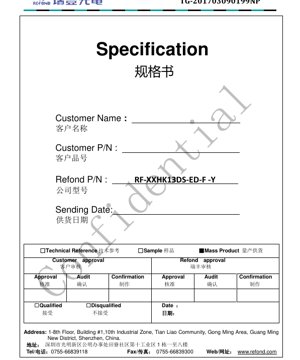
Table of Contents
- 1. Product Overview
- 1.1 Key Features
- 1.2 Applications
- 2. Package Dimensions
- 3. Electrical and Optical Characteristics (at Ts=25°C)
- 3.1 Forward Voltage (Vf)
- 3.2 Luminous Flux (Φv) at IF=30mA
- 3.3 Viewing Angle, CRI, and Thermal Resistance
- 4. Absolute Maximum Ratings
- 5. Binning System
- 6. Typical Optical Characteristics Curves
- 6.1 Forward Voltage vs. Forward Current (I-V Curve)
- 6.2 Forward Current vs. Relative Intensity
- 6.3 Pin Temperature Effects
- 6.4 Radiation Pattern
- 6.5 Spectral Distribution
- 7. Mechanical and Packaging Information
- 7.1 Carrier Tape and Reel
- 7.2 Label Information
- 7.3 Moisture Resistant Packaging
- 8. Soldering and Assembly Guidelines
- 8.1 Reflow Soldering Profile
- 8.2 Hand Soldering
- 8.3 Mechanical Handling
- 9. Storage and Handling Precautions
- 9.1 Storage Conditions
- 9.2 ESD Protection
- 9.3 Chemical Compatibility
- 9.4 Thermal Design
- 10. Reliability Testing
- 11. Application Notes
- 12. Working Principle
- 13. Market Trends and Developments
- 14. Frequently Asked Questions
- 14.1 Can I drive these LEDs at 60 mA?
- 14.2 What is the recommended storage humidity?
- 14.3 How can I ensure color consistency across multiple LEDs?
- 14.4 Is the LED resistant to sulfur environments?
- LED Specification Terminology
- Photoelectric Performance
- Electrical Parameters
- Thermal Management & Reliability
- Packaging & Materials
- Quality Control & Binning
- Testing & Certification
1. Product Overview
This white SMD LED is fabricated using a blue chip and phosphors to produce white light. It features a PLCC-2 package with an extremely wide viewing angle, suitable for all SMT assembly and solder processes. The product is available on tape and reel with 4000 pieces per reel, and is RoHS compliant. Moisture sensitivity level is 3.
1.1 Key Features
- PLCC-2 surface mount package
- Extremely wide viewing angle (120 degrees at 50% Iv)
- Suitable for all SMT assembly and soldering processes
- Available in tape and reel packaging (4000pcs/reel)
- Moisture sensitivity level: 3
- RoHS compliant
1.2 Applications
- Optical indicators
- Indoor displays
- Decorative lighting
- General lighting applications
2. Package Dimensions
The package dimensions are 3.0 x 1.4 x 0.8 mm (length x width x height). All dimensions are in millimeters with tolerances of ±0.2 mm unless otherwise noted. The polarity is indicated by a mark on the package body.
3. Electrical and Optical Characteristics (at Ts=25°C)
The following parameters are provided at a forward current of 30 mA unless otherwise stated.
3.1 Forward Voltage (Vf)
The forward voltage is binned into ranks: G1 (2.7-2.8V), G2 (2.8-2.9V), H1 (2.9-3.0V), H2 (3.0-3.1V), I1 (3.1-3.2V), I2 (3.2-3.3V), and J1 (3.3-3.4V).
3.2 Luminous Flux (Φv) at IF=30mA
Depending on the color temperature bin, luminous flux ranges are provided:
- For 6000-6500K (RF-65HK13DS-ED-F-Y): OFA (9-10 lm), OHA (10-11 lm), PEA (11-12 lm), PFA (12-13 lm)
- For 5510-6120K (RF-60HK13DS-ED-F-Y): similar ranges with OGA (10-11 lm), OHA (10-11 lm), PEA (11-12 lm), PFA (12-13 lm), PGA (14-15 lm)
- For 3700-4258K (RF-40HK13DS-ED-F-Y): OGA (10-11 lm), OHA (10-11 lm), PEA (11-12 lm), PFA (12-13 lm), PGA (14-15 lm)
- For 2825-3050K (RF-30HK13DS-ED-F-Y): OGA (10-11 lm), OHA (10-11 lm), PEA (11-12 lm), PFA (12-13 lm)
- For 2650-2868K (RF-27HK13DS-ED-F-Y): OGA (10-11 lm), OHA (10-11 lm), PEA (11-12 lm), PFA (12-13 lm), PGA (14-15 lm)
Typical luminous flux is approximately 10.9 lm at 6000-6500K and 11.5 lm at 4000K. The measurement tolerance is ±10%.
3.3 Viewing Angle, CRI, and Thermal Resistance
- Viewing angle at 50% Iv: 120 degrees
- Color Rendering Index (Ra): 80 (minimum)
- Thermal resistance Rth(j-s): 115 °C/W
- Reverse current (IR) at VF=5V: 10 μA (max)
4. Absolute Maximum Ratings
| Parameter | Symbol | Rating | Unit |
|---|---|---|---|
| Power Dissipation | Pd | 136 | mW |
| Forward Current | IF | 40 | mA |
| Peak Forward Current (1/10 duty, 0.1ms pulse) | IFP | 100 | mA |
| Reverse Voltage | VR | 5 | V |
| ESD (HBM) | ESD | 2000 | V |
| Operating Temperature | Topr | -40 to +85 | °C |
| Storage Temperature | Tstg | -40 to +100 | °C |
| Junction Temperature | Tj | 95 | °C |
Care must be taken that power dissipation does not exceed the absolute maximum rating. The maximum current should be determined based on thermal management to keep junction temperature below 95°C.
5. Binning System
The LEDs are binned according to forward voltage, luminous flux, and chromaticity coordinates. The chromaticity diagram includes multiple bins such as WP2, WK2, WP3, WK3, NP3, NK3, etc., each defined by four CIE xy coordinates. This ensures consistency in color and brightness for each application.
6. Typical Optical Characteristics Curves
6.1 Forward Voltage vs. Forward Current (I-V Curve)
At 30 mA, the forward voltage is approximately 3.0V typical. The curve shows the expected exponential increase in current with voltage above the threshold.
6.2 Forward Current vs. Relative Intensity
Relative intensity increases almost linearly with forward current between 10 mA and 40 mA.
6.3 Pin Temperature Effects
As pin temperature increases from 25°C to 95°C, the relative luminous flux decreases gradually. The forward voltage also decreases slightly with temperature (approximately -2 mV/°C). The forward current should be derated at higher temperatures to avoid exceeding the maximum junction temperature.
6.4 Radiation Pattern
The radiation diagram shows a wide beam angle with relative intensity nearly constant from -60° to +60°, dropping to 50% at about ±60°, consistent with the 120° viewing angle specification.
6.5 Spectral Distribution
The spectrum shows a peak in the blue region (~450 nm) from the chip and a broad yellow emission from the phosphor. For different color temperatures (6500K, 4000K, 3000K), the relative intensity of the blue peak decreases as the CCT decreases, resulting in a warmer appearance.
7. Mechanical and Packaging Information
7.1 Carrier Tape and Reel
The LED is packaged in carrier tape with a pitch of 4 mm and a reel diameter of 180 mm (standard). Polarity is marked on the tape. Each reel contains 4000 pieces.
7.2 Label Information
The label includes part number, spec number, lot number, bin code for luminous flux, chromaticity bin, forward voltage rank, quantity, and date code.
7.3 Moisture Resistant Packaging
The product is shipped in moisture barrier bags with desiccant to maintain low humidity. After opening, the LEDs must be used within 24 hours if stored at ≤30°C and ≤60% RH, or they must be baked at 60±5°C for over 24 hours.
8. Soldering and Assembly Guidelines
8.1 Reflow Soldering Profile
Recommended reflow profile: Preheat from 150°C to 200°C for 60-120 seconds; ramp up to 217°C with time above 217°C not exceeding 60 seconds; peak temperature 260°C for no more than 10 seconds; cool down at ≤6°C/s. Reflow should not be performed more than twice, and if the time between reflows exceeds 24 hours, the LEDs must be baked.
8.2 Hand Soldering
Hand soldering should be done with iron temperature below 300°C for less than 3 seconds, only once.
8.3 Mechanical Handling
The encapsulation material is silicone, which is soft. Avoid applying pressure on the top surface. Use proper pick-and-place nozzles with controlled force. Do not bend the PCB after soldering.
9. Storage and Handling Precautions
9.1 Storage Conditions
Before opening the aluminum bag: store at ≤30°C and ≤75% RH for up to one year from delivery. After opening: use within 24 hours at ≤30°C and ≤60% RH. If not used, bake at 60±5°C for 24 hours.
9.2 ESD Protection
The LED is sensitive to electrostatic discharge (ESD) up to 2000V HBM. Proper ESD precautions should be taken during handling and assembly.
9.3 Chemical Compatibility
Avoid exposure to sulfur compounds above 100 ppm. Halogen content (chlorine and bromine) must be controlled. Use only approved cleaning solvents such as isopropyl alcohol; ultrasonic cleaning is not recommended.
9.4 Thermal Design
Heat generation can reduce luminous efficacy and shift color. Ensure adequate thermal management to keep junction temperature below 95°C. The thermal resistance of 115°C/W means that at 30 mA, the power dissipation is about 0.1W, leading to a temperature rise of about 11.5°C above the solder point.
10. Reliability Testing
The product has passed the following reliability tests: reflow soldering (2 times at 260°C), thermal shock (-40°C to 100°C, 300 cycles), high temperature storage (100°C, 1000 hours), low temperature storage (-40°C, 1000 hours), life test at 30 mA and 25°C (1000 hours), and high temperature high humidity life test (60°C/90%RH, 30 mA, 1000 hours). Criteria: Vf change ≤10%, luminous flux maintenance ≥90%, no open/short/flicker.
11. Application Notes
For optimal performance, use constant current driving with appropriate current-limiting resistors. The typical forward current is 30 mA, but it can be adjusted up to 40 mA absolute maximum. Consider the binning tolerance for consistent color and brightness in arrays. The wide viewing angle makes these LEDs suitable for indicator and backlighting applications. Due to the silicone encapsulation, avoid dust contamination and clean with isopropyl alcohol if needed.
12. Working Principle
This white LED uses a blue-emitting InGaN chip that pumps a yellow phosphor (typically YAG:Ce). The combination of blue and yellow light produces white light. Different color temperatures are achieved by adjusting the phosphor composition and concentration.
13. Market Trends and Developments
The industry trend continues towards higher efficacy, smaller packages, and better color quality. This PLCC-2 package offers a good balance of size and thermal performance. Improvements in phosphor technology have enabled wider color gamut and higher CRI values. The product complies with RoHS and is suitable for general lighting applications.
14. Frequently Asked Questions
14.1 Can I drive these LEDs at 60 mA?
No, the absolute maximum forward current is 40 mA. For reliable operation, stay within 30 mA typical or design with proper derating for temperature.
14.2 What is the recommended storage humidity?
Before opening the bag, store at ≤75% RH. After opening, use within 24 hours at ≤60% RH or bake before use.
14.3 How can I ensure color consistency across multiple LEDs?
Use LEDs from the same bin (chromaticity and flux bin) and ensure proper thermal management.
14.4 Is the LED resistant to sulfur environments?
The LED encapsulation is silicone, which is sensitive to sulfur compounds. Keep sulfur concentration below 100 ppm in the environment.
LED Specification Terminology
Complete explanation of LED technical terms
Photoelectric Performance
| Term | Unit/Representation | Simple Explanation | Why Important |
|---|---|---|---|
| Luminous Efficacy | lm/W (lumens per watt) | Light output per watt of electricity, higher means more energy efficient. | Directly determines energy efficiency grade and electricity cost. |
| Luminous Flux | lm (lumens) | Total light emitted by source, commonly called "brightness". | Determines if the light is bright enough. |
| Viewing Angle | ° (degrees), e.g., 120° | Angle where light intensity drops to half, determines beam width. | Affects illumination range and uniformity. |
| CCT (Color Temperature) | K (Kelvin), e.g., 2700K/6500K | Warmth/coolness of light, lower values yellowish/warm, higher whitish/cool. | Determines lighting atmosphere and suitable scenarios. |
| CRI / Ra | Unitless, 0–100 | Ability to render object colors accurately, Ra≥80 is good. | Affects color authenticity, used in high-demand places like malls, museums. |
| SDCM | MacAdam ellipse steps, e.g., "5-step" | Color consistency metric, smaller steps mean more consistent color. | Ensures uniform color across same batch of LEDs. |
| Dominant Wavelength | nm (nanometers), e.g., 620nm (red) | Wavelength corresponding to color of colored LEDs. | Determines hue of red, yellow, green monochrome LEDs. |
| Spectral Distribution | Wavelength vs intensity curve | Shows intensity distribution across wavelengths. | Affects color rendering and quality. |
Electrical Parameters
| Term | Symbol | Simple Explanation | Design Considerations |
|---|---|---|---|
| Forward Voltage | Vf | Minimum voltage to turn on LED, like "starting threshold". | Driver voltage must be ≥Vf, voltages add up for series LEDs. |
| Forward Current | If | Current value for normal LED operation. | Usually constant current drive, current determines brightness & lifespan. |
| Max Pulse Current | Ifp | Peak current tolerable for short periods, used for dimming or flashing. | Pulse width & duty cycle must be strictly controlled to avoid damage. |
| Reverse Voltage | Vr | Max reverse voltage LED can withstand, beyond may cause breakdown. | Circuit must prevent reverse connection or voltage spikes. |
| Thermal Resistance | Rth (°C/W) | Resistance to heat transfer from chip to solder, lower is better. | High thermal resistance requires stronger heat dissipation. |
| ESD Immunity | V (HBM), e.g., 1000V | Ability to withstand electrostatic discharge, higher means less vulnerable. | Anti-static measures needed in production, especially for sensitive LEDs. |
Thermal Management & Reliability
| Term | Key Metric | Simple Explanation | Impact |
|---|---|---|---|
| Junction Temperature | Tj (°C) | Actual operating temperature inside LED chip. | Every 10°C reduction may double lifespan; too high causes light decay, color shift. |
| Lumen Depreciation | L70 / L80 (hours) | Time for brightness to drop to 70% or 80% of initial. | Directly defines LED "service life". |
| Lumen Maintenance | % (e.g., 70%) | Percentage of brightness retained after time. | Indicates brightness retention over long-term use. |
| Color Shift | Δu′v′ or MacAdam ellipse | Degree of color change during use. | Affects color consistency in lighting scenes. |
| Thermal Aging | Material degradation | Deterioration due to long-term high temperature. | May cause brightness drop, color change, or open-circuit failure. |
Packaging & Materials
| Term | Common Types | Simple Explanation | Features & Applications |
|---|---|---|---|
| Package Type | EMC, PPA, Ceramic | Housing material protecting chip, providing optical/thermal interface. | EMC: good heat resistance, low cost; Ceramic: better heat dissipation, longer life. |
| Chip Structure | Front, Flip Chip | Chip electrode arrangement. | Flip chip: better heat dissipation, higher efficacy, for high-power. |
| Phosphor Coating | YAG, Silicate, Nitride | Covers blue chip, converts some to yellow/red, mixes to white. | Different phosphors affect efficacy, CCT, and CRI. |
| Lens/Optics | Flat, Microlens, TIR | Optical structure on surface controlling light distribution. | Determines viewing angle and light distribution curve. |
Quality Control & Binning
| Term | Binning Content | Simple Explanation | Purpose |
|---|---|---|---|
| Luminous Flux Bin | Code e.g., 2G, 2H | Grouped by brightness, each group has min/max lumen values. | Ensures uniform brightness in same batch. |
| Voltage Bin | Code e.g., 6W, 6X | Grouped by forward voltage range. | Facilitates driver matching, improves system efficiency. |
| Color Bin | 5-step MacAdam ellipse | Grouped by color coordinates, ensuring tight range. | Guarantees color consistency, avoids uneven color within fixture. |
| CCT Bin | 2700K, 3000K etc. | Grouped by CCT, each has corresponding coordinate range. | Meets different scene CCT requirements. |
Testing & Certification
| Term | Standard/Test | Simple Explanation | Significance |
|---|---|---|---|
| LM-80 | Lumen maintenance test | Long-term lighting at constant temperature, recording brightness decay. | Used to estimate LED life (with TM-21). |
| TM-21 | Life estimation standard | Estimates life under actual conditions based on LM-80 data. | Provides scientific life prediction. |
| IESNA | Illuminating Engineering Society | Covers optical, electrical, thermal test methods. | Industry-recognized test basis. |
| RoHS / REACH | Environmental certification | Ensures no harmful substances (lead, mercury). | Market access requirement internationally. |
| ENERGY STAR / DLC | Energy efficiency certification | Energy efficiency and performance certification for lighting. | Used in government procurement, subsidy programs, enhances competitiveness. |